AI CRM Automation for RevOps Leaders: Compare Lead-Routing, Follow-Up, Forecasting, and Churn Workflows
Written by
Ishan Chhabra
Last Updated :
June 19, 2026
Skim in :
8
mins
In this article
Revenue teams love Oliv
Here’s why:
All your deal data unified (from 30+ tools and tabs).
Insights are delivered to you directly, no digging.
AI agents automate tasks for you.
Thank you! Your submission has been received!
Oops! Something went wrong while submitting the form.
Meet Oliv’s AI Agents
Hi! I’m, Deal Driver
I track deals, flag risks, send weekly pipeline updates and give sales managers full visibility into deal progress
Hi! I’m, CRM Manager
I maintain CRM hygiene by updating core, custom and qualification fields all without your team lifting a finger
Hi! I’m, Forecaster
I build accurate forecasts based on real deal movement and tell you which deals to pull in to hit your number
Hi! I’m, Coach
I believe performance fuels revenue. I spot skill gaps, score calls and build coaching plans to help every rep level up
Hi! I’m, Prospector
I dig into target accounts to surface the right contacts, tailor and time outreach so you always strike when it counts
Hi! I’m, Pipeline tracker
I call reps to get deal updates, and deliver a real-time, CRM-synced roll-up view of deal progress
Hi! I’m, Analyst
I answer complex pipeline questions, uncover deal patterns, and build reports that guide strategic decisions
TL;DR
AI CRM automation uses agents that execute multi-step revenue work, unlike copilots that wait, note-takers that only transcribe, or dashboards that only report.
Five core workflows differ by autonomy versus revenue risk: auto-run routing, follow-up, and service-deflection, but gate forecasting and churn with human review.
AI predictive forecasting lifts accuracy from roughly 44 percent (rep self-report) to about 79 percent, and reclaims the weekly forecast scrub.
Architecture decides your ceiling: native-AI platforms act in-workflow with two-way sync, while agent overlays often stay chat-first and one-way.
For most mid-market teams, buy do not build; pilot CRM hygiene first and prove ROI in 90 days on hours saved and forecast variance.
Trustworthy agents run on bounded autonomy: auto-run low-risk work, draft medium-risk work for approval, and block pricing and legal commitments.
Q1: What is AI CRM automation, and how is it different from copilots, note-takers, and dashboards? [toc=1. What AI CRM Automation Is]
A RevOps lead I worked with kept a sticky note on her monitor: "Update Salesforce by Friday 4pm." Her reps treated the CRM like a timesheet, not a tool. They logged just enough to avoid a Monday scolding. That sticky note is the whole problem in miniature.
AI CRM automation uses AI agents that do not just suggest, they execute multi-step revenue work: logging calls, cleaning records, scoring leads, routing deals, drafting forecasts, and flagging churn, then learning from your corrections. Unlike copilots that wait for a prompt or note-takers that only transcribe, agents pursue a goal and re-plan when blocked. Your CRM stops being a "dumb repository reps update weekly because management requires it" and starts acting.
🧰 The four things people confuse with each other
Most teams own all four and think they own an agent. They do not. Here is the honest separation.
Tool type
What it does
What it does not do
Dashboard
Shows you the number
Change the number
Note-taker
Transcribes one meeting
Update the deal or follow up
Copilot
Answers when you ask
Act without you asking
AI agent
Pursues a goal across steps
Sit idle waiting for a prompt
A dashboard reports. A note-taker remembers. A copilot assists. An agent works. That last word is the dividing line, and it is the same distinction we draw across the best revenue intelligence software platforms.
The dividing line in AI CRM automation: dashboards report, note-takers remember, copilots assist, but only agents do the work.
🍫 The vending machine versus the smart employee
Here is the cleanest way I have heard it framed. Traditional automation is a vending machine: fixed input, fixed output. Put in a token, get a snack. If the payment does not register, the whole thing stalls.
An agent is closer to a coach or a smart employee. It picks a goal and goes after it. When the plan stops working, it junks the plan, improvises, and tries another route. That adaptability is what separates "automation" from "agentic," and it sits at the heart of the best revenue orchestration platform tools.
⚡ Why this matters right now
The AI landscape is moving from chat to agents. Teams still living in chat windows are getting left behind. Operators who run agents report they are far more productive, not by a little, by a wide margin.
I might be slightly bullish here, but the pattern is hard to miss. When the agent does the logging, scoring, and follow-up, the human does the thinking. That trade is the entire pitch, and it is reshaping the move from revenue ops to intelligence to orchestration.
This article compares five workflows where that trade pays off most: lead-routing, follow-up, forecasting, churn-intervention, and service-deflection.
Agentic platforms like Oliv.ai sit on the far right of that table. Oliv operates at the deal level, tracking the full sales cycle rather than transcribing one meeting. That deal-level view is the line that separates an agent from a note-taker, and it is where the rest of this comparison starts.
Q2: Why are RevOps leaders drowning in dirty data, manual logging, and missed follow-ups? [toc=2. The Dirty-Data Problem]
Picture a senior AE on a Thursday. The call just ended. To send a good follow-up, she has to pull the transcript from Gong, paste it into a custom GPT, copy the output into Outlook, then hunt for the right PDF to attach. Five steps. Most reps simply do not do it.
RevOps drowns because every tool adds a silo a human must reconcile by hand. You pull a transcript from one app, context from the CRM, a PDF from a third, then stitch it together yourself. I call this manual context-stitching, and it is the quiet tax on every revenue team. The result is brutal: only 7% of teams hit 90% or higher forecast accuracy, and 87% of enterprises missed 2025 revenue targets despite record AI spend. The problem is not effort. It is a brittle, manual method.
Five RevOps pain points, one root cause: manual context-stitching across disconnected tools is the real bottleneck.
🧵 The follow-up loop nobody finishes
That five-step loop is where pipeline quietly dies. Each step is small. Together they are enough friction that a busy AE skips the follow-up entirely.
So the deal goes cold, not because the rep is lazy, but because the workflow punishes diligence. Running a growth engine this way is like driving a race car firing on two cylinders. It moves, but it burns fuel and drifts off line, which is why so many teams reassess the Gong integrations they depend on.
⏰ The Thursday and Friday forecast scrub
Then there is the weekly ritual. Every Thursday and Friday, managers sit with reps for one to two hours to reconstruct what happened that week. They talk through deals, then manually re-key the numbers into a forecast.
That forecast becomes Monday's slide. By Monday, half of it is already stale. Hours of senior time get spent assembling a snapshot that expires before the meeting starts, a pattern we unpack in our look at Gong forecasting.
📉 Why the numbers stay ugly
Here is the part the category avoids saying plainly. Adding more tools has not fixed accuracy. The 7% figure comes from a benchmark of 939 companies, and the median sits in the 70 to 79% range. More dashboards have not moved that median.
I could be wrong about the exact cause, but from what surfaces when you actually run these reviews, the bottleneck is not insight. It is reconciliation. The data exists. No one has time to stitch it, a reality that drives interest in the best AI sales forecasting software.
The fix is not another dashboard you log into. It is an agent that reads across the systems and assembles the context before a human ever opens the deal. That shift, from stitching to acting, is what the next sections compare workflow by workflow.
Q3: How do the five core CRM workflows compare, lead-routing, follow-up, forecasting, churn, and service-deflection? [toc=3. The Five Workflows Compared]
I keep a simple rule when teams ask what to automate first: match autonomy to revenue risk. Let agents run free on low-stakes data work. Keep a human hand on anything that touches a reported number or a customer promise. That single rule sorts the entire field.
The five workflows differ most on autonomy versus revenue risk. Lead-routing, CRM-hygiene follow-up, and service-deflection run near-autonomously and save the most hours. Forecasting and churn-intervention need human review because they shape revenue calls and renewals. Auto-run the safe stuff. Gate the consequential stuff.
🎂 The three-layer cake
A useful way to score each workflow is to ask which layer it reaches. There are three. Baseline data collection (recording and transcription) is now a commodity. The intelligence layer reads context and signals. The agent layer acts: routing a lead, drafting a reply, flagging an at-risk account.
Recording is free now, baked into Zoom, Teams, and Google Meet. The value has moved up the stack. A workflow that only transcribes lives in the bottom layer. A workflow that acts lives at the top, which is the dividing line across the revenue intelligence platforms.
📊 The five workflows, scored
Workflow
Autonomy
Time saved
Primary owner
Guardrail needed
Lead-routing
High
Hours/week
RevOps
Low
Follow-up / hygiene
High
15-20 hrs/week
RevOps + AE
Low
Service-deflection
High
Ticket backlog
CS Ops
Medium
Forecasting
Medium
1-2 hrs/rep/week
RevOps + Mgr
High
Churn-intervention
Medium
CS scramble time
CS + RevOps
High
Service-deflection is the one most comparisons skip. It resolves routine tickets and intake autonomously. One team cut a 48-minute intake form down to an 8-minute conversation by letting an agent handle it.
🧭 What to automate first
Automate first if low-risk: routing, hygiene-follow-up, service-deflection. Errors here are cheap and reversible.
Pilot with review if consequential: forecasting and churn, because a wrong call costs a quarter or a renewal.
💬 What operators actually say
Practitioners are blunt about where point tools stop. On forecasting tools specifically, one RevOps voice on Reddit put it sharply:
"Clari is a tool for sales leaders, it adds no value to reps as far as I can see." u/Msoave, r/SalesOperations Reddit Thread
On the data-portability side, a Gong user flagged the cost of one-way tools:
"This lack of flexibility has required us to engage our development team at additional cost, adding significant operational and opportunity costs just to extract data we already own." Neel P., Sales Operations Manager Gong G2 Verified Review
Both point at the same gap: tools that capture data but make acting on it harder. That is the column most platforms cover, one cell at a time, a tradeoff we map across the best Clari alternatives and competitors.
Oliv.ai spans the intelligence and agent layers across routing, follow-up, forecasting, and churn from one deal-level model. Point tools cover a single column of that table well. We built Oliv to cover the rows, so the act of stitching context across workflows belongs to the agent, not the rep.
Q4: How accurate are AI forecasting workflows, and what hours do they actually save? [toc=4. Forecasting Accuracy & ROI]
The forecast scrub is where I see the most senior time disappear. Managers reconstruct the week deal by deal, then translate gut feel into a committed number. It is skilled work applied to a task a machine should own.
AI predictive forecasting lifts accuracy from roughly 44% (rep self-report) and 62% (CRM rules) to about 79%, and McKinsey finds it cuts forecast error 20 to 50% while lifting revenue 2 to 3%. The bigger win is time. Managers reclaim the one-to-two-hour weekly scrub because the agent reads live pipeline movement instead of waiting for Monday's slide. The discipline that makes it work: if a rep cannot articulate deal status, push the deal off the forecast.
AI predictive forecasting climbs accuracy from 44 to 79 percent, a method change rather than a tooling upgrade.
📈 The accuracy ladder
Method matters more than effort. The same pipeline forecast three different ways produces three very different accuracy numbers.
Forecasting method
Accuracy
Rep self-report
~44%
CRM rules-based
~62%
AI predictive
~79%
That climb from 44% to 79% is not a tooling upgrade, it is a method change. The rep commit call, the least reliable input, is still what most teams lean on hardest.
💰 Why accuracy is a revenue lever
A 10-point accuracy gain maps to roughly 3 to 5% revenue realization. For a $10M ARR business, a 20-point gain can be worth $600K to $1M. McKinsey's 2 to 3% revenue lift sits in the same range.
Gartner adds a people angle: sellers who actively partner with AI are 3.7 times more likely to hit quota. So frame the business case in revenue percent, not just hours saved. The board hears dollars, which is why the best sales intelligence platform choice gets scrutinized so hard.
⚠️ Where I would stay skeptical
Accuracy only holds on clean, governed data. From what surfaces when you actually run this, a model fed duplicate accounts and stale stages will forecast confidently and wrongly. The number looks precise. It is precisely off.
So the sequence matters. Fix hygiene first, then trust the forecast agent. Skipping that order just automates the existing mess at higher speed.
Practitioners feel the latency problem directly. On legacy forecasting workflows, a RevOps user described the manual workaround that AI is meant to kill:
"It doesnt do a great job of auto-calculating the values I need to submit, so that is entirely handheld by using the built-in notes field as a calculator." Dexter L., Customer Success Executive Clari G2 Verified Review
Oliv.ai's deal-level forecasting updates within about 5 minutes of a call and tracks pipeline movement continuously, against the 20-to-30-minute delay common in legacy tools. So Monday's forecast is built from live reality, not a Thursday memory. That freshness is the difference between forecasting the quarter and reconstructing it, a gap we detail in our Gong forecasting breakdown and across the best AI sales tools.
Q5: How do churn-intervention and service-deflection workflows protect revenue after the sale? [toc=5. Churn & Service-Deflection]
Most teams find out a customer is leaving when the cancellation email lands. By then the save window is gone. The signals were there for weeks, sitting in product logs and ticket queues nobody was watching.
Churn-intervention agents score health signals early, giving Customer Success a 90-day window instead of a two-week scramble. A working model is simple: query volume dropping more than 50% adds 25 risk points, and zero queries for seven straight days adds 30 or more. Service-deflection agents, which resolve routine tickets and intake on their own, cut a 48-minute form down to an 8-minute conversation. Both turn signals into action, not red cells on a dashboard.
🧮 A churn score you can actually build
The best churn model I have seen is not a black box. It is a point system any RevOps lead can replicate in an afternoon. The logic is transparent, which is exactly why teams trust it.
Here is the shape of it:
Query volume drops more than 50% week over week: add 25 points.
Zero queries for seven consecutive days: add 30 or more points.
Score crosses your threshold: the account auto-flags for a CS save play.
The standard read treats churn as a lagging metric you report after the fact. Run it this way and it becomes a leading signal you act on, much like the shift we map from revenue ops to intelligence to orchestration.
⏰ Why service-deflection belongs to RevOps
Service-deflection rarely shows up in CRM-automation comparisons, and that is a miss. When an agent handles routine intake, a 48-minute form becomes an 8-minute conversation. The customer answers questions, and the agent fills the record.
That time goes straight back to the team. It also keeps the data clean at the source, because the agent logs structured fields instead of a human guessing later, a capability we explore across the revenue intelligence platforms.
💰 The math behind acting early
Volume realities make the case. Connection rates hover around 5%, and email reply rates sit near 1%. When every touch is that scarce, losing an existing account hurts far more than missing a cold lead.
I could be slightly off on the exact thresholds for your business. From what surfaces when you actually run these scores, though, the direction holds: catch the drop early, and you save accounts you would otherwise eulogize, which is why renewal teams lean on the best sales intelligence platform.
Practitioners describe the post-sale visibility gap plainly:
"By asking what the customer said they needed, I can prepare for any meeting, from kickoff to renewal." Amanda R., Director of Customer Success Gong G2 Verified Review
"Chorus does a good job with the basic functionality of call recording, but if you are looking for something more advanced and will help guide you, then you may be disappointed." Director of Sales Operations Chorus by ZoomInfo Gartner Verified Review
Oliv.ai scores pipeline health and renewal risk from the same deal-level context that drives forecasting. So a stalled deal and an at-risk account surface as actions a CS rep can run, not as another report someone has to open and interpret. This is the same logic behind the best revenue orchestration platform tools.
Q6: Native-AI platform, agent overlay, or governance-grade suite, which architecture fits your stack? [toc=6. Platform Architecture Classes]
I get asked this constantly: "Do we buy a native-AI tool or bolt an agent onto Salesforce?" The honest answer is that the architecture decides your ceiling. Pick wrong, and no amount of configuration saves you.
Three architectures compete. Native-AI platforms build the AI into the data model. Agent overlays layer agents on Salesforce or HubSpot. Governance-grade suites put enterprise controls first. Native-AI gives speed and deep workflow integration. Overlays leverage the incumbent's data fabric, but they often stay chat-focused and not deeply integrated into the actual workflow. Since recording is now commoditized, the value has moved up to the agent layer.
🏗️ The three classes, side by side
Dimension
Native-AI platform
Agent overlay
Governance suite
Integration depth
Built into the model
Bolted on top
Deep but rigid
Time-to-value
Fast
Medium
Slow
UX
In-workflow
Often chat-first
Admin-heavy
Data direction
Two-way
Often one-way
Two-way, gated
Best fit
SMB to mid-market
Salesforce-heavy orgs
Regulated enterprise
The pattern operators report is consistent. Overlays make you go talk to the agent, take the output, and paste it somewhere else. That extra hop is the friction that kills adoption, a recurring theme in Salesforce Agentforce reviews analyzed.
⚠️ The UI-first failure
Here is the structural critique the category avoids. Most tools treat AI as a chat box over the old database. A real agent goes directly to the underlying database, applies its own logic, and returns the answer.
That difference is not cosmetic. One-way integrations trap your data; a tool that pulls everything in but will not push it back out becomes a silo, not a hub, which is why teams compare the best Agentforce alternatives and competitors.
Operators see both sides honestly:
"It integrates intelligent agents into existing Salesforce workflows with minimal setup, and within the first week, the team reported a noticeable drop in average case handling time." Ayushmaan Y., Senior Associate Salesforce Agentforce G2 Verified Review
"The price of Agentforce is not clear and hard to find. Adoption is low because of the lack of knowledge on the subject, as customers are finding issues in deploying and using agents in Salesforce." Anusha T., Web Developer Salesforce Agentforce G2 Verified Review
Choose a native-AI platform if you want speed and in-workflow action without a developer babysitting it. Choose an overlay if you are deeply Salesforce-committed and accept the chat-first tradeoff, a decision we break down in our Salesforce Agentforce analysis.
Oliv.ai sits in the native-AI column. We built it with two-way CRM sync and 5-minute deal-level intelligence, so the agent acts inside the workflow instead of waiting in a separate chat window for someone to come ask it a question.
Q7: How do these workflows compare across SMB, mid-market, and enterprise on rep-hours-saved, pipeline-lift, and forecast-accuracy? [toc=7. Workflow x ICP x Outcomes]
The biggest mistake I see is copying an enterprise playbook into a 15-rep startup. What to automate first changes with your size. The constraint is different at every stage, and the sequence should follow the constraint.
It changes by size. SMBs should automate speed-to-lead and follow-up first, the highest hours-saved at the lowest setup cost. Mid-market should instrument the customer journey before human scale breaks the machine, often hiring senior RevOps as early as $3M ARR. Enterprises must lead with governance and duplicate-account resolution. AI-partnering sellers are 3.7 times more likely to hit quota, but only on clean data.
📊 Each workflow, mapped to outcomes
Workflow
Rep-hours saved
Pipeline-lift
Forecast-accuracy
Lead-routing
Hours/week
Faster speed-to-lead
Indirect
Follow-up / hygiene
15-20 hrs/week
Fewer cold deals
Cleaner inputs
Forecasting
1-2 hrs/rep/week
Better deal focus
44% to 79%
Churn-intervention
CS save time
Protects renewals
Indirect
Service-deflection
Ticket hours
CS capacity freed
Indirect
The forecasting row carries the hero number: AI predictive forecasting climbs from 44% (rep self-report) to 79%. That lift compounds with quota attainment, and it sits at the core of the best AI sales forecasting software.
🎯 First move, by company stage
Stage
Automate first
Key risk
Must-have
SMB
Follow-up, routing
Thin ops headcount
Fast setup
Mid-market
Forecasting, hygiene
Scale breaks the machine
RevOps owner
Enterprise
Governance, dedup
Duplicate accounts
Audit trail
One scaling story stuck with me. A team went from $2M to $50M ARR in just over three years by hiring a senior RevOps leader at $3M ARR to instrument the customer journey before the human scale broke the machine.
⚠️ The caveat nobody likes
Automation amplifies whatever it touches. Point it at clean data, and you get leverage. Point it at duplicate accounts and stale stages, and you scale the mess faster.
I might be blunt here, but the "just hire more SDRs" reflex is expensive. Paying a junior SDR $150,000 a year to quit is the failure mode mid-market keeps repeating. Instrument first, then scale, the way the best revenue orchestration platform tools are designed to.
Oliv.ai lets mid-market instrument that journey without a 28-rep hiring cycle. The same deal-level model scales from SMB follow-up to enterprise forecasting, so the system grows with you instead of being rebuilt at every stage. That is the promise we track across the best AI sales tools.
Q8: What governance guardrails and autonomy tiers keep agentic CRM work trustworthy? [toc=8. Governance & Autonomy Tiers]
The fastest way to lose a CRO's trust in agents is to let one send a pricing email it should not. Trust is not about how smart the agent is. It is about what you let it do without asking.
Trustworthy agentic CRM runs on bounded autonomy. Agents auto-execute low-risk work like dedupe, enrich, and route. They draft medium-risk work for one-click approval, such as emails and forecast updates. They are blocked from pricing, legal terms, and commitments. Before deploying, demand SOC 2, GDPR, two-party call-consent handling, an audit trail, and EU AI Act readiness. Watch for redaction bugs that hide non-sensitive activity.
🧭 Match autonomy to revenue risk
The core principle is one sentence: the higher the revenue risk, the more human gating you need. Three tiers cover almost every workflow.
Auto-run (low risk): deduplication, enrichment, and lead routing.
Draft for approval (medium risk): outbound emails and forecast updates.
Blocked (high risk): pricing, contract terms, and customer commitments.
That tiering is not bureaucracy. It is what lets you sleep while the agent works overnight, a principle baked into the revenue intelligence platforms worth trusting.
⚠️ The review burden is real
Here is the part we got wrong early, and I will own it. Agents that never sleep create a new job: reviewing their output. One operator described a teammate spending 10 to 15 hours a week checking agent emails because the agents work all night.
So agentic AI is not a job for lazy teams. The 10/80/10 rule helps: humans own 10% ideation and 10% quality check, and the agent owns the 80% execution in the middle. That keeps the review load sane, much like the discipline behind the best AI for sales calls.
✅ The governance checklist before you sign
Treat these as buying criteria, not nice-to-haves:
SOC 2 Type II and GDPR or CCPA compliance.
Two-party consent handling for recorded calls.
A complete audit trail; in finance, you have to create one by law.
EU AI Act readiness for autonomous decisioning.
The cautionary tale is real. Some capture tools redact activity they wrongly flag as sensitive, leaving you unable to build a complete customer picture, a gap detailed in our Salesforce Einstein reviews. Operators feel the data-portability version of this too:
"It does not allow for data storage or data migration. You cant really input the data from Einstein into another platform." Verified User Salesforce Einstein G2 Verified Review
"You really need to understand how the AI interprets instructions, and effectively crafting prompts and configuring the underlying actions demands a specific skill set." Alessandro N., Salesforce Administrator Salesforce Agentforce G2 Verified Review
Oliv.ai ships agent outputs as reviewable, deal-level one-pagers, so the human-review tier the 10/80/10 rule requires is built in rather than bolted on. Its two-way capture also avoids the redaction failure mode, which keeps the customer picture complete instead of quietly censored. We compare this directly across the best Salesforce Einstein competitors and alternatives.
Q9: Oliv AI vs Gong vs Salesforce Agentforce, which CRM-automation tools are actually agentic? [toc=9. Vendor Reality Check]
I sat in a buying call last quarter where a RevOps lead asked the only question that matters: "Which of these actually does the work, and which just shows me the work?" That line separates an agent from a dashboard with a chat box.
Agentforce is strong at the data-fabric layer, but it stays largely chat-driven. A rep still has to go talk to the agent, then move the output somewhere else, and pricing runs opaque at around $0.10 per action. Gong understands conversations at the meeting level, with a 20-to-30-minute delay and a one-way API that is awkward to export from. Deal-level agents like Oliv.ai understand the entire cycle, with roughly 5-minute intelligence and two-way CRM sync.
🔍 The three tools, scored honestly
Each tool earns its keep somewhere. The question is whether its strength matches the job you are hiring it for.
Criteria
Gong
Agentforce
Oliv.ai
Understands
Meeting level
Task prompts
Full deal cycle
Integration
One-way export
Bolt-on, chat-first
Two-way sync
Intelligence delay
20-30 min
Varies
~5 min
Data access
Per-call download
Limited migration
Spreadsheet-like
Pricing model
Premium suite
~$0.10/action
Modular
Recording itself is commoditized now. Zoom, Teams, and Google Meet all transcribe for free, so paying a premium for capture alone is hard to justify, a point we make across the Gong alternatives.
⚠️ Where each one frustrates buyers
Operators are candid about the gaps. On data portability, the Gong complaint is consistent:
"This lack of flexibility has required us to engage our development team at additional cost, adding significant operational and opportunity costs just to extract data we already own." Neel P., Sales Operations Manager Gong G2 Verified Review
On Agentforce, the chat-and-clarity friction shows up too:
"The price of Agentforce is not clear and hard to find. Adoption is low because of the lack of knowledge on the subject, as customers are finding issues in deploying and using agents in Salesforce." Anusha T., Web Developer Salesforce Agentforce G2 Verified Review
And Gong's complexity is a recurring AE gripe:
"Its too complicated, and not intuitive at all, and understanding the pipeline management portion of it is almost impossible." John S., Senior Account Executive Gong G2 Verified Review
🎯 When an incumbent still wins
I want to be fair here. Choose Gong if conversation coaching is your single biggest need, because its call analysis is genuinely strong. Choose Agentforce if you are deeply Salesforce-committed and own the data fabric already, a tradeoff we weigh in the best Agentforce alternatives and competitors.
The standard read says pick the biggest brand. From what surfaces when you actually run these tools side by side, pick the one whose architecture matches your job to be done, which is exactly how we frame the Gong vs Oliv comparison.
Oliv.ai is the agentic option when you want the work done inside the workflow, not narrated back to you in a chat window. We built it to read the full deal cycle and write back to the CRM, so the 5-minute intelligence becomes action, not another tab to check. That is the standard we hold across the best revenue intelligence software platforms.
Q10: Which workflow should you pilot first, build or buy, and how do you prove ROI in 90 days? [toc=10. 90-Day Pilot & Build-vs-Buy]
The teams that win with agents do not boil the ocean. They pick one painful workflow, prove it, and then expand. The teams that stall try to automate everything at once and drown in setup.
Pilot CRM hygiene and follow-up first. They are low-risk, reversible, and they clean the data every other agent depends on. For most mid-market teams, buy, do not build. Even top-1% builders warn that in-house go-to-market agents go obsolete in months without dedicated engineers. Prove ROI in 90 days by tracking hours reclaimed (15 to 20 a week on hygiene), forecast-variance drop, and cycle-time.
📋 The 90-day sequence
Run it in this order so each step feeds the next:
Days 1 to 30, hygiene and follow-up. Clean records and automate the post-call email. Expected outcome: 15 to 20 hours a week back.
Days 31 to 60, lead-routing. Match leads to reps by fit and capacity. Expected outcome: faster speed-to-lead.
Days 61 to 90, forecasting and churn. Layer the consequential workflows once data is clean. Expected outcome: tighter forecast variance.
Train the agent daily for the first 30 days. Correct its mistakes for an hour or two, and by day 30 it is reliably good, a ramp we detail in the best AI sales forecasting software.
A 90-day pilot sequence: start with reversible hygiene and follow-up, then layer routing, forecasting, and churn to prove ROI.
💰 Build versus buy, the honest cut
I will say the quiet part out loud: most teams should not build this.
Build if: you have dedicated GTM engineers and a true edge no vendor covers.
Buy if: you lack those engineers, which is most mid-market teams.
The warning from builders is blunt. You are not Vercel, and an internal build goes obsolete in a couple of months when the models shift underneath you. The durable skill is context engineering, loading the agent with everything about your business so the prompt stays simple, not endless prompt tweaking, which is why teams lean on the best AI sales tools.
✅ The metrics that prove it worked
Pick three numbers and track them weekly:
Rep-hours reclaimed (target: 15 to 20 a week on hygiene).
Forecast variance (target: a measurable drop quarter over quarter).
Cycle-time per deal (target: shorter, with cleaner inputs).
Operators consistently flag the cost of buying the wrong fit, so let the pain pick the pilot:
"It was a big mistake on our part to commit to a two year term, and were stuck with a tool that works technically but isnt the right business decision." Iris P., Head of Marketing & Sales Partnerships Gong G2 Verified Review
"The engage product is stagnant. Looks to have the same features, UX, integrations and issues as it had 5 years ago." Matthew T., Head of Revenue Operations Outreach G2 Verified Review
Here is where my head is right now. Over the next two years, the SaaS you log into becomes agents that work for you, and revenue orchestration gives way to revenue engineering. The 25-to-200-rep team stitching Gong, Clari, and Salesloft into a $500-per-user stack will look at that bill differently, which is why the move from revenue ops to intelligence to orchestration matters now.
So I will leave you with a question, not a pitch. Which workflow in your pipeline made you wince this week, the forecast scrub or the follow-up stitching? That is the one to hand an agent first, and at Oliv.ai it is exactly the deal-level work we built our agents to run. Tell us what is breaking, and we will show you where an agent fits, the same way the best revenue orchestration platform tools are meant to.
Q1: What is AI CRM automation, and how is it different from copilots, note-takers, and dashboards? [toc=1. What AI CRM Automation Is]
A RevOps lead I worked with kept a sticky note on her monitor: "Update Salesforce by Friday 4pm." Her reps treated the CRM like a timesheet, not a tool. They logged just enough to avoid a Monday scolding. That sticky note is the whole problem in miniature.
AI CRM automation uses AI agents that do not just suggest, they execute multi-step revenue work: logging calls, cleaning records, scoring leads, routing deals, drafting forecasts, and flagging churn, then learning from your corrections. Unlike copilots that wait for a prompt or note-takers that only transcribe, agents pursue a goal and re-plan when blocked. Your CRM stops being a "dumb repository reps update weekly because management requires it" and starts acting.
🧰 The four things people confuse with each other
Most teams own all four and think they own an agent. They do not. Here is the honest separation.
Tool type
What it does
What it does not do
Dashboard
Shows you the number
Change the number
Note-taker
Transcribes one meeting
Update the deal or follow up
Copilot
Answers when you ask
Act without you asking
AI agent
Pursues a goal across steps
Sit idle waiting for a prompt
A dashboard reports. A note-taker remembers. A copilot assists. An agent works. That last word is the dividing line, and it is the same distinction we draw across the best revenue intelligence software platforms.
The dividing line in AI CRM automation: dashboards report, note-takers remember, copilots assist, but only agents do the work.
🍫 The vending machine versus the smart employee
Here is the cleanest way I have heard it framed. Traditional automation is a vending machine: fixed input, fixed output. Put in a token, get a snack. If the payment does not register, the whole thing stalls.
An agent is closer to a coach or a smart employee. It picks a goal and goes after it. When the plan stops working, it junks the plan, improvises, and tries another route. That adaptability is what separates "automation" from "agentic," and it sits at the heart of the best revenue orchestration platform tools.
⚡ Why this matters right now
The AI landscape is moving from chat to agents. Teams still living in chat windows are getting left behind. Operators who run agents report they are far more productive, not by a little, by a wide margin.
I might be slightly bullish here, but the pattern is hard to miss. When the agent does the logging, scoring, and follow-up, the human does the thinking. That trade is the entire pitch, and it is reshaping the move from revenue ops to intelligence to orchestration.
This article compares five workflows where that trade pays off most: lead-routing, follow-up, forecasting, churn-intervention, and service-deflection.
Agentic platforms like Oliv.ai sit on the far right of that table. Oliv operates at the deal level, tracking the full sales cycle rather than transcribing one meeting. That deal-level view is the line that separates an agent from a note-taker, and it is where the rest of this comparison starts.
Q2: Why are RevOps leaders drowning in dirty data, manual logging, and missed follow-ups? [toc=2. The Dirty-Data Problem]
Picture a senior AE on a Thursday. The call just ended. To send a good follow-up, she has to pull the transcript from Gong, paste it into a custom GPT, copy the output into Outlook, then hunt for the right PDF to attach. Five steps. Most reps simply do not do it.
RevOps drowns because every tool adds a silo a human must reconcile by hand. You pull a transcript from one app, context from the CRM, a PDF from a third, then stitch it together yourself. I call this manual context-stitching, and it is the quiet tax on every revenue team. The result is brutal: only 7% of teams hit 90% or higher forecast accuracy, and 87% of enterprises missed 2025 revenue targets despite record AI spend. The problem is not effort. It is a brittle, manual method.
Five RevOps pain points, one root cause: manual context-stitching across disconnected tools is the real bottleneck.
🧵 The follow-up loop nobody finishes
That five-step loop is where pipeline quietly dies. Each step is small. Together they are enough friction that a busy AE skips the follow-up entirely.
So the deal goes cold, not because the rep is lazy, but because the workflow punishes diligence. Running a growth engine this way is like driving a race car firing on two cylinders. It moves, but it burns fuel and drifts off line, which is why so many teams reassess the Gong integrations they depend on.
⏰ The Thursday and Friday forecast scrub
Then there is the weekly ritual. Every Thursday and Friday, managers sit with reps for one to two hours to reconstruct what happened that week. They talk through deals, then manually re-key the numbers into a forecast.
That forecast becomes Monday's slide. By Monday, half of it is already stale. Hours of senior time get spent assembling a snapshot that expires before the meeting starts, a pattern we unpack in our look at Gong forecasting.
📉 Why the numbers stay ugly
Here is the part the category avoids saying plainly. Adding more tools has not fixed accuracy. The 7% figure comes from a benchmark of 939 companies, and the median sits in the 70 to 79% range. More dashboards have not moved that median.
I could be wrong about the exact cause, but from what surfaces when you actually run these reviews, the bottleneck is not insight. It is reconciliation. The data exists. No one has time to stitch it, a reality that drives interest in the best AI sales forecasting software.
The fix is not another dashboard you log into. It is an agent that reads across the systems and assembles the context before a human ever opens the deal. That shift, from stitching to acting, is what the next sections compare workflow by workflow.
Q3: How do the five core CRM workflows compare, lead-routing, follow-up, forecasting, churn, and service-deflection? [toc=3. The Five Workflows Compared]
I keep a simple rule when teams ask what to automate first: match autonomy to revenue risk. Let agents run free on low-stakes data work. Keep a human hand on anything that touches a reported number or a customer promise. That single rule sorts the entire field.
The five workflows differ most on autonomy versus revenue risk. Lead-routing, CRM-hygiene follow-up, and service-deflection run near-autonomously and save the most hours. Forecasting and churn-intervention need human review because they shape revenue calls and renewals. Auto-run the safe stuff. Gate the consequential stuff.
🎂 The three-layer cake
A useful way to score each workflow is to ask which layer it reaches. There are three. Baseline data collection (recording and transcription) is now a commodity. The intelligence layer reads context and signals. The agent layer acts: routing a lead, drafting a reply, flagging an at-risk account.
Recording is free now, baked into Zoom, Teams, and Google Meet. The value has moved up the stack. A workflow that only transcribes lives in the bottom layer. A workflow that acts lives at the top, which is the dividing line across the revenue intelligence platforms.
📊 The five workflows, scored
Workflow
Autonomy
Time saved
Primary owner
Guardrail needed
Lead-routing
High
Hours/week
RevOps
Low
Follow-up / hygiene
High
15-20 hrs/week
RevOps + AE
Low
Service-deflection
High
Ticket backlog
CS Ops
Medium
Forecasting
Medium
1-2 hrs/rep/week
RevOps + Mgr
High
Churn-intervention
Medium
CS scramble time
CS + RevOps
High
Service-deflection is the one most comparisons skip. It resolves routine tickets and intake autonomously. One team cut a 48-minute intake form down to an 8-minute conversation by letting an agent handle it.
🧭 What to automate first
Automate first if low-risk: routing, hygiene-follow-up, service-deflection. Errors here are cheap and reversible.
Pilot with review if consequential: forecasting and churn, because a wrong call costs a quarter or a renewal.
💬 What operators actually say
Practitioners are blunt about where point tools stop. On forecasting tools specifically, one RevOps voice on Reddit put it sharply:
"Clari is a tool for sales leaders, it adds no value to reps as far as I can see." u/Msoave, r/SalesOperations Reddit Thread
On the data-portability side, a Gong user flagged the cost of one-way tools:
"This lack of flexibility has required us to engage our development team at additional cost, adding significant operational and opportunity costs just to extract data we already own." Neel P., Sales Operations Manager Gong G2 Verified Review
Both point at the same gap: tools that capture data but make acting on it harder. That is the column most platforms cover, one cell at a time, a tradeoff we map across the best Clari alternatives and competitors.
Oliv.ai spans the intelligence and agent layers across routing, follow-up, forecasting, and churn from one deal-level model. Point tools cover a single column of that table well. We built Oliv to cover the rows, so the act of stitching context across workflows belongs to the agent, not the rep.
Q4: How accurate are AI forecasting workflows, and what hours do they actually save? [toc=4. Forecasting Accuracy & ROI]
The forecast scrub is where I see the most senior time disappear. Managers reconstruct the week deal by deal, then translate gut feel into a committed number. It is skilled work applied to a task a machine should own.
AI predictive forecasting lifts accuracy from roughly 44% (rep self-report) and 62% (CRM rules) to about 79%, and McKinsey finds it cuts forecast error 20 to 50% while lifting revenue 2 to 3%. The bigger win is time. Managers reclaim the one-to-two-hour weekly scrub because the agent reads live pipeline movement instead of waiting for Monday's slide. The discipline that makes it work: if a rep cannot articulate deal status, push the deal off the forecast.
AI predictive forecasting climbs accuracy from 44 to 79 percent, a method change rather than a tooling upgrade.
📈 The accuracy ladder
Method matters more than effort. The same pipeline forecast three different ways produces three very different accuracy numbers.
Forecasting method
Accuracy
Rep self-report
~44%
CRM rules-based
~62%
AI predictive
~79%
That climb from 44% to 79% is not a tooling upgrade, it is a method change. The rep commit call, the least reliable input, is still what most teams lean on hardest.
💰 Why accuracy is a revenue lever
A 10-point accuracy gain maps to roughly 3 to 5% revenue realization. For a $10M ARR business, a 20-point gain can be worth $600K to $1M. McKinsey's 2 to 3% revenue lift sits in the same range.
Gartner adds a people angle: sellers who actively partner with AI are 3.7 times more likely to hit quota. So frame the business case in revenue percent, not just hours saved. The board hears dollars, which is why the best sales intelligence platform choice gets scrutinized so hard.
⚠️ Where I would stay skeptical
Accuracy only holds on clean, governed data. From what surfaces when you actually run this, a model fed duplicate accounts and stale stages will forecast confidently and wrongly. The number looks precise. It is precisely off.
So the sequence matters. Fix hygiene first, then trust the forecast agent. Skipping that order just automates the existing mess at higher speed.
Practitioners feel the latency problem directly. On legacy forecasting workflows, a RevOps user described the manual workaround that AI is meant to kill:
"It doesnt do a great job of auto-calculating the values I need to submit, so that is entirely handheld by using the built-in notes field as a calculator." Dexter L., Customer Success Executive Clari G2 Verified Review
Oliv.ai's deal-level forecasting updates within about 5 minutes of a call and tracks pipeline movement continuously, against the 20-to-30-minute delay common in legacy tools. So Monday's forecast is built from live reality, not a Thursday memory. That freshness is the difference between forecasting the quarter and reconstructing it, a gap we detail in our Gong forecasting breakdown and across the best AI sales tools.
Q5: How do churn-intervention and service-deflection workflows protect revenue after the sale? [toc=5. Churn & Service-Deflection]
Most teams find out a customer is leaving when the cancellation email lands. By then the save window is gone. The signals were there for weeks, sitting in product logs and ticket queues nobody was watching.
Churn-intervention agents score health signals early, giving Customer Success a 90-day window instead of a two-week scramble. A working model is simple: query volume dropping more than 50% adds 25 risk points, and zero queries for seven straight days adds 30 or more. Service-deflection agents, which resolve routine tickets and intake on their own, cut a 48-minute form down to an 8-minute conversation. Both turn signals into action, not red cells on a dashboard.
🧮 A churn score you can actually build
The best churn model I have seen is not a black box. It is a point system any RevOps lead can replicate in an afternoon. The logic is transparent, which is exactly why teams trust it.
Here is the shape of it:
Query volume drops more than 50% week over week: add 25 points.
Zero queries for seven consecutive days: add 30 or more points.
Score crosses your threshold: the account auto-flags for a CS save play.
The standard read treats churn as a lagging metric you report after the fact. Run it this way and it becomes a leading signal you act on, much like the shift we map from revenue ops to intelligence to orchestration.
⏰ Why service-deflection belongs to RevOps
Service-deflection rarely shows up in CRM-automation comparisons, and that is a miss. When an agent handles routine intake, a 48-minute form becomes an 8-minute conversation. The customer answers questions, and the agent fills the record.
That time goes straight back to the team. It also keeps the data clean at the source, because the agent logs structured fields instead of a human guessing later, a capability we explore across the revenue intelligence platforms.
💰 The math behind acting early
Volume realities make the case. Connection rates hover around 5%, and email reply rates sit near 1%. When every touch is that scarce, losing an existing account hurts far more than missing a cold lead.
I could be slightly off on the exact thresholds for your business. From what surfaces when you actually run these scores, though, the direction holds: catch the drop early, and you save accounts you would otherwise eulogize, which is why renewal teams lean on the best sales intelligence platform.
Practitioners describe the post-sale visibility gap plainly:
"By asking what the customer said they needed, I can prepare for any meeting, from kickoff to renewal." Amanda R., Director of Customer Success Gong G2 Verified Review
"Chorus does a good job with the basic functionality of call recording, but if you are looking for something more advanced and will help guide you, then you may be disappointed." Director of Sales Operations Chorus by ZoomInfo Gartner Verified Review
Oliv.ai scores pipeline health and renewal risk from the same deal-level context that drives forecasting. So a stalled deal and an at-risk account surface as actions a CS rep can run, not as another report someone has to open and interpret. This is the same logic behind the best revenue orchestration platform tools.
Q6: Native-AI platform, agent overlay, or governance-grade suite, which architecture fits your stack? [toc=6. Platform Architecture Classes]
I get asked this constantly: "Do we buy a native-AI tool or bolt an agent onto Salesforce?" The honest answer is that the architecture decides your ceiling. Pick wrong, and no amount of configuration saves you.
Three architectures compete. Native-AI platforms build the AI into the data model. Agent overlays layer agents on Salesforce or HubSpot. Governance-grade suites put enterprise controls first. Native-AI gives speed and deep workflow integration. Overlays leverage the incumbent's data fabric, but they often stay chat-focused and not deeply integrated into the actual workflow. Since recording is now commoditized, the value has moved up to the agent layer.
🏗️ The three classes, side by side
Dimension
Native-AI platform
Agent overlay
Governance suite
Integration depth
Built into the model
Bolted on top
Deep but rigid
Time-to-value
Fast
Medium
Slow
UX
In-workflow
Often chat-first
Admin-heavy
Data direction
Two-way
Often one-way
Two-way, gated
Best fit
SMB to mid-market
Salesforce-heavy orgs
Regulated enterprise
The pattern operators report is consistent. Overlays make you go talk to the agent, take the output, and paste it somewhere else. That extra hop is the friction that kills adoption, a recurring theme in Salesforce Agentforce reviews analyzed.
⚠️ The UI-first failure
Here is the structural critique the category avoids. Most tools treat AI as a chat box over the old database. A real agent goes directly to the underlying database, applies its own logic, and returns the answer.
That difference is not cosmetic. One-way integrations trap your data; a tool that pulls everything in but will not push it back out becomes a silo, not a hub, which is why teams compare the best Agentforce alternatives and competitors.
Operators see both sides honestly:
"It integrates intelligent agents into existing Salesforce workflows with minimal setup, and within the first week, the team reported a noticeable drop in average case handling time." Ayushmaan Y., Senior Associate Salesforce Agentforce G2 Verified Review
"The price of Agentforce is not clear and hard to find. Adoption is low because of the lack of knowledge on the subject, as customers are finding issues in deploying and using agents in Salesforce." Anusha T., Web Developer Salesforce Agentforce G2 Verified Review
Choose a native-AI platform if you want speed and in-workflow action without a developer babysitting it. Choose an overlay if you are deeply Salesforce-committed and accept the chat-first tradeoff, a decision we break down in our Salesforce Agentforce analysis.
Oliv.ai sits in the native-AI column. We built it with two-way CRM sync and 5-minute deal-level intelligence, so the agent acts inside the workflow instead of waiting in a separate chat window for someone to come ask it a question.
Q7: How do these workflows compare across SMB, mid-market, and enterprise on rep-hours-saved, pipeline-lift, and forecast-accuracy? [toc=7. Workflow x ICP x Outcomes]
The biggest mistake I see is copying an enterprise playbook into a 15-rep startup. What to automate first changes with your size. The constraint is different at every stage, and the sequence should follow the constraint.
It changes by size. SMBs should automate speed-to-lead and follow-up first, the highest hours-saved at the lowest setup cost. Mid-market should instrument the customer journey before human scale breaks the machine, often hiring senior RevOps as early as $3M ARR. Enterprises must lead with governance and duplicate-account resolution. AI-partnering sellers are 3.7 times more likely to hit quota, but only on clean data.
📊 Each workflow, mapped to outcomes
Workflow
Rep-hours saved
Pipeline-lift
Forecast-accuracy
Lead-routing
Hours/week
Faster speed-to-lead
Indirect
Follow-up / hygiene
15-20 hrs/week
Fewer cold deals
Cleaner inputs
Forecasting
1-2 hrs/rep/week
Better deal focus
44% to 79%
Churn-intervention
CS save time
Protects renewals
Indirect
Service-deflection
Ticket hours
CS capacity freed
Indirect
The forecasting row carries the hero number: AI predictive forecasting climbs from 44% (rep self-report) to 79%. That lift compounds with quota attainment, and it sits at the core of the best AI sales forecasting software.
🎯 First move, by company stage
Stage
Automate first
Key risk
Must-have
SMB
Follow-up, routing
Thin ops headcount
Fast setup
Mid-market
Forecasting, hygiene
Scale breaks the machine
RevOps owner
Enterprise
Governance, dedup
Duplicate accounts
Audit trail
One scaling story stuck with me. A team went from $2M to $50M ARR in just over three years by hiring a senior RevOps leader at $3M ARR to instrument the customer journey before the human scale broke the machine.
⚠️ The caveat nobody likes
Automation amplifies whatever it touches. Point it at clean data, and you get leverage. Point it at duplicate accounts and stale stages, and you scale the mess faster.
I might be blunt here, but the "just hire more SDRs" reflex is expensive. Paying a junior SDR $150,000 a year to quit is the failure mode mid-market keeps repeating. Instrument first, then scale, the way the best revenue orchestration platform tools are designed to.
Oliv.ai lets mid-market instrument that journey without a 28-rep hiring cycle. The same deal-level model scales from SMB follow-up to enterprise forecasting, so the system grows with you instead of being rebuilt at every stage. That is the promise we track across the best AI sales tools.
Q8: What governance guardrails and autonomy tiers keep agentic CRM work trustworthy? [toc=8. Governance & Autonomy Tiers]
The fastest way to lose a CRO's trust in agents is to let one send a pricing email it should not. Trust is not about how smart the agent is. It is about what you let it do without asking.
Trustworthy agentic CRM runs on bounded autonomy. Agents auto-execute low-risk work like dedupe, enrich, and route. They draft medium-risk work for one-click approval, such as emails and forecast updates. They are blocked from pricing, legal terms, and commitments. Before deploying, demand SOC 2, GDPR, two-party call-consent handling, an audit trail, and EU AI Act readiness. Watch for redaction bugs that hide non-sensitive activity.
🧭 Match autonomy to revenue risk
The core principle is one sentence: the higher the revenue risk, the more human gating you need. Three tiers cover almost every workflow.
Auto-run (low risk): deduplication, enrichment, and lead routing.
Draft for approval (medium risk): outbound emails and forecast updates.
Blocked (high risk): pricing, contract terms, and customer commitments.
That tiering is not bureaucracy. It is what lets you sleep while the agent works overnight, a principle baked into the revenue intelligence platforms worth trusting.
⚠️ The review burden is real
Here is the part we got wrong early, and I will own it. Agents that never sleep create a new job: reviewing their output. One operator described a teammate spending 10 to 15 hours a week checking agent emails because the agents work all night.
So agentic AI is not a job for lazy teams. The 10/80/10 rule helps: humans own 10% ideation and 10% quality check, and the agent owns the 80% execution in the middle. That keeps the review load sane, much like the discipline behind the best AI for sales calls.
✅ The governance checklist before you sign
Treat these as buying criteria, not nice-to-haves:
SOC 2 Type II and GDPR or CCPA compliance.
Two-party consent handling for recorded calls.
A complete audit trail; in finance, you have to create one by law.
EU AI Act readiness for autonomous decisioning.
The cautionary tale is real. Some capture tools redact activity they wrongly flag as sensitive, leaving you unable to build a complete customer picture, a gap detailed in our Salesforce Einstein reviews. Operators feel the data-portability version of this too:
"It does not allow for data storage or data migration. You cant really input the data from Einstein into another platform." Verified User Salesforce Einstein G2 Verified Review
"You really need to understand how the AI interprets instructions, and effectively crafting prompts and configuring the underlying actions demands a specific skill set." Alessandro N., Salesforce Administrator Salesforce Agentforce G2 Verified Review
Oliv.ai ships agent outputs as reviewable, deal-level one-pagers, so the human-review tier the 10/80/10 rule requires is built in rather than bolted on. Its two-way capture also avoids the redaction failure mode, which keeps the customer picture complete instead of quietly censored. We compare this directly across the best Salesforce Einstein competitors and alternatives.
Q9: Oliv AI vs Gong vs Salesforce Agentforce, which CRM-automation tools are actually agentic? [toc=9. Vendor Reality Check]
I sat in a buying call last quarter where a RevOps lead asked the only question that matters: "Which of these actually does the work, and which just shows me the work?" That line separates an agent from a dashboard with a chat box.
Agentforce is strong at the data-fabric layer, but it stays largely chat-driven. A rep still has to go talk to the agent, then move the output somewhere else, and pricing runs opaque at around $0.10 per action. Gong understands conversations at the meeting level, with a 20-to-30-minute delay and a one-way API that is awkward to export from. Deal-level agents like Oliv.ai understand the entire cycle, with roughly 5-minute intelligence and two-way CRM sync.
🔍 The three tools, scored honestly
Each tool earns its keep somewhere. The question is whether its strength matches the job you are hiring it for.
Criteria
Gong
Agentforce
Oliv.ai
Understands
Meeting level
Task prompts
Full deal cycle
Integration
One-way export
Bolt-on, chat-first
Two-way sync
Intelligence delay
20-30 min
Varies
~5 min
Data access
Per-call download
Limited migration
Spreadsheet-like
Pricing model
Premium suite
~$0.10/action
Modular
Recording itself is commoditized now. Zoom, Teams, and Google Meet all transcribe for free, so paying a premium for capture alone is hard to justify, a point we make across the Gong alternatives.
⚠️ Where each one frustrates buyers
Operators are candid about the gaps. On data portability, the Gong complaint is consistent:
"This lack of flexibility has required us to engage our development team at additional cost, adding significant operational and opportunity costs just to extract data we already own." Neel P., Sales Operations Manager Gong G2 Verified Review
On Agentforce, the chat-and-clarity friction shows up too:
"The price of Agentforce is not clear and hard to find. Adoption is low because of the lack of knowledge on the subject, as customers are finding issues in deploying and using agents in Salesforce." Anusha T., Web Developer Salesforce Agentforce G2 Verified Review
And Gong's complexity is a recurring AE gripe:
"Its too complicated, and not intuitive at all, and understanding the pipeline management portion of it is almost impossible." John S., Senior Account Executive Gong G2 Verified Review
🎯 When an incumbent still wins
I want to be fair here. Choose Gong if conversation coaching is your single biggest need, because its call analysis is genuinely strong. Choose Agentforce if you are deeply Salesforce-committed and own the data fabric already, a tradeoff we weigh in the best Agentforce alternatives and competitors.
The standard read says pick the biggest brand. From what surfaces when you actually run these tools side by side, pick the one whose architecture matches your job to be done, which is exactly how we frame the Gong vs Oliv comparison.
Oliv.ai is the agentic option when you want the work done inside the workflow, not narrated back to you in a chat window. We built it to read the full deal cycle and write back to the CRM, so the 5-minute intelligence becomes action, not another tab to check. That is the standard we hold across the best revenue intelligence software platforms.
Q10: Which workflow should you pilot first, build or buy, and how do you prove ROI in 90 days? [toc=10. 90-Day Pilot & Build-vs-Buy]
The teams that win with agents do not boil the ocean. They pick one painful workflow, prove it, and then expand. The teams that stall try to automate everything at once and drown in setup.
Pilot CRM hygiene and follow-up first. They are low-risk, reversible, and they clean the data every other agent depends on. For most mid-market teams, buy, do not build. Even top-1% builders warn that in-house go-to-market agents go obsolete in months without dedicated engineers. Prove ROI in 90 days by tracking hours reclaimed (15 to 20 a week on hygiene), forecast-variance drop, and cycle-time.
📋 The 90-day sequence
Run it in this order so each step feeds the next:
Days 1 to 30, hygiene and follow-up. Clean records and automate the post-call email. Expected outcome: 15 to 20 hours a week back.
Days 31 to 60, lead-routing. Match leads to reps by fit and capacity. Expected outcome: faster speed-to-lead.
Days 61 to 90, forecasting and churn. Layer the consequential workflows once data is clean. Expected outcome: tighter forecast variance.
Train the agent daily for the first 30 days. Correct its mistakes for an hour or two, and by day 30 it is reliably good, a ramp we detail in the best AI sales forecasting software.
A 90-day pilot sequence: start with reversible hygiene and follow-up, then layer routing, forecasting, and churn to prove ROI.
💰 Build versus buy, the honest cut
I will say the quiet part out loud: most teams should not build this.
Build if: you have dedicated GTM engineers and a true edge no vendor covers.
Buy if: you lack those engineers, which is most mid-market teams.
The warning from builders is blunt. You are not Vercel, and an internal build goes obsolete in a couple of months when the models shift underneath you. The durable skill is context engineering, loading the agent with everything about your business so the prompt stays simple, not endless prompt tweaking, which is why teams lean on the best AI sales tools.
✅ The metrics that prove it worked
Pick three numbers and track them weekly:
Rep-hours reclaimed (target: 15 to 20 a week on hygiene).
Forecast variance (target: a measurable drop quarter over quarter).
Cycle-time per deal (target: shorter, with cleaner inputs).
Operators consistently flag the cost of buying the wrong fit, so let the pain pick the pilot:
"It was a big mistake on our part to commit to a two year term, and were stuck with a tool that works technically but isnt the right business decision." Iris P., Head of Marketing & Sales Partnerships Gong G2 Verified Review
"The engage product is stagnant. Looks to have the same features, UX, integrations and issues as it had 5 years ago." Matthew T., Head of Revenue Operations Outreach G2 Verified Review
Here is where my head is right now. Over the next two years, the SaaS you log into becomes agents that work for you, and revenue orchestration gives way to revenue engineering. The 25-to-200-rep team stitching Gong, Clari, and Salesloft into a $500-per-user stack will look at that bill differently, which is why the move from revenue ops to intelligence to orchestration matters now.
So I will leave you with a question, not a pitch. Which workflow in your pipeline made you wince this week, the forecast scrub or the follow-up stitching? That is the one to hand an agent first, and at Oliv.ai it is exactly the deal-level work we built our agents to run. Tell us what is breaking, and we will show you where an agent fits, the same way the best revenue orchestration platform tools are meant to.
Q1: What is AI CRM automation, and how is it different from copilots, note-takers, and dashboards? [toc=1. What AI CRM Automation Is]
A RevOps lead I worked with kept a sticky note on her monitor: "Update Salesforce by Friday 4pm." Her reps treated the CRM like a timesheet, not a tool. They logged just enough to avoid a Monday scolding. That sticky note is the whole problem in miniature.
AI CRM automation uses AI agents that do not just suggest, they execute multi-step revenue work: logging calls, cleaning records, scoring leads, routing deals, drafting forecasts, and flagging churn, then learning from your corrections. Unlike copilots that wait for a prompt or note-takers that only transcribe, agents pursue a goal and re-plan when blocked. Your CRM stops being a "dumb repository reps update weekly because management requires it" and starts acting.
🧰 The four things people confuse with each other
Most teams own all four and think they own an agent. They do not. Here is the honest separation.
Tool type
What it does
What it does not do
Dashboard
Shows you the number
Change the number
Note-taker
Transcribes one meeting
Update the deal or follow up
Copilot
Answers when you ask
Act without you asking
AI agent
Pursues a goal across steps
Sit idle waiting for a prompt
A dashboard reports. A note-taker remembers. A copilot assists. An agent works. That last word is the dividing line, and it is the same distinction we draw across the best revenue intelligence software platforms.
The dividing line in AI CRM automation: dashboards report, note-takers remember, copilots assist, but only agents do the work.
🍫 The vending machine versus the smart employee
Here is the cleanest way I have heard it framed. Traditional automation is a vending machine: fixed input, fixed output. Put in a token, get a snack. If the payment does not register, the whole thing stalls.
An agent is closer to a coach or a smart employee. It picks a goal and goes after it. When the plan stops working, it junks the plan, improvises, and tries another route. That adaptability is what separates "automation" from "agentic," and it sits at the heart of the best revenue orchestration platform tools.
⚡ Why this matters right now
The AI landscape is moving from chat to agents. Teams still living in chat windows are getting left behind. Operators who run agents report they are far more productive, not by a little, by a wide margin.
I might be slightly bullish here, but the pattern is hard to miss. When the agent does the logging, scoring, and follow-up, the human does the thinking. That trade is the entire pitch, and it is reshaping the move from revenue ops to intelligence to orchestration.
This article compares five workflows where that trade pays off most: lead-routing, follow-up, forecasting, churn-intervention, and service-deflection.
Agentic platforms like Oliv.ai sit on the far right of that table. Oliv operates at the deal level, tracking the full sales cycle rather than transcribing one meeting. That deal-level view is the line that separates an agent from a note-taker, and it is where the rest of this comparison starts.
Q2: Why are RevOps leaders drowning in dirty data, manual logging, and missed follow-ups? [toc=2. The Dirty-Data Problem]
Picture a senior AE on a Thursday. The call just ended. To send a good follow-up, she has to pull the transcript from Gong, paste it into a custom GPT, copy the output into Outlook, then hunt for the right PDF to attach. Five steps. Most reps simply do not do it.
RevOps drowns because every tool adds a silo a human must reconcile by hand. You pull a transcript from one app, context from the CRM, a PDF from a third, then stitch it together yourself. I call this manual context-stitching, and it is the quiet tax on every revenue team. The result is brutal: only 7% of teams hit 90% or higher forecast accuracy, and 87% of enterprises missed 2025 revenue targets despite record AI spend. The problem is not effort. It is a brittle, manual method.
Five RevOps pain points, one root cause: manual context-stitching across disconnected tools is the real bottleneck.
🧵 The follow-up loop nobody finishes
That five-step loop is where pipeline quietly dies. Each step is small. Together they are enough friction that a busy AE skips the follow-up entirely.
So the deal goes cold, not because the rep is lazy, but because the workflow punishes diligence. Running a growth engine this way is like driving a race car firing on two cylinders. It moves, but it burns fuel and drifts off line, which is why so many teams reassess the Gong integrations they depend on.
⏰ The Thursday and Friday forecast scrub
Then there is the weekly ritual. Every Thursday and Friday, managers sit with reps for one to two hours to reconstruct what happened that week. They talk through deals, then manually re-key the numbers into a forecast.
That forecast becomes Monday's slide. By Monday, half of it is already stale. Hours of senior time get spent assembling a snapshot that expires before the meeting starts, a pattern we unpack in our look at Gong forecasting.
📉 Why the numbers stay ugly
Here is the part the category avoids saying plainly. Adding more tools has not fixed accuracy. The 7% figure comes from a benchmark of 939 companies, and the median sits in the 70 to 79% range. More dashboards have not moved that median.
I could be wrong about the exact cause, but from what surfaces when you actually run these reviews, the bottleneck is not insight. It is reconciliation. The data exists. No one has time to stitch it, a reality that drives interest in the best AI sales forecasting software.
The fix is not another dashboard you log into. It is an agent that reads across the systems and assembles the context before a human ever opens the deal. That shift, from stitching to acting, is what the next sections compare workflow by workflow.
Q3: How do the five core CRM workflows compare, lead-routing, follow-up, forecasting, churn, and service-deflection? [toc=3. The Five Workflows Compared]
I keep a simple rule when teams ask what to automate first: match autonomy to revenue risk. Let agents run free on low-stakes data work. Keep a human hand on anything that touches a reported number or a customer promise. That single rule sorts the entire field.
The five workflows differ most on autonomy versus revenue risk. Lead-routing, CRM-hygiene follow-up, and service-deflection run near-autonomously and save the most hours. Forecasting and churn-intervention need human review because they shape revenue calls and renewals. Auto-run the safe stuff. Gate the consequential stuff.
🎂 The three-layer cake
A useful way to score each workflow is to ask which layer it reaches. There are three. Baseline data collection (recording and transcription) is now a commodity. The intelligence layer reads context and signals. The agent layer acts: routing a lead, drafting a reply, flagging an at-risk account.
Recording is free now, baked into Zoom, Teams, and Google Meet. The value has moved up the stack. A workflow that only transcribes lives in the bottom layer. A workflow that acts lives at the top, which is the dividing line across the revenue intelligence platforms.
📊 The five workflows, scored
Workflow
Autonomy
Time saved
Primary owner
Guardrail needed
Lead-routing
High
Hours/week
RevOps
Low
Follow-up / hygiene
High
15-20 hrs/week
RevOps + AE
Low
Service-deflection
High
Ticket backlog
CS Ops
Medium
Forecasting
Medium
1-2 hrs/rep/week
RevOps + Mgr
High
Churn-intervention
Medium
CS scramble time
CS + RevOps
High
Service-deflection is the one most comparisons skip. It resolves routine tickets and intake autonomously. One team cut a 48-minute intake form down to an 8-minute conversation by letting an agent handle it.
🧭 What to automate first
Automate first if low-risk: routing, hygiene-follow-up, service-deflection. Errors here are cheap and reversible.
Pilot with review if consequential: forecasting and churn, because a wrong call costs a quarter or a renewal.
💬 What operators actually say
Practitioners are blunt about where point tools stop. On forecasting tools specifically, one RevOps voice on Reddit put it sharply:
"Clari is a tool for sales leaders, it adds no value to reps as far as I can see." u/Msoave, r/SalesOperations Reddit Thread
On the data-portability side, a Gong user flagged the cost of one-way tools:
"This lack of flexibility has required us to engage our development team at additional cost, adding significant operational and opportunity costs just to extract data we already own." Neel P., Sales Operations Manager Gong G2 Verified Review
Both point at the same gap: tools that capture data but make acting on it harder. That is the column most platforms cover, one cell at a time, a tradeoff we map across the best Clari alternatives and competitors.
Oliv.ai spans the intelligence and agent layers across routing, follow-up, forecasting, and churn from one deal-level model. Point tools cover a single column of that table well. We built Oliv to cover the rows, so the act of stitching context across workflows belongs to the agent, not the rep.
Q4: How accurate are AI forecasting workflows, and what hours do they actually save? [toc=4. Forecasting Accuracy & ROI]
The forecast scrub is where I see the most senior time disappear. Managers reconstruct the week deal by deal, then translate gut feel into a committed number. It is skilled work applied to a task a machine should own.
AI predictive forecasting lifts accuracy from roughly 44% (rep self-report) and 62% (CRM rules) to about 79%, and McKinsey finds it cuts forecast error 20 to 50% while lifting revenue 2 to 3%. The bigger win is time. Managers reclaim the one-to-two-hour weekly scrub because the agent reads live pipeline movement instead of waiting for Monday's slide. The discipline that makes it work: if a rep cannot articulate deal status, push the deal off the forecast.
AI predictive forecasting climbs accuracy from 44 to 79 percent, a method change rather than a tooling upgrade.
📈 The accuracy ladder
Method matters more than effort. The same pipeline forecast three different ways produces three very different accuracy numbers.
Forecasting method
Accuracy
Rep self-report
~44%
CRM rules-based
~62%
AI predictive
~79%
That climb from 44% to 79% is not a tooling upgrade, it is a method change. The rep commit call, the least reliable input, is still what most teams lean on hardest.
💰 Why accuracy is a revenue lever
A 10-point accuracy gain maps to roughly 3 to 5% revenue realization. For a $10M ARR business, a 20-point gain can be worth $600K to $1M. McKinsey's 2 to 3% revenue lift sits in the same range.
Gartner adds a people angle: sellers who actively partner with AI are 3.7 times more likely to hit quota. So frame the business case in revenue percent, not just hours saved. The board hears dollars, which is why the best sales intelligence platform choice gets scrutinized so hard.
⚠️ Where I would stay skeptical
Accuracy only holds on clean, governed data. From what surfaces when you actually run this, a model fed duplicate accounts and stale stages will forecast confidently and wrongly. The number looks precise. It is precisely off.
So the sequence matters. Fix hygiene first, then trust the forecast agent. Skipping that order just automates the existing mess at higher speed.
Practitioners feel the latency problem directly. On legacy forecasting workflows, a RevOps user described the manual workaround that AI is meant to kill:
"It doesnt do a great job of auto-calculating the values I need to submit, so that is entirely handheld by using the built-in notes field as a calculator." Dexter L., Customer Success Executive Clari G2 Verified Review
Oliv.ai's deal-level forecasting updates within about 5 minutes of a call and tracks pipeline movement continuously, against the 20-to-30-minute delay common in legacy tools. So Monday's forecast is built from live reality, not a Thursday memory. That freshness is the difference between forecasting the quarter and reconstructing it, a gap we detail in our Gong forecasting breakdown and across the best AI sales tools.
Q5: How do churn-intervention and service-deflection workflows protect revenue after the sale? [toc=5. Churn & Service-Deflection]
Most teams find out a customer is leaving when the cancellation email lands. By then the save window is gone. The signals were there for weeks, sitting in product logs and ticket queues nobody was watching.
Churn-intervention agents score health signals early, giving Customer Success a 90-day window instead of a two-week scramble. A working model is simple: query volume dropping more than 50% adds 25 risk points, and zero queries for seven straight days adds 30 or more. Service-deflection agents, which resolve routine tickets and intake on their own, cut a 48-minute form down to an 8-minute conversation. Both turn signals into action, not red cells on a dashboard.
🧮 A churn score you can actually build
The best churn model I have seen is not a black box. It is a point system any RevOps lead can replicate in an afternoon. The logic is transparent, which is exactly why teams trust it.
Here is the shape of it:
Query volume drops more than 50% week over week: add 25 points.
Zero queries for seven consecutive days: add 30 or more points.
Score crosses your threshold: the account auto-flags for a CS save play.
The standard read treats churn as a lagging metric you report after the fact. Run it this way and it becomes a leading signal you act on, much like the shift we map from revenue ops to intelligence to orchestration.
⏰ Why service-deflection belongs to RevOps
Service-deflection rarely shows up in CRM-automation comparisons, and that is a miss. When an agent handles routine intake, a 48-minute form becomes an 8-minute conversation. The customer answers questions, and the agent fills the record.
That time goes straight back to the team. It also keeps the data clean at the source, because the agent logs structured fields instead of a human guessing later, a capability we explore across the revenue intelligence platforms.
💰 The math behind acting early
Volume realities make the case. Connection rates hover around 5%, and email reply rates sit near 1%. When every touch is that scarce, losing an existing account hurts far more than missing a cold lead.
I could be slightly off on the exact thresholds for your business. From what surfaces when you actually run these scores, though, the direction holds: catch the drop early, and you save accounts you would otherwise eulogize, which is why renewal teams lean on the best sales intelligence platform.
Practitioners describe the post-sale visibility gap plainly:
"By asking what the customer said they needed, I can prepare for any meeting, from kickoff to renewal." Amanda R., Director of Customer Success Gong G2 Verified Review
"Chorus does a good job with the basic functionality of call recording, but if you are looking for something more advanced and will help guide you, then you may be disappointed." Director of Sales Operations Chorus by ZoomInfo Gartner Verified Review
Oliv.ai scores pipeline health and renewal risk from the same deal-level context that drives forecasting. So a stalled deal and an at-risk account surface as actions a CS rep can run, not as another report someone has to open and interpret. This is the same logic behind the best revenue orchestration platform tools.
Q6: Native-AI platform, agent overlay, or governance-grade suite, which architecture fits your stack? [toc=6. Platform Architecture Classes]
I get asked this constantly: "Do we buy a native-AI tool or bolt an agent onto Salesforce?" The honest answer is that the architecture decides your ceiling. Pick wrong, and no amount of configuration saves you.
Three architectures compete. Native-AI platforms build the AI into the data model. Agent overlays layer agents on Salesforce or HubSpot. Governance-grade suites put enterprise controls first. Native-AI gives speed and deep workflow integration. Overlays leverage the incumbent's data fabric, but they often stay chat-focused and not deeply integrated into the actual workflow. Since recording is now commoditized, the value has moved up to the agent layer.
🏗️ The three classes, side by side
Dimension
Native-AI platform
Agent overlay
Governance suite
Integration depth
Built into the model
Bolted on top
Deep but rigid
Time-to-value
Fast
Medium
Slow
UX
In-workflow
Often chat-first
Admin-heavy
Data direction
Two-way
Often one-way
Two-way, gated
Best fit
SMB to mid-market
Salesforce-heavy orgs
Regulated enterprise
The pattern operators report is consistent. Overlays make you go talk to the agent, take the output, and paste it somewhere else. That extra hop is the friction that kills adoption, a recurring theme in Salesforce Agentforce reviews analyzed.
⚠️ The UI-first failure
Here is the structural critique the category avoids. Most tools treat AI as a chat box over the old database. A real agent goes directly to the underlying database, applies its own logic, and returns the answer.
That difference is not cosmetic. One-way integrations trap your data; a tool that pulls everything in but will not push it back out becomes a silo, not a hub, which is why teams compare the best Agentforce alternatives and competitors.
Operators see both sides honestly:
"It integrates intelligent agents into existing Salesforce workflows with minimal setup, and within the first week, the team reported a noticeable drop in average case handling time." Ayushmaan Y., Senior Associate Salesforce Agentforce G2 Verified Review
"The price of Agentforce is not clear and hard to find. Adoption is low because of the lack of knowledge on the subject, as customers are finding issues in deploying and using agents in Salesforce." Anusha T., Web Developer Salesforce Agentforce G2 Verified Review
Choose a native-AI platform if you want speed and in-workflow action without a developer babysitting it. Choose an overlay if you are deeply Salesforce-committed and accept the chat-first tradeoff, a decision we break down in our Salesforce Agentforce analysis.
Oliv.ai sits in the native-AI column. We built it with two-way CRM sync and 5-minute deal-level intelligence, so the agent acts inside the workflow instead of waiting in a separate chat window for someone to come ask it a question.
Q7: How do these workflows compare across SMB, mid-market, and enterprise on rep-hours-saved, pipeline-lift, and forecast-accuracy? [toc=7. Workflow x ICP x Outcomes]
The biggest mistake I see is copying an enterprise playbook into a 15-rep startup. What to automate first changes with your size. The constraint is different at every stage, and the sequence should follow the constraint.
It changes by size. SMBs should automate speed-to-lead and follow-up first, the highest hours-saved at the lowest setup cost. Mid-market should instrument the customer journey before human scale breaks the machine, often hiring senior RevOps as early as $3M ARR. Enterprises must lead with governance and duplicate-account resolution. AI-partnering sellers are 3.7 times more likely to hit quota, but only on clean data.
📊 Each workflow, mapped to outcomes
Workflow
Rep-hours saved
Pipeline-lift
Forecast-accuracy
Lead-routing
Hours/week
Faster speed-to-lead
Indirect
Follow-up / hygiene
15-20 hrs/week
Fewer cold deals
Cleaner inputs
Forecasting
1-2 hrs/rep/week
Better deal focus
44% to 79%
Churn-intervention
CS save time
Protects renewals
Indirect
Service-deflection
Ticket hours
CS capacity freed
Indirect
The forecasting row carries the hero number: AI predictive forecasting climbs from 44% (rep self-report) to 79%. That lift compounds with quota attainment, and it sits at the core of the best AI sales forecasting software.
🎯 First move, by company stage
Stage
Automate first
Key risk
Must-have
SMB
Follow-up, routing
Thin ops headcount
Fast setup
Mid-market
Forecasting, hygiene
Scale breaks the machine
RevOps owner
Enterprise
Governance, dedup
Duplicate accounts
Audit trail
One scaling story stuck with me. A team went from $2M to $50M ARR in just over three years by hiring a senior RevOps leader at $3M ARR to instrument the customer journey before the human scale broke the machine.
⚠️ The caveat nobody likes
Automation amplifies whatever it touches. Point it at clean data, and you get leverage. Point it at duplicate accounts and stale stages, and you scale the mess faster.
I might be blunt here, but the "just hire more SDRs" reflex is expensive. Paying a junior SDR $150,000 a year to quit is the failure mode mid-market keeps repeating. Instrument first, then scale, the way the best revenue orchestration platform tools are designed to.
Oliv.ai lets mid-market instrument that journey without a 28-rep hiring cycle. The same deal-level model scales from SMB follow-up to enterprise forecasting, so the system grows with you instead of being rebuilt at every stage. That is the promise we track across the best AI sales tools.
Q8: What governance guardrails and autonomy tiers keep agentic CRM work trustworthy? [toc=8. Governance & Autonomy Tiers]
The fastest way to lose a CRO's trust in agents is to let one send a pricing email it should not. Trust is not about how smart the agent is. It is about what you let it do without asking.
Trustworthy agentic CRM runs on bounded autonomy. Agents auto-execute low-risk work like dedupe, enrich, and route. They draft medium-risk work for one-click approval, such as emails and forecast updates. They are blocked from pricing, legal terms, and commitments. Before deploying, demand SOC 2, GDPR, two-party call-consent handling, an audit trail, and EU AI Act readiness. Watch for redaction bugs that hide non-sensitive activity.
🧭 Match autonomy to revenue risk
The core principle is one sentence: the higher the revenue risk, the more human gating you need. Three tiers cover almost every workflow.
Auto-run (low risk): deduplication, enrichment, and lead routing.
Draft for approval (medium risk): outbound emails and forecast updates.
Blocked (high risk): pricing, contract terms, and customer commitments.
That tiering is not bureaucracy. It is what lets you sleep while the agent works overnight, a principle baked into the revenue intelligence platforms worth trusting.
⚠️ The review burden is real
Here is the part we got wrong early, and I will own it. Agents that never sleep create a new job: reviewing their output. One operator described a teammate spending 10 to 15 hours a week checking agent emails because the agents work all night.
So agentic AI is not a job for lazy teams. The 10/80/10 rule helps: humans own 10% ideation and 10% quality check, and the agent owns the 80% execution in the middle. That keeps the review load sane, much like the discipline behind the best AI for sales calls.
✅ The governance checklist before you sign
Treat these as buying criteria, not nice-to-haves:
SOC 2 Type II and GDPR or CCPA compliance.
Two-party consent handling for recorded calls.
A complete audit trail; in finance, you have to create one by law.
EU AI Act readiness for autonomous decisioning.
The cautionary tale is real. Some capture tools redact activity they wrongly flag as sensitive, leaving you unable to build a complete customer picture, a gap detailed in our Salesforce Einstein reviews. Operators feel the data-portability version of this too:
"It does not allow for data storage or data migration. You cant really input the data from Einstein into another platform." Verified User Salesforce Einstein G2 Verified Review
"You really need to understand how the AI interprets instructions, and effectively crafting prompts and configuring the underlying actions demands a specific skill set." Alessandro N., Salesforce Administrator Salesforce Agentforce G2 Verified Review
Oliv.ai ships agent outputs as reviewable, deal-level one-pagers, so the human-review tier the 10/80/10 rule requires is built in rather than bolted on. Its two-way capture also avoids the redaction failure mode, which keeps the customer picture complete instead of quietly censored. We compare this directly across the best Salesforce Einstein competitors and alternatives.
Q9: Oliv AI vs Gong vs Salesforce Agentforce, which CRM-automation tools are actually agentic? [toc=9. Vendor Reality Check]
I sat in a buying call last quarter where a RevOps lead asked the only question that matters: "Which of these actually does the work, and which just shows me the work?" That line separates an agent from a dashboard with a chat box.
Agentforce is strong at the data-fabric layer, but it stays largely chat-driven. A rep still has to go talk to the agent, then move the output somewhere else, and pricing runs opaque at around $0.10 per action. Gong understands conversations at the meeting level, with a 20-to-30-minute delay and a one-way API that is awkward to export from. Deal-level agents like Oliv.ai understand the entire cycle, with roughly 5-minute intelligence and two-way CRM sync.
🔍 The three tools, scored honestly
Each tool earns its keep somewhere. The question is whether its strength matches the job you are hiring it for.
Criteria
Gong
Agentforce
Oliv.ai
Understands
Meeting level
Task prompts
Full deal cycle
Integration
One-way export
Bolt-on, chat-first
Two-way sync
Intelligence delay
20-30 min
Varies
~5 min
Data access
Per-call download
Limited migration
Spreadsheet-like
Pricing model
Premium suite
~$0.10/action
Modular
Recording itself is commoditized now. Zoom, Teams, and Google Meet all transcribe for free, so paying a premium for capture alone is hard to justify, a point we make across the Gong alternatives.
⚠️ Where each one frustrates buyers
Operators are candid about the gaps. On data portability, the Gong complaint is consistent:
"This lack of flexibility has required us to engage our development team at additional cost, adding significant operational and opportunity costs just to extract data we already own." Neel P., Sales Operations Manager Gong G2 Verified Review
On Agentforce, the chat-and-clarity friction shows up too:
"The price of Agentforce is not clear and hard to find. Adoption is low because of the lack of knowledge on the subject, as customers are finding issues in deploying and using agents in Salesforce." Anusha T., Web Developer Salesforce Agentforce G2 Verified Review
And Gong's complexity is a recurring AE gripe:
"Its too complicated, and not intuitive at all, and understanding the pipeline management portion of it is almost impossible." John S., Senior Account Executive Gong G2 Verified Review
🎯 When an incumbent still wins
I want to be fair here. Choose Gong if conversation coaching is your single biggest need, because its call analysis is genuinely strong. Choose Agentforce if you are deeply Salesforce-committed and own the data fabric already, a tradeoff we weigh in the best Agentforce alternatives and competitors.
The standard read says pick the biggest brand. From what surfaces when you actually run these tools side by side, pick the one whose architecture matches your job to be done, which is exactly how we frame the Gong vs Oliv comparison.
Oliv.ai is the agentic option when you want the work done inside the workflow, not narrated back to you in a chat window. We built it to read the full deal cycle and write back to the CRM, so the 5-minute intelligence becomes action, not another tab to check. That is the standard we hold across the best revenue intelligence software platforms.
Q10: Which workflow should you pilot first, build or buy, and how do you prove ROI in 90 days? [toc=10. 90-Day Pilot & Build-vs-Buy]
The teams that win with agents do not boil the ocean. They pick one painful workflow, prove it, and then expand. The teams that stall try to automate everything at once and drown in setup.
Pilot CRM hygiene and follow-up first. They are low-risk, reversible, and they clean the data every other agent depends on. For most mid-market teams, buy, do not build. Even top-1% builders warn that in-house go-to-market agents go obsolete in months without dedicated engineers. Prove ROI in 90 days by tracking hours reclaimed (15 to 20 a week on hygiene), forecast-variance drop, and cycle-time.
📋 The 90-day sequence
Run it in this order so each step feeds the next:
Days 1 to 30, hygiene and follow-up. Clean records and automate the post-call email. Expected outcome: 15 to 20 hours a week back.
Days 31 to 60, lead-routing. Match leads to reps by fit and capacity. Expected outcome: faster speed-to-lead.
Days 61 to 90, forecasting and churn. Layer the consequential workflows once data is clean. Expected outcome: tighter forecast variance.
Train the agent daily for the first 30 days. Correct its mistakes for an hour or two, and by day 30 it is reliably good, a ramp we detail in the best AI sales forecasting software.
A 90-day pilot sequence: start with reversible hygiene and follow-up, then layer routing, forecasting, and churn to prove ROI.
💰 Build versus buy, the honest cut
I will say the quiet part out loud: most teams should not build this.
Build if: you have dedicated GTM engineers and a true edge no vendor covers.
Buy if: you lack those engineers, which is most mid-market teams.
The warning from builders is blunt. You are not Vercel, and an internal build goes obsolete in a couple of months when the models shift underneath you. The durable skill is context engineering, loading the agent with everything about your business so the prompt stays simple, not endless prompt tweaking, which is why teams lean on the best AI sales tools.
✅ The metrics that prove it worked
Pick three numbers and track them weekly:
Rep-hours reclaimed (target: 15 to 20 a week on hygiene).
Forecast variance (target: a measurable drop quarter over quarter).
Cycle-time per deal (target: shorter, with cleaner inputs).
Operators consistently flag the cost of buying the wrong fit, so let the pain pick the pilot:
"It was a big mistake on our part to commit to a two year term, and were stuck with a tool that works technically but isnt the right business decision." Iris P., Head of Marketing & Sales Partnerships Gong G2 Verified Review
"The engage product is stagnant. Looks to have the same features, UX, integrations and issues as it had 5 years ago." Matthew T., Head of Revenue Operations Outreach G2 Verified Review
Here is where my head is right now. Over the next two years, the SaaS you log into becomes agents that work for you, and revenue orchestration gives way to revenue engineering. The 25-to-200-rep team stitching Gong, Clari, and Salesloft into a $500-per-user stack will look at that bill differently, which is why the move from revenue ops to intelligence to orchestration matters now.
So I will leave you with a question, not a pitch. Which workflow in your pipeline made you wince this week, the forecast scrub or the follow-up stitching? That is the one to hand an agent first, and at Oliv.ai it is exactly the deal-level work we built our agents to run. Tell us what is breaking, and we will show you where an agent fits, the same way the best revenue orchestration platform tools are meant to.
Q1: What is AI CRM automation, and how is it different from copilots, note-takers, and dashboards? [toc=1. What AI CRM Automation Is]
A RevOps lead I worked with kept a sticky note on her monitor: "Update Salesforce by Friday 4pm." Her reps treated the CRM like a timesheet, not a tool. They logged just enough to avoid a Monday scolding. That sticky note is the whole problem in miniature.
AI CRM automation uses AI agents that do not just suggest, they execute multi-step revenue work: logging calls, cleaning records, scoring leads, routing deals, drafting forecasts, and flagging churn, then learning from your corrections. Unlike copilots that wait for a prompt or note-takers that only transcribe, agents pursue a goal and re-plan when blocked. Your CRM stops being a "dumb repository reps update weekly because management requires it" and starts acting.
🧰 The four things people confuse with each other
Most teams own all four and think they own an agent. They do not. Here is the honest separation.
Tool type
What it does
What it does not do
Dashboard
Shows you the number
Change the number
Note-taker
Transcribes one meeting
Update the deal or follow up
Copilot
Answers when you ask
Act without you asking
AI agent
Pursues a goal across steps
Sit idle waiting for a prompt
A dashboard reports. A note-taker remembers. A copilot assists. An agent works. That last word is the dividing line, and it is the same distinction we draw across the best revenue intelligence software platforms.
The dividing line in AI CRM automation: dashboards report, note-takers remember, copilots assist, but only agents do the work.
🍫 The vending machine versus the smart employee
Here is the cleanest way I have heard it framed. Traditional automation is a vending machine: fixed input, fixed output. Put in a token, get a snack. If the payment does not register, the whole thing stalls.
An agent is closer to a coach or a smart employee. It picks a goal and goes after it. When the plan stops working, it junks the plan, improvises, and tries another route. That adaptability is what separates "automation" from "agentic," and it sits at the heart of the best revenue orchestration platform tools.
⚡ Why this matters right now
The AI landscape is moving from chat to agents. Teams still living in chat windows are getting left behind. Operators who run agents report they are far more productive, not by a little, by a wide margin.
I might be slightly bullish here, but the pattern is hard to miss. When the agent does the logging, scoring, and follow-up, the human does the thinking. That trade is the entire pitch, and it is reshaping the move from revenue ops to intelligence to orchestration.
This article compares five workflows where that trade pays off most: lead-routing, follow-up, forecasting, churn-intervention, and service-deflection.
Agentic platforms like Oliv.ai sit on the far right of that table. Oliv operates at the deal level, tracking the full sales cycle rather than transcribing one meeting. That deal-level view is the line that separates an agent from a note-taker, and it is where the rest of this comparison starts.
Q2: Why are RevOps leaders drowning in dirty data, manual logging, and missed follow-ups? [toc=2. The Dirty-Data Problem]
Picture a senior AE on a Thursday. The call just ended. To send a good follow-up, she has to pull the transcript from Gong, paste it into a custom GPT, copy the output into Outlook, then hunt for the right PDF to attach. Five steps. Most reps simply do not do it.
RevOps drowns because every tool adds a silo a human must reconcile by hand. You pull a transcript from one app, context from the CRM, a PDF from a third, then stitch it together yourself. I call this manual context-stitching, and it is the quiet tax on every revenue team. The result is brutal: only 7% of teams hit 90% or higher forecast accuracy, and 87% of enterprises missed 2025 revenue targets despite record AI spend. The problem is not effort. It is a brittle, manual method.
Five RevOps pain points, one root cause: manual context-stitching across disconnected tools is the real bottleneck.
🧵 The follow-up loop nobody finishes
That five-step loop is where pipeline quietly dies. Each step is small. Together they are enough friction that a busy AE skips the follow-up entirely.
So the deal goes cold, not because the rep is lazy, but because the workflow punishes diligence. Running a growth engine this way is like driving a race car firing on two cylinders. It moves, but it burns fuel and drifts off line, which is why so many teams reassess the Gong integrations they depend on.
⏰ The Thursday and Friday forecast scrub
Then there is the weekly ritual. Every Thursday and Friday, managers sit with reps for one to two hours to reconstruct what happened that week. They talk through deals, then manually re-key the numbers into a forecast.
That forecast becomes Monday's slide. By Monday, half of it is already stale. Hours of senior time get spent assembling a snapshot that expires before the meeting starts, a pattern we unpack in our look at Gong forecasting.
📉 Why the numbers stay ugly
Here is the part the category avoids saying plainly. Adding more tools has not fixed accuracy. The 7% figure comes from a benchmark of 939 companies, and the median sits in the 70 to 79% range. More dashboards have not moved that median.
I could be wrong about the exact cause, but from what surfaces when you actually run these reviews, the bottleneck is not insight. It is reconciliation. The data exists. No one has time to stitch it, a reality that drives interest in the best AI sales forecasting software.
The fix is not another dashboard you log into. It is an agent that reads across the systems and assembles the context before a human ever opens the deal. That shift, from stitching to acting, is what the next sections compare workflow by workflow.
Q3: How do the five core CRM workflows compare, lead-routing, follow-up, forecasting, churn, and service-deflection? [toc=3. The Five Workflows Compared]
I keep a simple rule when teams ask what to automate first: match autonomy to revenue risk. Let agents run free on low-stakes data work. Keep a human hand on anything that touches a reported number or a customer promise. That single rule sorts the entire field.
The five workflows differ most on autonomy versus revenue risk. Lead-routing, CRM-hygiene follow-up, and service-deflection run near-autonomously and save the most hours. Forecasting and churn-intervention need human review because they shape revenue calls and renewals. Auto-run the safe stuff. Gate the consequential stuff.
🎂 The three-layer cake
A useful way to score each workflow is to ask which layer it reaches. There are three. Baseline data collection (recording and transcription) is now a commodity. The intelligence layer reads context and signals. The agent layer acts: routing a lead, drafting a reply, flagging an at-risk account.
Recording is free now, baked into Zoom, Teams, and Google Meet. The value has moved up the stack. A workflow that only transcribes lives in the bottom layer. A workflow that acts lives at the top, which is the dividing line across the revenue intelligence platforms.
📊 The five workflows, scored
Workflow
Autonomy
Time saved
Primary owner
Guardrail needed
Lead-routing
High
Hours/week
RevOps
Low
Follow-up / hygiene
High
15-20 hrs/week
RevOps + AE
Low
Service-deflection
High
Ticket backlog
CS Ops
Medium
Forecasting
Medium
1-2 hrs/rep/week
RevOps + Mgr
High
Churn-intervention
Medium
CS scramble time
CS + RevOps
High
Service-deflection is the one most comparisons skip. It resolves routine tickets and intake autonomously. One team cut a 48-minute intake form down to an 8-minute conversation by letting an agent handle it.
🧭 What to automate first
Automate first if low-risk: routing, hygiene-follow-up, service-deflection. Errors here are cheap and reversible.
Pilot with review if consequential: forecasting and churn, because a wrong call costs a quarter or a renewal.
💬 What operators actually say
Practitioners are blunt about where point tools stop. On forecasting tools specifically, one RevOps voice on Reddit put it sharply:
"Clari is a tool for sales leaders, it adds no value to reps as far as I can see." u/Msoave, r/SalesOperations Reddit Thread
On the data-portability side, a Gong user flagged the cost of one-way tools:
"This lack of flexibility has required us to engage our development team at additional cost, adding significant operational and opportunity costs just to extract data we already own." Neel P., Sales Operations Manager Gong G2 Verified Review
Both point at the same gap: tools that capture data but make acting on it harder. That is the column most platforms cover, one cell at a time, a tradeoff we map across the best Clari alternatives and competitors.
Oliv.ai spans the intelligence and agent layers across routing, follow-up, forecasting, and churn from one deal-level model. Point tools cover a single column of that table well. We built Oliv to cover the rows, so the act of stitching context across workflows belongs to the agent, not the rep.
Q4: How accurate are AI forecasting workflows, and what hours do they actually save? [toc=4. Forecasting Accuracy & ROI]
The forecast scrub is where I see the most senior time disappear. Managers reconstruct the week deal by deal, then translate gut feel into a committed number. It is skilled work applied to a task a machine should own.
AI predictive forecasting lifts accuracy from roughly 44% (rep self-report) and 62% (CRM rules) to about 79%, and McKinsey finds it cuts forecast error 20 to 50% while lifting revenue 2 to 3%. The bigger win is time. Managers reclaim the one-to-two-hour weekly scrub because the agent reads live pipeline movement instead of waiting for Monday's slide. The discipline that makes it work: if a rep cannot articulate deal status, push the deal off the forecast.
AI predictive forecasting climbs accuracy from 44 to 79 percent, a method change rather than a tooling upgrade.
📈 The accuracy ladder
Method matters more than effort. The same pipeline forecast three different ways produces three very different accuracy numbers.
Forecasting method
Accuracy
Rep self-report
~44%
CRM rules-based
~62%
AI predictive
~79%
That climb from 44% to 79% is not a tooling upgrade, it is a method change. The rep commit call, the least reliable input, is still what most teams lean on hardest.
💰 Why accuracy is a revenue lever
A 10-point accuracy gain maps to roughly 3 to 5% revenue realization. For a $10M ARR business, a 20-point gain can be worth $600K to $1M. McKinsey's 2 to 3% revenue lift sits in the same range.
Gartner adds a people angle: sellers who actively partner with AI are 3.7 times more likely to hit quota. So frame the business case in revenue percent, not just hours saved. The board hears dollars, which is why the best sales intelligence platform choice gets scrutinized so hard.
⚠️ Where I would stay skeptical
Accuracy only holds on clean, governed data. From what surfaces when you actually run this, a model fed duplicate accounts and stale stages will forecast confidently and wrongly. The number looks precise. It is precisely off.
So the sequence matters. Fix hygiene first, then trust the forecast agent. Skipping that order just automates the existing mess at higher speed.
Practitioners feel the latency problem directly. On legacy forecasting workflows, a RevOps user described the manual workaround that AI is meant to kill:
"It doesnt do a great job of auto-calculating the values I need to submit, so that is entirely handheld by using the built-in notes field as a calculator." Dexter L., Customer Success Executive Clari G2 Verified Review
Oliv.ai's deal-level forecasting updates within about 5 minutes of a call and tracks pipeline movement continuously, against the 20-to-30-minute delay common in legacy tools. So Monday's forecast is built from live reality, not a Thursday memory. That freshness is the difference between forecasting the quarter and reconstructing it, a gap we detail in our Gong forecasting breakdown and across the best AI sales tools.
Q5: How do churn-intervention and service-deflection workflows protect revenue after the sale? [toc=5. Churn & Service-Deflection]
Most teams find out a customer is leaving when the cancellation email lands. By then the save window is gone. The signals were there for weeks, sitting in product logs and ticket queues nobody was watching.
Churn-intervention agents score health signals early, giving Customer Success a 90-day window instead of a two-week scramble. A working model is simple: query volume dropping more than 50% adds 25 risk points, and zero queries for seven straight days adds 30 or more. Service-deflection agents, which resolve routine tickets and intake on their own, cut a 48-minute form down to an 8-minute conversation. Both turn signals into action, not red cells on a dashboard.
🧮 A churn score you can actually build
The best churn model I have seen is not a black box. It is a point system any RevOps lead can replicate in an afternoon. The logic is transparent, which is exactly why teams trust it.
Here is the shape of it:
Query volume drops more than 50% week over week: add 25 points.
Zero queries for seven consecutive days: add 30 or more points.
Score crosses your threshold: the account auto-flags for a CS save play.
The standard read treats churn as a lagging metric you report after the fact. Run it this way and it becomes a leading signal you act on, much like the shift we map from revenue ops to intelligence to orchestration.
⏰ Why service-deflection belongs to RevOps
Service-deflection rarely shows up in CRM-automation comparisons, and that is a miss. When an agent handles routine intake, a 48-minute form becomes an 8-minute conversation. The customer answers questions, and the agent fills the record.
That time goes straight back to the team. It also keeps the data clean at the source, because the agent logs structured fields instead of a human guessing later, a capability we explore across the revenue intelligence platforms.
💰 The math behind acting early
Volume realities make the case. Connection rates hover around 5%, and email reply rates sit near 1%. When every touch is that scarce, losing an existing account hurts far more than missing a cold lead.
I could be slightly off on the exact thresholds for your business. From what surfaces when you actually run these scores, though, the direction holds: catch the drop early, and you save accounts you would otherwise eulogize, which is why renewal teams lean on the best sales intelligence platform.
Practitioners describe the post-sale visibility gap plainly:
"By asking what the customer said they needed, I can prepare for any meeting, from kickoff to renewal." Amanda R., Director of Customer Success Gong G2 Verified Review
"Chorus does a good job with the basic functionality of call recording, but if you are looking for something more advanced and will help guide you, then you may be disappointed." Director of Sales Operations Chorus by ZoomInfo Gartner Verified Review
Oliv.ai scores pipeline health and renewal risk from the same deal-level context that drives forecasting. So a stalled deal and an at-risk account surface as actions a CS rep can run, not as another report someone has to open and interpret. This is the same logic behind the best revenue orchestration platform tools.
Q6: Native-AI platform, agent overlay, or governance-grade suite, which architecture fits your stack? [toc=6. Platform Architecture Classes]
I get asked this constantly: "Do we buy a native-AI tool or bolt an agent onto Salesforce?" The honest answer is that the architecture decides your ceiling. Pick wrong, and no amount of configuration saves you.
Three architectures compete. Native-AI platforms build the AI into the data model. Agent overlays layer agents on Salesforce or HubSpot. Governance-grade suites put enterprise controls first. Native-AI gives speed and deep workflow integration. Overlays leverage the incumbent's data fabric, but they often stay chat-focused and not deeply integrated into the actual workflow. Since recording is now commoditized, the value has moved up to the agent layer.
🏗️ The three classes, side by side
Dimension
Native-AI platform
Agent overlay
Governance suite
Integration depth
Built into the model
Bolted on top
Deep but rigid
Time-to-value
Fast
Medium
Slow
UX
In-workflow
Often chat-first
Admin-heavy
Data direction
Two-way
Often one-way
Two-way, gated
Best fit
SMB to mid-market
Salesforce-heavy orgs
Regulated enterprise
The pattern operators report is consistent. Overlays make you go talk to the agent, take the output, and paste it somewhere else. That extra hop is the friction that kills adoption, a recurring theme in Salesforce Agentforce reviews analyzed.
⚠️ The UI-first failure
Here is the structural critique the category avoids. Most tools treat AI as a chat box over the old database. A real agent goes directly to the underlying database, applies its own logic, and returns the answer.
That difference is not cosmetic. One-way integrations trap your data; a tool that pulls everything in but will not push it back out becomes a silo, not a hub, which is why teams compare the best Agentforce alternatives and competitors.
Operators see both sides honestly:
"It integrates intelligent agents into existing Salesforce workflows with minimal setup, and within the first week, the team reported a noticeable drop in average case handling time." Ayushmaan Y., Senior Associate Salesforce Agentforce G2 Verified Review
"The price of Agentforce is not clear and hard to find. Adoption is low because of the lack of knowledge on the subject, as customers are finding issues in deploying and using agents in Salesforce." Anusha T., Web Developer Salesforce Agentforce G2 Verified Review
Choose a native-AI platform if you want speed and in-workflow action without a developer babysitting it. Choose an overlay if you are deeply Salesforce-committed and accept the chat-first tradeoff, a decision we break down in our Salesforce Agentforce analysis.
Oliv.ai sits in the native-AI column. We built it with two-way CRM sync and 5-minute deal-level intelligence, so the agent acts inside the workflow instead of waiting in a separate chat window for someone to come ask it a question.
Q7: How do these workflows compare across SMB, mid-market, and enterprise on rep-hours-saved, pipeline-lift, and forecast-accuracy? [toc=7. Workflow x ICP x Outcomes]
The biggest mistake I see is copying an enterprise playbook into a 15-rep startup. What to automate first changes with your size. The constraint is different at every stage, and the sequence should follow the constraint.
It changes by size. SMBs should automate speed-to-lead and follow-up first, the highest hours-saved at the lowest setup cost. Mid-market should instrument the customer journey before human scale breaks the machine, often hiring senior RevOps as early as $3M ARR. Enterprises must lead with governance and duplicate-account resolution. AI-partnering sellers are 3.7 times more likely to hit quota, but only on clean data.
📊 Each workflow, mapped to outcomes
Workflow
Rep-hours saved
Pipeline-lift
Forecast-accuracy
Lead-routing
Hours/week
Faster speed-to-lead
Indirect
Follow-up / hygiene
15-20 hrs/week
Fewer cold deals
Cleaner inputs
Forecasting
1-2 hrs/rep/week
Better deal focus
44% to 79%
Churn-intervention
CS save time
Protects renewals
Indirect
Service-deflection
Ticket hours
CS capacity freed
Indirect
The forecasting row carries the hero number: AI predictive forecasting climbs from 44% (rep self-report) to 79%. That lift compounds with quota attainment, and it sits at the core of the best AI sales forecasting software.
🎯 First move, by company stage
Stage
Automate first
Key risk
Must-have
SMB
Follow-up, routing
Thin ops headcount
Fast setup
Mid-market
Forecasting, hygiene
Scale breaks the machine
RevOps owner
Enterprise
Governance, dedup
Duplicate accounts
Audit trail
One scaling story stuck with me. A team went from $2M to $50M ARR in just over three years by hiring a senior RevOps leader at $3M ARR to instrument the customer journey before the human scale broke the machine.
⚠️ The caveat nobody likes
Automation amplifies whatever it touches. Point it at clean data, and you get leverage. Point it at duplicate accounts and stale stages, and you scale the mess faster.
I might be blunt here, but the "just hire more SDRs" reflex is expensive. Paying a junior SDR $150,000 a year to quit is the failure mode mid-market keeps repeating. Instrument first, then scale, the way the best revenue orchestration platform tools are designed to.
Oliv.ai lets mid-market instrument that journey without a 28-rep hiring cycle. The same deal-level model scales from SMB follow-up to enterprise forecasting, so the system grows with you instead of being rebuilt at every stage. That is the promise we track across the best AI sales tools.
Q8: What governance guardrails and autonomy tiers keep agentic CRM work trustworthy? [toc=8. Governance & Autonomy Tiers]
The fastest way to lose a CRO's trust in agents is to let one send a pricing email it should not. Trust is not about how smart the agent is. It is about what you let it do without asking.
Trustworthy agentic CRM runs on bounded autonomy. Agents auto-execute low-risk work like dedupe, enrich, and route. They draft medium-risk work for one-click approval, such as emails and forecast updates. They are blocked from pricing, legal terms, and commitments. Before deploying, demand SOC 2, GDPR, two-party call-consent handling, an audit trail, and EU AI Act readiness. Watch for redaction bugs that hide non-sensitive activity.
🧭 Match autonomy to revenue risk
The core principle is one sentence: the higher the revenue risk, the more human gating you need. Three tiers cover almost every workflow.
Auto-run (low risk): deduplication, enrichment, and lead routing.
Draft for approval (medium risk): outbound emails and forecast updates.
Blocked (high risk): pricing, contract terms, and customer commitments.
That tiering is not bureaucracy. It is what lets you sleep while the agent works overnight, a principle baked into the revenue intelligence platforms worth trusting.
⚠️ The review burden is real
Here is the part we got wrong early, and I will own it. Agents that never sleep create a new job: reviewing their output. One operator described a teammate spending 10 to 15 hours a week checking agent emails because the agents work all night.
So agentic AI is not a job for lazy teams. The 10/80/10 rule helps: humans own 10% ideation and 10% quality check, and the agent owns the 80% execution in the middle. That keeps the review load sane, much like the discipline behind the best AI for sales calls.
✅ The governance checklist before you sign
Treat these as buying criteria, not nice-to-haves:
SOC 2 Type II and GDPR or CCPA compliance.
Two-party consent handling for recorded calls.
A complete audit trail; in finance, you have to create one by law.
EU AI Act readiness for autonomous decisioning.
The cautionary tale is real. Some capture tools redact activity they wrongly flag as sensitive, leaving you unable to build a complete customer picture, a gap detailed in our Salesforce Einstein reviews. Operators feel the data-portability version of this too:
"It does not allow for data storage or data migration. You cant really input the data from Einstein into another platform." Verified User Salesforce Einstein G2 Verified Review
"You really need to understand how the AI interprets instructions, and effectively crafting prompts and configuring the underlying actions demands a specific skill set." Alessandro N., Salesforce Administrator Salesforce Agentforce G2 Verified Review
Oliv.ai ships agent outputs as reviewable, deal-level one-pagers, so the human-review tier the 10/80/10 rule requires is built in rather than bolted on. Its two-way capture also avoids the redaction failure mode, which keeps the customer picture complete instead of quietly censored. We compare this directly across the best Salesforce Einstein competitors and alternatives.
Q9: Oliv AI vs Gong vs Salesforce Agentforce, which CRM-automation tools are actually agentic? [toc=9. Vendor Reality Check]
I sat in a buying call last quarter where a RevOps lead asked the only question that matters: "Which of these actually does the work, and which just shows me the work?" That line separates an agent from a dashboard with a chat box.
Agentforce is strong at the data-fabric layer, but it stays largely chat-driven. A rep still has to go talk to the agent, then move the output somewhere else, and pricing runs opaque at around $0.10 per action. Gong understands conversations at the meeting level, with a 20-to-30-minute delay and a one-way API that is awkward to export from. Deal-level agents like Oliv.ai understand the entire cycle, with roughly 5-minute intelligence and two-way CRM sync.
🔍 The three tools, scored honestly
Each tool earns its keep somewhere. The question is whether its strength matches the job you are hiring it for.
Criteria
Gong
Agentforce
Oliv.ai
Understands
Meeting level
Task prompts
Full deal cycle
Integration
One-way export
Bolt-on, chat-first
Two-way sync
Intelligence delay
20-30 min
Varies
~5 min
Data access
Per-call download
Limited migration
Spreadsheet-like
Pricing model
Premium suite
~$0.10/action
Modular
Recording itself is commoditized now. Zoom, Teams, and Google Meet all transcribe for free, so paying a premium for capture alone is hard to justify, a point we make across the Gong alternatives.
⚠️ Where each one frustrates buyers
Operators are candid about the gaps. On data portability, the Gong complaint is consistent:
"This lack of flexibility has required us to engage our development team at additional cost, adding significant operational and opportunity costs just to extract data we already own." Neel P., Sales Operations Manager Gong G2 Verified Review
On Agentforce, the chat-and-clarity friction shows up too:
"The price of Agentforce is not clear and hard to find. Adoption is low because of the lack of knowledge on the subject, as customers are finding issues in deploying and using agents in Salesforce." Anusha T., Web Developer Salesforce Agentforce G2 Verified Review
And Gong's complexity is a recurring AE gripe:
"Its too complicated, and not intuitive at all, and understanding the pipeline management portion of it is almost impossible." John S., Senior Account Executive Gong G2 Verified Review
🎯 When an incumbent still wins
I want to be fair here. Choose Gong if conversation coaching is your single biggest need, because its call analysis is genuinely strong. Choose Agentforce if you are deeply Salesforce-committed and own the data fabric already, a tradeoff we weigh in the best Agentforce alternatives and competitors.
The standard read says pick the biggest brand. From what surfaces when you actually run these tools side by side, pick the one whose architecture matches your job to be done, which is exactly how we frame the Gong vs Oliv comparison.
Oliv.ai is the agentic option when you want the work done inside the workflow, not narrated back to you in a chat window. We built it to read the full deal cycle and write back to the CRM, so the 5-minute intelligence becomes action, not another tab to check. That is the standard we hold across the best revenue intelligence software platforms.
Q10: Which workflow should you pilot first, build or buy, and how do you prove ROI in 90 days? [toc=10. 90-Day Pilot & Build-vs-Buy]
The teams that win with agents do not boil the ocean. They pick one painful workflow, prove it, and then expand. The teams that stall try to automate everything at once and drown in setup.
Pilot CRM hygiene and follow-up first. They are low-risk, reversible, and they clean the data every other agent depends on. For most mid-market teams, buy, do not build. Even top-1% builders warn that in-house go-to-market agents go obsolete in months without dedicated engineers. Prove ROI in 90 days by tracking hours reclaimed (15 to 20 a week on hygiene), forecast-variance drop, and cycle-time.
📋 The 90-day sequence
Run it in this order so each step feeds the next:
Days 1 to 30, hygiene and follow-up. Clean records and automate the post-call email. Expected outcome: 15 to 20 hours a week back.
Days 31 to 60, lead-routing. Match leads to reps by fit and capacity. Expected outcome: faster speed-to-lead.
Days 61 to 90, forecasting and churn. Layer the consequential workflows once data is clean. Expected outcome: tighter forecast variance.
Train the agent daily for the first 30 days. Correct its mistakes for an hour or two, and by day 30 it is reliably good, a ramp we detail in the best AI sales forecasting software.
A 90-day pilot sequence: start with reversible hygiene and follow-up, then layer routing, forecasting, and churn to prove ROI.
💰 Build versus buy, the honest cut
I will say the quiet part out loud: most teams should not build this.
Build if: you have dedicated GTM engineers and a true edge no vendor covers.
Buy if: you lack those engineers, which is most mid-market teams.
The warning from builders is blunt. You are not Vercel, and an internal build goes obsolete in a couple of months when the models shift underneath you. The durable skill is context engineering, loading the agent with everything about your business so the prompt stays simple, not endless prompt tweaking, which is why teams lean on the best AI sales tools.
✅ The metrics that prove it worked
Pick three numbers and track them weekly:
Rep-hours reclaimed (target: 15 to 20 a week on hygiene).
Forecast variance (target: a measurable drop quarter over quarter).
Cycle-time per deal (target: shorter, with cleaner inputs).
Operators consistently flag the cost of buying the wrong fit, so let the pain pick the pilot:
"It was a big mistake on our part to commit to a two year term, and were stuck with a tool that works technically but isnt the right business decision." Iris P., Head of Marketing & Sales Partnerships Gong G2 Verified Review
"The engage product is stagnant. Looks to have the same features, UX, integrations and issues as it had 5 years ago." Matthew T., Head of Revenue Operations Outreach G2 Verified Review
Here is where my head is right now. Over the next two years, the SaaS you log into becomes agents that work for you, and revenue orchestration gives way to revenue engineering. The 25-to-200-rep team stitching Gong, Clari, and Salesloft into a $500-per-user stack will look at that bill differently, which is why the move from revenue ops to intelligence to orchestration matters now.
So I will leave you with a question, not a pitch. Which workflow in your pipeline made you wince this week, the forecast scrub or the follow-up stitching? That is the one to hand an agent first, and at Oliv.ai it is exactly the deal-level work we built our agents to run. Tell us what is breaking, and we will show you where an agent fits, the same way the best revenue orchestration platform tools are meant to.
FAQ's
What is AI CRM automation, and how is it different from copilots and note-takers?
We define AI CRM automation as AI agents that do not just suggest, they execute multi-step revenue work: logging calls, cleaning records, scoring leads, routing deals, drafting forecasts, and flagging churn, then learning from your corrections.
Here is the clean separation we use:
A dashboard shows you the number but never changes it.
A note-taker transcribes one meeting but never updates the deal.
A copilot answers when you ask but does not act on its own.
An agent pursues a goal across steps and re-plans when blocked.
That last word, work, is the dividing line. Traditional automation behaves like a vending machine with fixed input and fixed output, while an agent behaves more like a smart employee that improvises when the plan stalls. We unpack this distinction across the best revenue intelligence software platforms, where the value has moved up from commoditized recording to the agent layer that actually executes.
Which CRM workflow should RevOps teams automate first with AI?
We tell every RevOps leader to match autonomy to revenue risk. Auto-run the low-stakes data work, and gate anything that touches a reported number or a customer promise.
The practical starting order looks like this:
Automate first (low risk): lead-routing, CRM-hygiene follow-up, and service-deflection, because errors are cheap and reversible.
Pilot with review (consequential): forecasting and churn-intervention, because a wrong call costs a quarter or a renewal.
Follow-up and hygiene deliver the biggest early win, reclaiming roughly 15 to 20 hours a week while cleaning the data every other agent depends on. Service-deflection is the workflow most comparisons skip, yet it turned one team's 48-minute intake form into an 8-minute conversation. We map each workflow to outcomes across the best revenue orchestration platform tools, so you can sequence pilots by hours saved rather than hype.
How much does AI CRM automation improve forecast accuracy?
We see AI predictive forecasting lift accuracy from roughly 44 percent (rep self-report) and 62 percent (CRM rules) to about 79 percent. McKinsey finds AI cuts forecast error 20 to 50 percent while lifting revenue 2 to 3 percent.
The bigger payoff is time. Managers reclaim the one-to-two-hour weekly forecast scrub because the agent reads live pipeline movement instead of waiting for Monday's slide.
A few caveats we are honest about:
Accuracy only holds on clean, governed data; a model fed duplicate accounts will forecast confidently and wrongly.
Fix hygiene first, then trust the forecast agent.
A 10-point accuracy gain maps to roughly 3 to 5 percent revenue realization, so frame the case in dollars.
We detail the method and the math behind this lift in our guide to the best AI sales forecasting software, where sequencing hygiene before forecasting is the rule that makes the number trustworthy.
What is the difference between native-AI platforms and agent overlays like Agentforce?
We group the market into three architectures, and the architecture decides your ceiling.
Native-AI platforms build AI into the data model, giving speed, two-way sync, and in-workflow action.
Agent overlays layer agents on Salesforce or HubSpot, leveraging the incumbent's data fabric but often staying chat-first.
Governance-grade suites put enterprise controls first, with deep but rigid integration.
The friction operators report with overlays is real: you go talk to the agent, take the output, then paste it somewhere else. One-way integrations also trap your data, turning a tool into a silo rather than a hub.
Since recording is now commoditized, the value sits at the agent layer that acts, not the chat box over an old database. We compare these tradeoffs directly in our analysis of the best Agentforce alternatives and competitors, including where overlays genuinely win for Salesforce-committed teams.
Should we build or buy AI CRM agents, and how do we prove ROI in 90 days?
For most mid-market teams, we say buy, do not build. Even top-1 percent builders warn that in-house go-to-market agents go obsolete in months without dedicated engineers.
Here is the 90-day pilot sequence we recommend:
Days 1 to 30: hygiene and follow-up, reclaiming 15 to 20 hours a week.
Days 31 to 60: lead-routing for faster speed-to-lead.
Days 61 to 90: forecasting and churn, layered once data is clean.
Prove ROI by tracking three numbers weekly: rep-hours reclaimed, forecast-variance drop, and cycle-time per deal. Train the agent daily for the first 30 days, and the durable skill is context engineering, loading the agent with everything about your business so the prompt stays simple.
We walk through this build-versus-buy decision and tooling tradeoffs in our roundup of the best AI sales tools, so you can pilot the workflow that wince-tested your team this week.
What governance guardrails keep agentic CRM automation trustworthy?
We run trustworthy agents on bounded autonomy, matching the level of control to revenue risk.
Auto-run (low risk): deduplication, enrichment, and lead routing.
Draft for approval (medium risk): outbound emails and forecast updates.
Blocked (high risk): pricing, contract terms, and customer commitments.
Before deploying, we demand SOC 2 Type II, GDPR or CCPA compliance, two-party call-consent handling, a complete audit trail, and EU AI Act readiness for autonomous decisioning.
One honest caveat: agents that never sleep create a new job, reviewing their output. The 10/80/10 rule keeps that sane, with humans owning 10 percent ideation and 10 percent quality check while the agent runs the 80 percent in between. We also flag redaction bugs in some capture tools that hide non-sensitive activity, a gap we explore in our Salesforce Einstein reviews so buyers know what to audit before signing.
How does AI CRM automation differ across SMB, mid-market, and enterprise teams?
We see the first move change with company size, because the binding constraint changes at every stage.
SMB: automate speed-to-lead and follow-up first, the highest hours-saved at the lowest setup cost.
Mid-market: instrument the customer journey before human scale breaks the machine, often hiring senior RevOps as early as 3 million dollars ARR.
Enterprise: lead with governance and duplicate-account resolution before scaling autonomy.
Gartner finds sellers who actively partner with AI are 3.7 times more likely to hit quota, but only on clean data. Automation amplifies whatever it touches, so pointing it at duplicate accounts and stale stages just scales the mess faster.
The expensive reflex we push back on is 'just hire more SDRs'; paying a junior SDR 150,000 dollars a year to quit is the failure mode mid-market keeps repeating. We show how the same deal-level model scales across stages in our guide to the best sales intelligence platform.
Enjoyed the read? Join our founder for a quick 7-minute chat — no pitch, just a real conversation on how we’re rethinking RevOps with AI.
Revenue teams love Oliv
Here’s why:
All your deal data unified (from 30+ tools and tabs).
Insights are delivered to you directly, no digging.
AI agents automate tasks for you.
Thank you! Your submission has been received!
Oops! Something went wrong while submitting the form.
Meet Oliv’s AI Agents
Hi! I’m, Deal Driver
I track deals, flag risks, send weekly pipeline updates and give sales managers full visibility into deal progress
Hi! I’m, CRM Manager
I maintain CRM hygiene by updating core, custom and qualification fields, all without your team lifting a finger
Hi! I’m, Forecaster
I build accurate forecasts based on real deal movement and tell you which deals to pull in to hit your number
Hi! I’m, Coach
I believe performance fuels revenue. I spot skill gaps, score calls and build coaching plans to help every rep level up
Hi! I’m, Prospector
I dig into target accounts to surface the right contacts, tailor and time outreach so you always strike when it counts
Hi! I’m, Pipeline tracker
I call reps to get deal updates, and deliver a real-time, CRM-synced roll-up view of deal progress
Hi! I’m, Analyst
I answer complex pipeline questions, uncover deal patterns, and build reports that guide strategic decisions
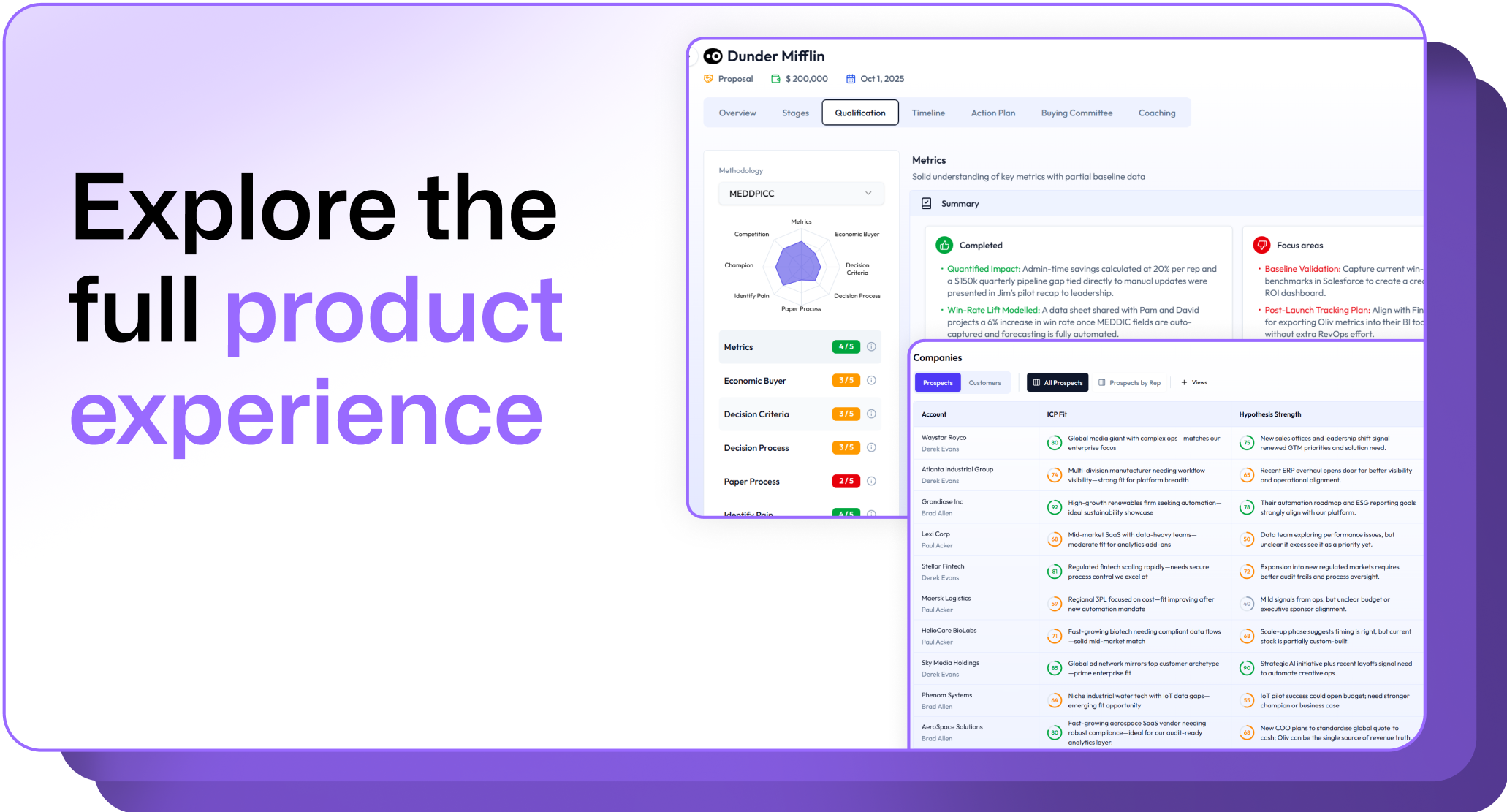
.avif)
.png)






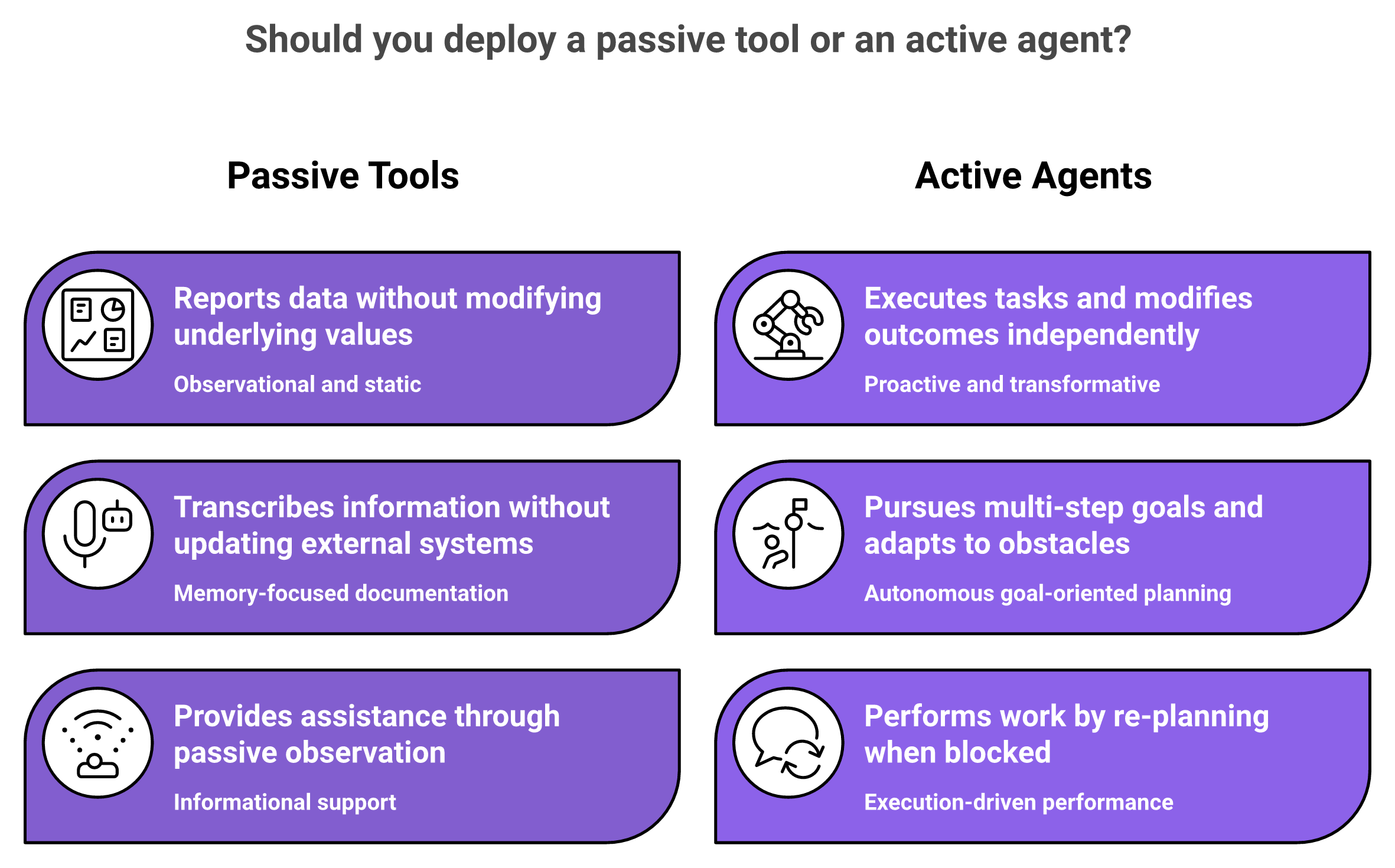
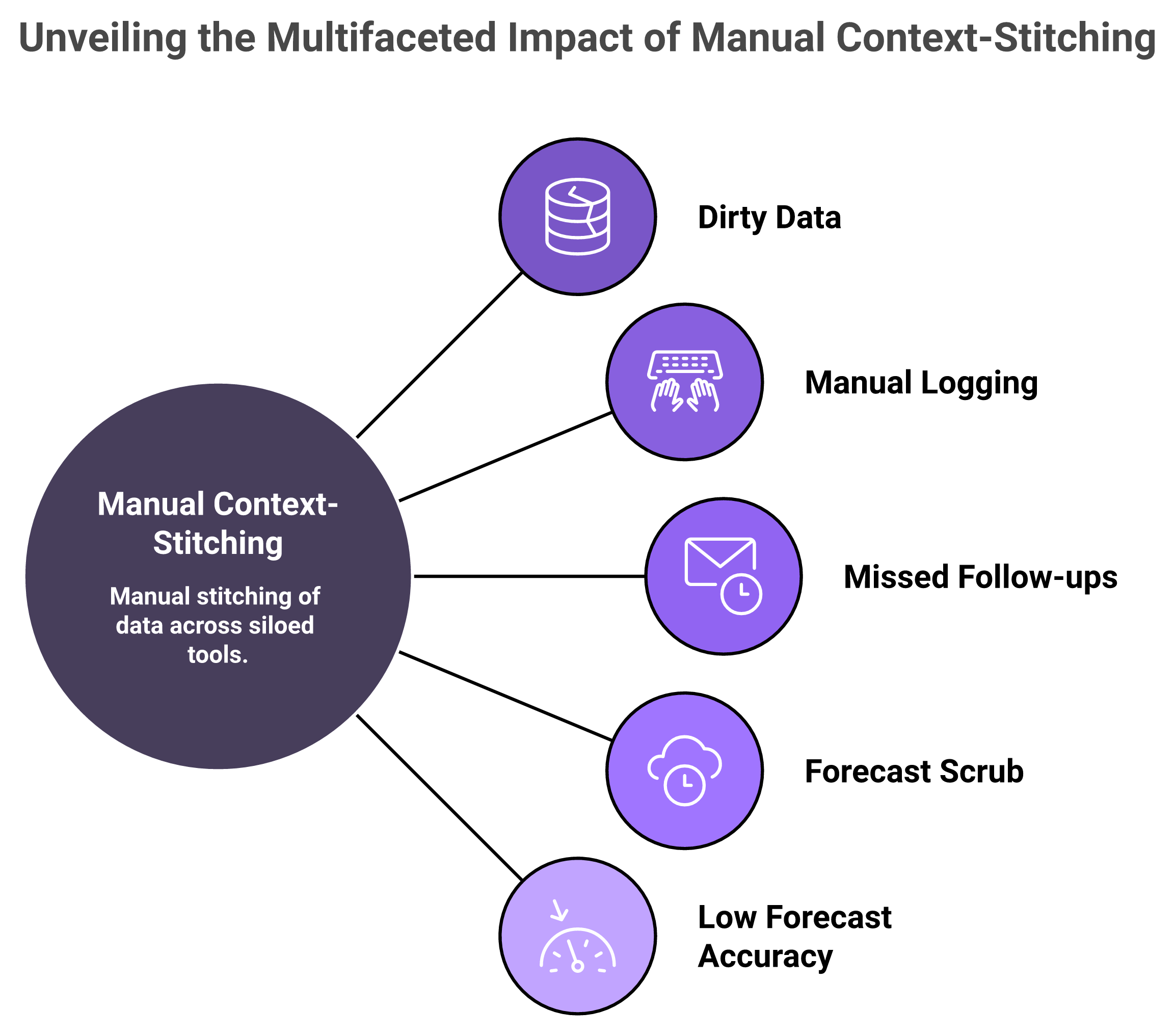
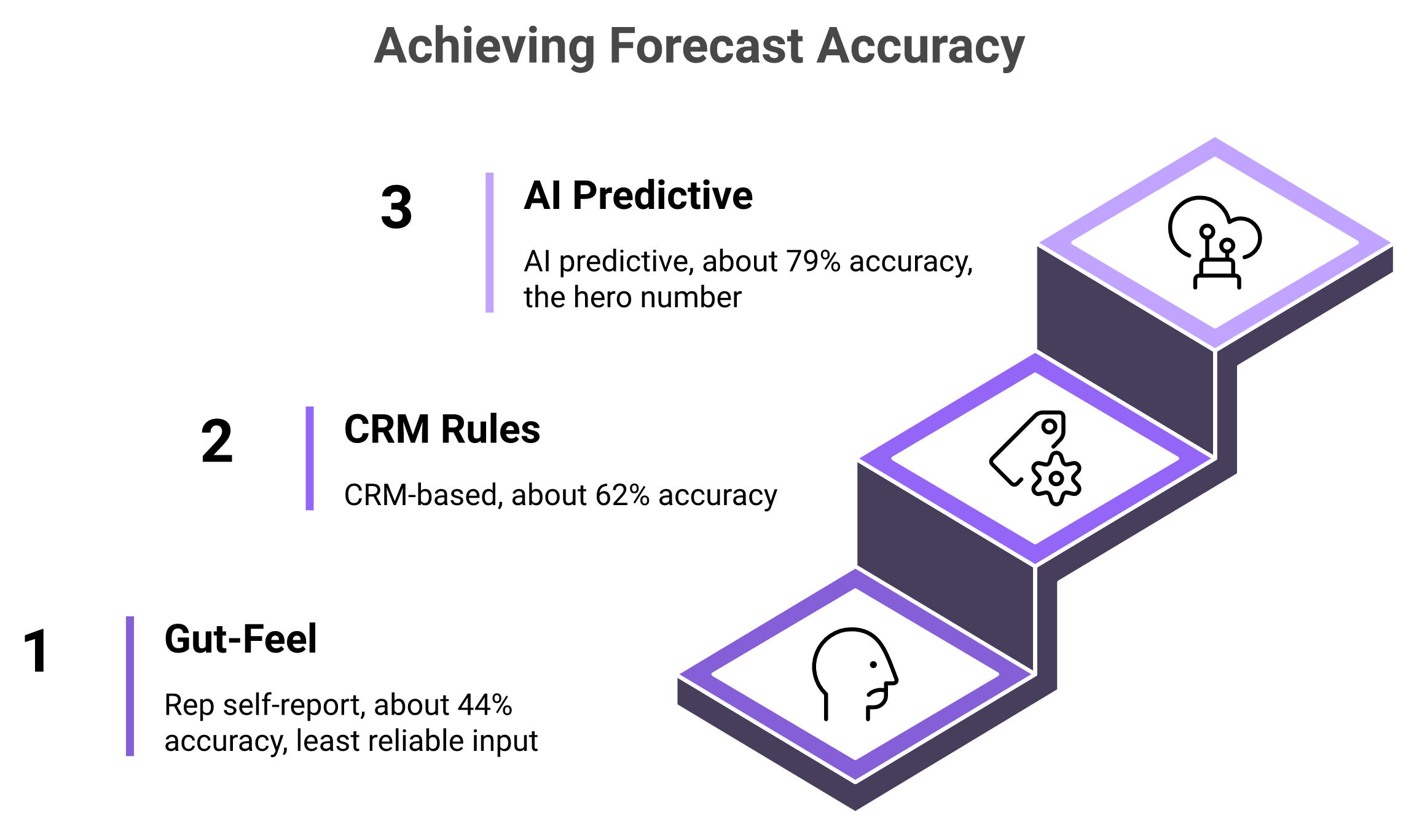
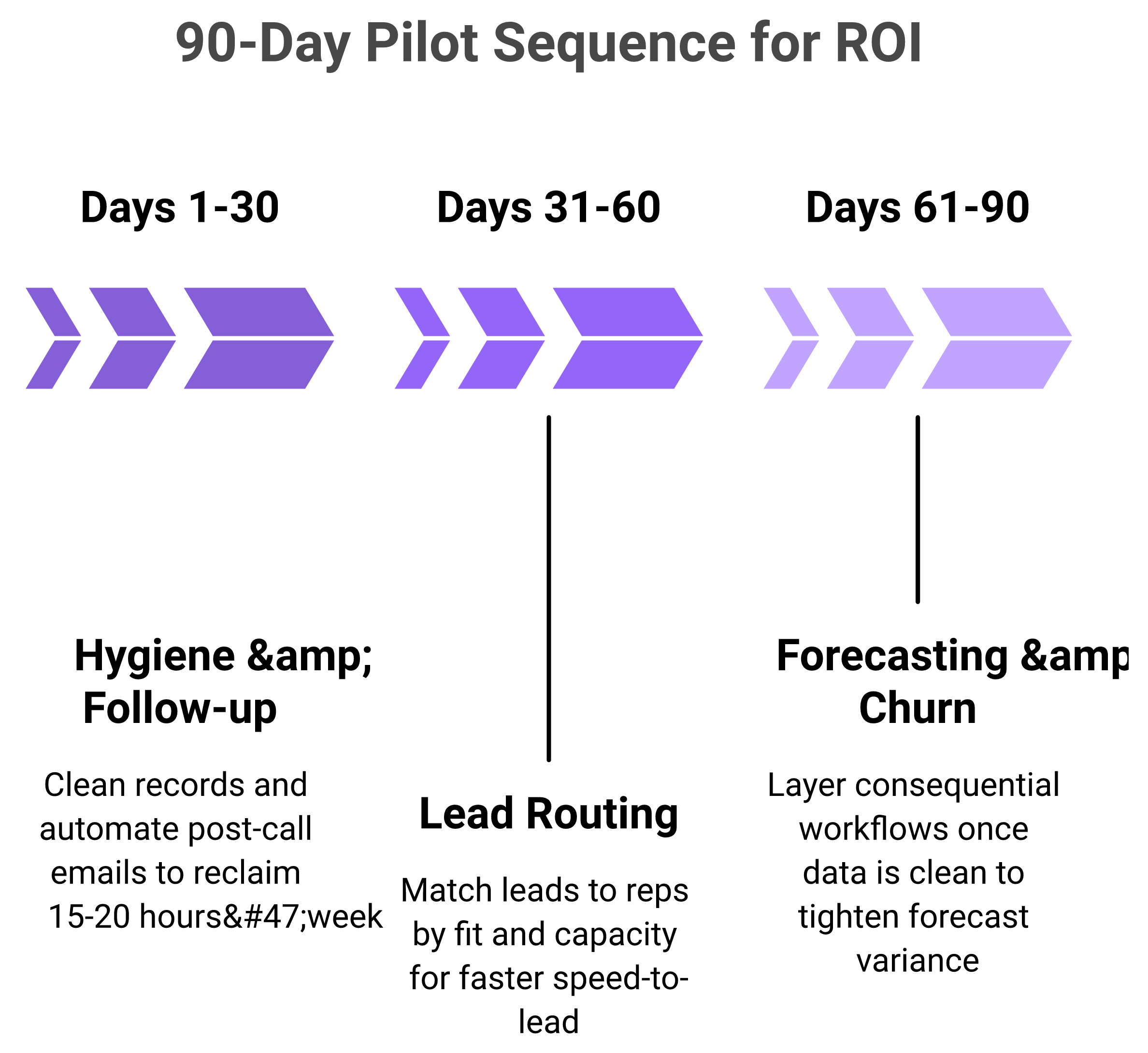

.png)
.png)
.png)
.png)

