All your deal data unified (from 30+ tools and tabs).
Insights are delivered to you directly, no digging.
AI agents automate tasks for you.
Thank you! Your submission has been received!
Oops! Something went wrong while submitting the form.
Meet Oliv’s AI Agents
Hi! I’m, Deal Driver
I track deals, flag risks, send weekly pipeline updates and give sales managers full visibility into deal progress
Hi! I’m, CRM Manager
I maintain CRM hygiene by updating core, custom and qualification fields all without your team lifting a finger
Hi! I’m, Forecaster
I build accurate forecasts based on real deal movement and tell you which deals to pull in to hit your number
Hi! I’m, Coach
I believe performance fuels revenue. I spot skill gaps, score calls and build coaching plans to help every rep level up
Hi! I’m, Prospector
I dig into target accounts to surface the right contacts, tailor and time outreach so you always strike when it counts
Hi! I’m, Pipeline tracker
I call reps to get deal updates, and deliver a real-time, CRM-synced roll-up view of deal progress
Hi! I’m, Analyst
I answer complex pipeline questions, uncover deal patterns, and build reports that guide strategic decisions
TL;DR
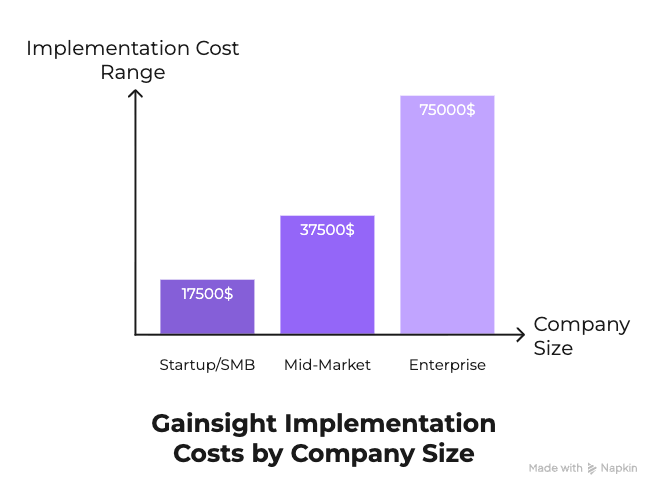
Year 1 costs run 20-30% higher than license fees due to mandatory implementation ($10K-$120K) and training expenses.
Per-user pricing ranges from $1,200 to $4,200 annually, with volume discounts dropping costs 50% at 500 users versus 10 users.
Implementation timelines span 6 weeks to 6 months, with enterprise deployments requiring dedicated CS ops resources and often third-party consultants.
Gainsight imposes 5-10% annual renewal uplifts unless negotiated away through early signing, multi-year commitments, or competitive leverage.
Teams under 50 users face highest per-user costs and implementation burden relative to value, making alternatives more cost-effective.
AI-native platforms deliver insights in days versus Gainsight's 4-6 month time-to-value, fundamentally changing the ROI equation for lean CS teams.
Q1. What Is Gainsight and Which Product Do You Actually Need? [toc=Product Overview]
Gainsight is the leading enterprise customer success platform, recognized by Forrester as a market leader in customer success management. Before diving into pricing, understanding which Gainsight product aligns with your needs is essential. The company offers three distinct platforms with different pricing models and use cases.
A horizontal stacked bar chart titled "Per-User Pricing Comparison Across Editions" displaying Gainsight's three pricing tiers.
📦 Gainsight's Three Core Products
1. Gainsight Customer Success (CS)
The flagship product, Gainsight CS is designed for customer success teams managing account health, renewals, and expansion revenue. It uses a per-user licensing model based on the number of CS team members accessing the platform.
Best for: CS teams managing customer lifecycle, health scoring, and proactive outreach
Pricing model: Per CS team member license (annual)
Typical buyers: Mid-market to enterprise organizations with dedicated CS operations
2. Gainsight Product Experience (PX)
A product analytics and in-app engagement platform that tracks user behavior within your product. PX uses a Monthly Active User (MAU) pricing model rather than team seats.
Best for: Product teams needing user behavior analytics and in-app guidance
Pricing model: Per MAU (typically $30,000 to $100,000+ annually)
A community platform for building customer forums, knowledge bases, and peer-to-peer support networks. Pricing is based on community member count.
Best for: Organizations building self-service support ecosystems
Pricing model: Per community member ($15,000 to $60,000 annually)
Typical buyers: Companies scaling customer education and peer support
🎯 Which Product Do Most Buyers Evaluate?
For this pricing guide, we focus primarily on Gainsight CS, the core customer success platform that most buyers research when searching for "Gainsight pricing." This is also where Gainsight's most complex pricing tiers exist. Understanding how to build a revenue operations function helps contextualize where Gainsight fits in your tech stack.
⚠️ Important: Many organizations bundle multiple Gainsight products. Purchasing PX or Communities alongside CS during initial negotiation often yields 15 to 25% bundle discounts.
💬 What Users Say About Choosing Gainsight
"Gainsight has become the heart of our insight generation, serving the broader organization effectively. It is truly the backbone of our Customer Success organization." — Verified User, Enterprise (1000+ emp.) G2 Verified Review
"Consider the costs and implementation time. Implementation took us a good 6 months, and now we cannot consider switching because of how entrenched we are with it, even though it is obscenely expensive." — Verified User, Computer Software G2 Verified Review
✅ Quick Product Selection Guide
Gainsight Product Selection Guide
If You Need...
Choose
Pricing Basis
Account health scoring and CS workflows
Gainsight CS
Per CS team member
Product usage analytics and in-app guides
Gainsight PX
Per MAU
Customer community and self-service
Communities
Per community member
All of the above
Bundle (negotiate 15 to 25% off)
Combined
Oliv.ai Alternative: For teams seeking customer intelligence without the complexity of choosing between multiple products and pricing models, Oliv provides unified AI-led insights across the entire customer journey, delivering signals proactively rather than requiring separate platform purchases for different use cases. Explore how AI-Native Revenue Orchestration simplifies this decision entirely.
Q2. How Much Does Gainsight Cost in 2026? (Complete Per-User Breakdown) [toc=2026 Pricing Breakdown]
Gainsight does not publicly disclose pricing, requiring buyers to contact sales for quotes. However, verified purchase data from Vendr (based on 102 recent transactions) provides reliable benchmarks across all three CS editions.
💰 Gainsight Pricing Model Overview
Gainsight CS charges based on the number of Customer Success team member licenses. There is no separate base platform fee. Pricing is structured entirely on a per-user annual license model with volume discounts at scale.
Three Editions Available:
Essentials: Core health scoring, journey orchestration, basic automation
Per-user costs decrease 40 to 50% as team size scales:
At 10 users: $2,400 to $4,200 per user (depending on edition)
At 500 users: $1,200 to $2,400 per user
💸 Key Insight: At 500 users, you're paying approximately 50% less per user than at 10 users across all editions.
Oliv.ai Alternative: For teams seeking transparent, modular pricing without volume-based negotiations, Oliv offers pay-for-what-you-use plans starting significantly lower, with no mandatory platform fees at entry tiers. Learn how to reduce sales tech stack costs with modern alternatives.
Q3. What Features Unlock at Each Gainsight Pricing Tier? [toc=Feature Comparison by Tier]
Understanding what capabilities each Gainsight edition includes helps justify the price difference between Essentials ($1,200 to $2,400/user) and Enterprise ($2,400 to $4,200/user).
✅ Features Included in All Editions (Mandatory/Base)
Every Gainsight CS license includes these core capabilities:
Customer health scoring
Journey orchestration
Success plans
Email automation
Cockpit (task management)
Basic reporting and dashboards
Salesforce integration (standard)
Teams evaluating feature requirements should also explore the best sales intelligence platforms to understand modern capability benchmarks.
📋 Feature Comparison by Tier
Gainsight Feature Comparison by Edition
Feature
Essentials
Essentials+
Enterprise
Health Scoring
✅
✅
✅
Journey Orchestration
✅
✅
✅
Success Plans
✅
✅
✅
Email Automation
✅
✅
✅
Cockpit Task Management
✅
✅
✅
Basic Reporting
✅
✅
✅
Salesforce Integration
✅
✅
✅
Advanced Automation
❌
✅
✅
Deeper Integrations
❌
✅
✅
Custom Workflows
❌
❌
✅
API Access
❌
❌
✅
Dedicated Support
❌
❌
✅
Enterprise Security/Compliance
❌
❌
✅
💰 Optional Add-Ons (Separate Pricing)
These modules require additional investment beyond your base CS license:
Gainsight Optional Add-On Modules Pricing
Add-On Module
Pricing Model
Typical Annual Cost
Gainsight PX (Product Experience)
Per MAU
$30,000 to $100,000+
Customer Communities
Per member
$15,000 to $60,000
Customer Education (Skilljar)
Per learner
$20,000 to $80,000
Advanced Analytics and BI
Flat fee/% of contract
$10,000 to $30,000
Premium Support
% of ACV
8 to 12% of ACV
Additional Integrations
Per integration
$2,000 to $8,000 each
⚠️ Hidden Cost Alert: Premium support (8 to 12% of ACV) is often required for Enterprise deals, adding $25,000 to $100,000+ annually depending on contract size.
💬 What Users Say About Features vs. Complexity
"The product itself has a lot of potential, but when building anything remotely close to complex, limitations block the ability to fully create a robust system." — Daniel K., CS Operations Manager, Mid-Market G2 Verified Review
"There is an excessive focus on AI at the expense of addressing basic features, parity issues, and stability problems that, if resolved, would significantly improve the platform." — Verified User, Enterprise (1000+ emp.) G2 Verified Review
🎯 Which Tier Should You Choose?
Gainsight Tier Selection Guide
Choose This Tier
If You Need...
Budget Range (50 users)
Essentials
Core CS workflows, starting fast
$75K to $108K/year
Essentials+
Advanced automation, deeper integrations
$96K to $168K/year
Enterprise
Custom workflows, API, compliance, dedicated support
$144K to $216K/year
Oliv.ai Alternative: Rather than paying premium tiers to unlock automation and integrations, Oliv's AI agents deliver advanced capabilities, like automated CRM updates, proactive deal signals, and intelligent forecasting, without tiered feature gating. Discover how the best AI sales tools are reshaping the feature-to-price equation.
Q4. What Is Gainsight's True Total Cost of Ownership? [toc=True Total Cost]
The quoted license price for Gainsight rarely reflects what organizations actually pay. Based on verified Vendr data, Year 1 total costs run 20 to 30% higher than the license fee alone due to mandatory implementation, training, and data migration expenses.
💰 Year 1 vs Year 2+ Cost Comparison
Gainsight Year 1 vs Year 2+ Cost Comparison by Edition
Edition
Team Size
Year 1 Total Cost
Year 2+ Recurring
Essentials
50 users
$126,000 to $142,000
$108,000 to $119,000
Essentials+
100 users
$284,000 to $316,000
$252,000 to $277,000
Enterprise
250 users
$825,000 to $895,000
$750,000 to $825,000
Year 1 = License + Implementation + Training | Year 2+ = License + 5 to 10% uplift
⚠️ The Hidden Cost Problem with Legacy CS Platforms
Traditional customer success platforms like Gainsight require substantial upfront investment beyond the software license. Implementation timelines range from 6 to 8 weeks for smaller deployments to 4 to 6 months for complex enterprise rollouts. Many buyers opt for third-party implementation partners, which can add 20 to 30% to implementation costs.
The hidden cost reality includes:
Data migration: $5,000 to $50,000 depending on complexity
Training: $3,000 to $40,000 based on team size and depth
Premium support: 8 to 12% of annual contract value (often required for Enterprise)
Annual uplift clauses: 5 to 10% price increases at renewal unless negotiated away
"Just make sure you have a LOT of dedicated resources to managing the implementation. You need deep commitments from your customer teams, your Salesforce admins, and engineering team for integrations." — Verified User, Information Technology G2 Verified Review
⏰ The AI Era Shift: Time to Value Over Configuration Debt
Modern AI native platforms are fundamentally rethinking the cost equation. Instead of months spent configuring health scores, building playbooks, and training teams on dashboard navigation, AI led tools surface intelligence immediately without the configuration debt that makes legacy platforms expensive to implement and maintain.
The question is not just "how much does it cost?" but "how long until we see value?" With traditional platforms, organizations invest $75K to $150K before seeing any return, with full ROI often taking 12 to 18 months post purchase. This shift represents the future of revenue intelligence that forward thinking CS teams are embracing.
✅ How Oliv Eliminates Configuration Overhead
Oliv takes a fundamentally different approach to total cost of ownership. With baseline configuration in 5 minutes and core value delivered in 1 to 2 days, we eliminate the implementation tax that makes legacy CS platforms so expensive in Year 1.
There are no mandatory professional services fees. No 4 to 6 month implementation timelines. Our AI agents, including the CRM Manager Agent and Deal Driver Agent, work immediately without requiring health score calibration or playbook configuration. The platform surfaces what matters proactively, rather than waiting for humans to build reports. This approach helps teams reduce sales tech stack costs significantly.
"Consider the costs and implementation time. Implementation took us a good 6 months, and now we cannot consider switching because of how entrenched we are with it, even though it is obscenely expensive." — Verified User, Computer Software G2 Verified Review
Q5. How Does Gainsight Pricing Compare to ChurnZero, Totango, and Alternatives? [toc=Competitor Pricing Comparison]
All major customer success platforms, including Gainsight, ChurnZero, and Totango, operate on similar per seat pricing models with comparable enterprise tiers. The competitive landscape often becomes a "which dashboard do you prefer" decision rather than a fundamentally different approach to customer intelligence.
While these incumbents compete on features and integrations, they share the same fundamental operational burden: months to implement, dedicated admins to maintain, and dashboards that require humans to interpret and act upon. When evaluating the best revenue intelligence software platforms, this operational overhead becomes a critical consideration.
"Setting up our ChurnZero instance has involved a significant amount of manual administration. The data transfer from our CRM to Salesforce is not straightforward, which has forced us to create numerous workarounds." — Brandon O., Client Education Manager G2 Verified Review
"You quickly uncover that with a more simplistic setup, there is less product functionality than competitors." — Tim M., Director, Customer Success Programs G2 Verified Review
🔄 The Emerging AI Native Category
A new category of CS tools is emerging that leads with intelligence rather than workflow configuration. These platforms surface signals proactively, flagging at risk accounts, identifying expansion opportunities, and delivering insights, without requiring users to first build reports and configure health scores.
Oliv is not competing with Gainsight, ChurnZero, or Totango on feature parity. We are delivering AI led intelligence that tells CS teams what to do, not just what happened.
The Deal Driver Agent flags at risk accounts daily and delivers insights directly to your inbox. The Forecaster Agent produces unbiased weekly roll ups without manual input. There is no dashboard to dig through, signals come to you. This positions Oliv as a leading revenue orchestration platform for modern teams.
Traditional CS Platforms vs Oliv Comparison
Dimension
Gainsight/ChurnZero/Totango
Oliv
Primary value
Workflow management
AI led signals
Implementation
Weeks to months
Days
Ops overhead
Dedicated admin required
Minimal
Insight delivery
Dashboard first
Proactive push
Q6. What ROI Should You Expect from Gainsight and How Long Does It Take? [toc=Expected ROI Timeline]
Gainsight's published case studies claim meaningful ROI: improved retention rates, 10%+ incremental revenue from CS efforts, and operational efficiency gains. For complex enterprises with dedicated CS ops teams seeking end to end alignment, these outcomes are achievable.
⏰ The ROI Timeline Challenge
The critical question is not whether Gainsight delivers ROI, it is when. Gainsight's average time to verified outcome is approximately 4 months from contract signing, meaning organizations invest $75K to $150K before seeing any measurable return. Full ROI realization often takes 12 to 18 months post purchase.
Timeline breakdown:
Months 1 to 2: Implementation, configuration, data migration
Months 3 to 4: Training, adoption, health score calibration
Months 5 to 6: Initial playbook refinement, workflow optimization
Months 7 to 12: Measurable outcomes begin appearing
Months 12 to 18: Full ROI realization
This extended timeline contrasts sharply with what teams experience when leveraging best AI sales forecasting software that delivers value immediately.
"The issues I have are likely more related to our specific setup than to Gainsight itself, but I also feel that Gainsight hasn't provided the support we need to resolve them. Currently, it isn't addressing the challenges we face, and we're experiencing minimal benefit." — Alberto S., Enterprise G2 Verified Review
💭 Reframing ROI: Time to Insight, Not Time to Dashboard
Modern CS teams need to identify at risk accounts today, not after months of health score calibration and playbook configuration. The relevant metric is not "time to dashboard" but "time to insight."
Traditional platforms require extensive setup before delivering value: configure health scores, build playbooks, train teams on navigation, customize dashboards. Only then can you start identifying which accounts need attention. Teams exploring deal intelligence solutions are increasingly prioritizing speed to insight.
"There is an excessive focus on AI at the expense of addressing basic features, parity issues, and stability problems that, if resolved, would significantly improve the platform." — Verified User, Enterprise G2 Verified Review
✅ How Oliv Delivers Immediate ROI
Oliv's AI agents begin surfacing churn signals, expansion opportunities, and customer health insights from Day 1 without waiting for configuration.
The Health Monitor Agent scans accounts weekly for usage and support ticket anomalies, alerting CSMs before risk peaks. The Retention Forecaster Agent identifies accounts likely to churn based on behavioral signals, not manually configured health scores.
Value is delivered in days, not quarters. Core deployment takes 1 to 2 days versus Gainsight's 4 to 6 month implementation cycle. For teams that need signals and speed over configuration and complexity, this fundamentally changes the ROI equation. Discover how the best AI sales tools are transforming time to value expectations across the industry.
Q7. How to Negotiate the Best Gainsight Pricing Deal [toc=Negotiation Playbook]
Gainsight's list pricing is negotiable. Buyers who leverage timing, competitive pressure, and multi year commitments routinely secure 15 to 20% below the 25th percentile on verified Vendr benchmarks.
⏰ Step 1: Time Your Negotiation Strategically
Vendors are most flexible during specific periods:
Quarter end (March, June, September, December): Sales teams push to hit quota
Early renewal (60 to 90 days before contract expires): Leverage your renewal window
Fiscal year end: Maximum flexibility for volume discounts
Gainsight typically imposes a 5 to 10% annual uplift at renewal, but buyers successfully waive this by signing early or committing to multi year terms. Understanding how to reduce sales tech stack costs through smart negotiations is essential for RevOps leaders.
💰 Step 2: Arm Yourself with Competitive Quotes
Before entering negotiations, obtain formal quotes from:
ChurnZero (mid market alternative)
Totango (product led growth focus)
Catalyst (modern interface option)
Presenting competitive alternatives creates pricing pressure and establishes market rate benchmarks. Exploring the best revenue intelligence software platforms gives you leverage during vendor discussions.
✅ Step 3: Negotiate Implementation Separately
Implementation costs ($10K to $120K) are often more negotiable than license fees:
Request bundled implementation pricing (10 to 15% discount when combined with license)
Propose phased rollouts to spread costs across fiscal years
Leverage Gainsight's free community resources (Pulse community) to reduce training costs by 40 to 60%
💸 Step 4: Address Hidden Cost Levers
Gainsight Hidden Cost Negotiation Tactics
Cost Lever
Negotiation Tactic
Annual uplift (5 to 10%)
Request cap at 3% or waive entirely
Premium support (8 to 12% ACV)
Bundle into base license for Enterprise
Data migration ($5K to $50K)
Request vendor assisted migration
Add on modules
Bundle PX/Communities for 15 to 25% discount
Source: Vendr verified buyer data
📋 Step 5: Commit to Multi Year Terms (Strategically)
Multi year contracts (2 to 3 years) unlock the deepest discounts but carry risk. Best practice:
Secure price lock provisions preventing mid term increases
Include right to terminate clauses after Year 1 with prorated refund
Negotiate user flex provisions (plus or minus 10% seat adjustments)
✅ How Oliv Simplifies Procurement: Oliv's transparent, usage based pricing eliminates the negotiation overhead. No implementation fees, no mandatory professional services, and no annual uplift clauses, just straightforward per agent pricing with immediate value delivery. This represents the future of revenue intelligence where complexity gives way to simplicity.
Q8. Is Gainsight Right for Your Team Size and Budget? (Decision Framework) [toc=Team Size Decision Framework]
Gainsight excels for organizations with 100+ CS users, dedicated CS operations capacity, enterprise compliance requirements, and budget for 4 to 6 month implementations. The platform has maintained Forrester leadership status for good reason, it is comprehensive, powerful, and deeply configurable.
❌ Where Gainsight Over Engineers
Teams under 50 users face the highest per user costs ($2,400 to $4,200/user at the 10 user tier). The implementation burden is relatively heaviest for smaller teams, and the dashboard first model requires dedicated CS ops roles that startups cannot afford.
"Evaluate if this product will bring actual value or if it will slow teams down by adding an additional tool to check and work in." — Verified User, Computer Software G2 Verified Review
"The implementation/integration is a nightmare. You really need to have dedicated resources to managing and ongoing administration on this tool." — Verified User, Information Technology G2 Verified Review
A vertical bar chart titled "Gainsight Implementation Costs by Company Size" with three purple bars of increasing height.
🔄 The Modern CS Buyer Profile
A different buyer profile is emerging: CS leaders who want to see what matters and act quickly, without months of setup or dedicated admin resources. Modern lean CS teams need signals, not systems. When building a revenue operations function, choosing the right tooling matters immensely.
The question is not "which dashboard is most comprehensive?" but "do I need a dashboard at all?"
✅ How Oliv Fits the Modern CS Team
Oliv is purpose built for teams that prioritize signals over systems, speed over comprehensiveness, and AI led insight over configuration led workflows.
We serve 5 to 200 rep teams seeking out of the box value. The MAP Manager Agent creates and updates mutual action plans automatically. The QBR Builder Agent drafts quarterly business review decks by pulling live customer outcomes, no manual assembly required. This is AI Native Revenue Orchestration in action.
📋 Decision Tree
Gainsight vs Oliv Decision Framework
Choose Gainsight If...
Choose Oliv If...
100+ CS users
Less than 100 users
Dedicated CS ops team
No dedicated ops capacity
Enterprise compliance requirements
Need insights in days, not months
4 to 6 month implementation capacity
Prioritize speed over feature breadth
Budget for $150K+ Year 1 spend
Want immediate ROI without configuration debt
Q9. What Are the Best Gainsight Alternatives for Modern CS Teams? [toc=Best Alternatives]
The CS platform landscape includes legitimate alternatives: ChurnZero for mid market teams wanting Gainsight like features at lower cost, Totango for product led growth motions, Catalyst and Vitally for modern interfaces with faster implementation.
⚠️ The Category Convergence Problem
Switching from Gainsight to ChurnZero or Totango often means trading one configuration heavy system for another, same ops overhead, similar implementation timelines, comparable learning curves. The category is converging on feature parity. Teams evaluating their options should explore the best sales intelligence platforms available today.
"Setting up our ChurnZero instance has involved a significant amount of manual administration. The data transfer from our CRM to Salesforce is not straightforward, which has forced us to create numerous workarounds." — Brandon O., Client Education Manager G2 Verified Review
"You quickly uncover that with a more simplistic setup, there is less product functionality than competitors." — Tim M., Director, Customer Success Programs G2 Verified Review
🔄 The Fundamental Alternative: AI Led Intelligence
A different category is emerging, platforms that lead with AI intelligence rather than workflow configuration. These tools do not require health score calibration or playbook building; they surface what matters proactively. This shift from revenue ops to intelligence to orchestration is reshaping how CS teams operate.
The relevant comparison is not "which dashboard is better" but "dashboard first vs. intelligence first."
✅ Oliv: Purpose Built for Modern, Leaner CS Teams
Unlike the Gainsight/ChurnZero/Totango category, Oliv delivers AI led intelligence without platform fees or implementation overhead.
The Expansion Signal Detection Agent recognizes cross sell intent during MBRs. Engagement Heatmaps identify which accounts in a 100 account book have not had meaningful engagement. Value is delivered proactively, not through reports you must build. This positions Oliv among the best deal intelligence platforms for modern revenue teams.
Traditional CS Platforms vs Oliv Comparison
Dimension
Gainsight/ChurnZero/Totango
Oliv
Philosophy
Dashboard first
Intelligence first
Implementation
Weeks to months
Days
Ops requirement
Dedicated admin
Minimal
Value delivery
Build reports, interpret, act
AI tells you what to do
Think of it this way: Traditional tools are manually reviewed CCTV footage. Oliv is a 24/7 intelligent security detail.
Q10. Frequently Asked Questions About Gainsight Pricing [toc=Pricing FAQ]
Does Gainsight offer a free trial?
Gainsight does not offer a traditional free trial. The platform's complexity and required implementation make self service trials impractical. Instead, Gainsight provides guided demos and proof of concept engagements for serious buyers. Implementation timelines of 6 to 8 weeks (minimum) make "try before you buy" challenging.
What is the minimum contract length?
Gainsight typically requires 12 month minimum contracts. Multi year commitments (2 to 3 years) unlock significant discounts (15 to 20% below standard pricing) but reduce flexibility. Buyers can negotiate year to year terms but typically pay premium pricing.
Is Gainsight worth it for small teams?
For teams under 50 users, Gainsight's value proposition weakens:
Highest per user costs: $2,400 to $4,200/user at small scale
Implementation burden: Same 6 to 8 week minimum regardless of team size
Ops overhead: Requires dedicated admin capacity most small teams lack
"Consider the costs and implementation time. Implementation took us a good 6 months, and now we cannot consider switching because of how entrenched we are with it, even though it is obscenely expensive." — Verified User, Computer Software G2 Verified Review
How does Gainsight charge, per user or per account?
Gainsight prices based on CS team member licenses (users), not managed accounts. Volume discounts apply as team size increases, per user costs drop approximately 50% when scaling from 10 to 500 users.
✅ How Oliv Differs: Oliv requires no implementation fees and delivers core value in 1 to 2 days. Configuration happens in minutes, not months, eliminating the procurement complexity that makes CS platform decisions so high stakes. Discover why teams are choosing the best AI sales tools that prioritize immediate time to value.
Q1. What Is Gainsight and Which Product Do You Actually Need? [toc=Product Overview]
Gainsight is the leading enterprise customer success platform, recognized by Forrester as a market leader in customer success management. Before diving into pricing, understanding which Gainsight product aligns with your needs is essential. The company offers three distinct platforms with different pricing models and use cases.
A horizontal stacked bar chart titled "Per-User Pricing Comparison Across Editions" displaying Gainsight's three pricing tiers.
📦 Gainsight's Three Core Products
1. Gainsight Customer Success (CS)
The flagship product, Gainsight CS is designed for customer success teams managing account health, renewals, and expansion revenue. It uses a per-user licensing model based on the number of CS team members accessing the platform.
Best for: CS teams managing customer lifecycle, health scoring, and proactive outreach
Pricing model: Per CS team member license (annual)
Typical buyers: Mid-market to enterprise organizations with dedicated CS operations
2. Gainsight Product Experience (PX)
A product analytics and in-app engagement platform that tracks user behavior within your product. PX uses a Monthly Active User (MAU) pricing model rather than team seats.
Best for: Product teams needing user behavior analytics and in-app guidance
Pricing model: Per MAU (typically $30,000 to $100,000+ annually)
A community platform for building customer forums, knowledge bases, and peer-to-peer support networks. Pricing is based on community member count.
Best for: Organizations building self-service support ecosystems
Pricing model: Per community member ($15,000 to $60,000 annually)
Typical buyers: Companies scaling customer education and peer support
🎯 Which Product Do Most Buyers Evaluate?
For this pricing guide, we focus primarily on Gainsight CS, the core customer success platform that most buyers research when searching for "Gainsight pricing." This is also where Gainsight's most complex pricing tiers exist. Understanding how to build a revenue operations function helps contextualize where Gainsight fits in your tech stack.
⚠️ Important: Many organizations bundle multiple Gainsight products. Purchasing PX or Communities alongside CS during initial negotiation often yields 15 to 25% bundle discounts.
💬 What Users Say About Choosing Gainsight
"Gainsight has become the heart of our insight generation, serving the broader organization effectively. It is truly the backbone of our Customer Success organization." — Verified User, Enterprise (1000+ emp.) G2 Verified Review
"Consider the costs and implementation time. Implementation took us a good 6 months, and now we cannot consider switching because of how entrenched we are with it, even though it is obscenely expensive." — Verified User, Computer Software G2 Verified Review
✅ Quick Product Selection Guide
Gainsight Product Selection Guide
If You Need...
Choose
Pricing Basis
Account health scoring and CS workflows
Gainsight CS
Per CS team member
Product usage analytics and in-app guides
Gainsight PX
Per MAU
Customer community and self-service
Communities
Per community member
All of the above
Bundle (negotiate 15 to 25% off)
Combined
Oliv.ai Alternative: For teams seeking customer intelligence without the complexity of choosing between multiple products and pricing models, Oliv provides unified AI-led insights across the entire customer journey, delivering signals proactively rather than requiring separate platform purchases for different use cases. Explore how AI-Native Revenue Orchestration simplifies this decision entirely.
Q2. How Much Does Gainsight Cost in 2026? (Complete Per-User Breakdown) [toc=2026 Pricing Breakdown]
Gainsight does not publicly disclose pricing, requiring buyers to contact sales for quotes. However, verified purchase data from Vendr (based on 102 recent transactions) provides reliable benchmarks across all three CS editions.
💰 Gainsight Pricing Model Overview
Gainsight CS charges based on the number of Customer Success team member licenses. There is no separate base platform fee. Pricing is structured entirely on a per-user annual license model with volume discounts at scale.
Three Editions Available:
Essentials: Core health scoring, journey orchestration, basic automation
Per-user costs decrease 40 to 50% as team size scales:
At 10 users: $2,400 to $4,200 per user (depending on edition)
At 500 users: $1,200 to $2,400 per user
💸 Key Insight: At 500 users, you're paying approximately 50% less per user than at 10 users across all editions.
Oliv.ai Alternative: For teams seeking transparent, modular pricing without volume-based negotiations, Oliv offers pay-for-what-you-use plans starting significantly lower, with no mandatory platform fees at entry tiers. Learn how to reduce sales tech stack costs with modern alternatives.
Q3. What Features Unlock at Each Gainsight Pricing Tier? [toc=Feature Comparison by Tier]
Understanding what capabilities each Gainsight edition includes helps justify the price difference between Essentials ($1,200 to $2,400/user) and Enterprise ($2,400 to $4,200/user).
✅ Features Included in All Editions (Mandatory/Base)
Every Gainsight CS license includes these core capabilities:
Customer health scoring
Journey orchestration
Success plans
Email automation
Cockpit (task management)
Basic reporting and dashboards
Salesforce integration (standard)
Teams evaluating feature requirements should also explore the best sales intelligence platforms to understand modern capability benchmarks.
📋 Feature Comparison by Tier
Gainsight Feature Comparison by Edition
Feature
Essentials
Essentials+
Enterprise
Health Scoring
✅
✅
✅
Journey Orchestration
✅
✅
✅
Success Plans
✅
✅
✅
Email Automation
✅
✅
✅
Cockpit Task Management
✅
✅
✅
Basic Reporting
✅
✅
✅
Salesforce Integration
✅
✅
✅
Advanced Automation
❌
✅
✅
Deeper Integrations
❌
✅
✅
Custom Workflows
❌
❌
✅
API Access
❌
❌
✅
Dedicated Support
❌
❌
✅
Enterprise Security/Compliance
❌
❌
✅
💰 Optional Add-Ons (Separate Pricing)
These modules require additional investment beyond your base CS license:
Gainsight Optional Add-On Modules Pricing
Add-On Module
Pricing Model
Typical Annual Cost
Gainsight PX (Product Experience)
Per MAU
$30,000 to $100,000+
Customer Communities
Per member
$15,000 to $60,000
Customer Education (Skilljar)
Per learner
$20,000 to $80,000
Advanced Analytics and BI
Flat fee/% of contract
$10,000 to $30,000
Premium Support
% of ACV
8 to 12% of ACV
Additional Integrations
Per integration
$2,000 to $8,000 each
⚠️ Hidden Cost Alert: Premium support (8 to 12% of ACV) is often required for Enterprise deals, adding $25,000 to $100,000+ annually depending on contract size.
💬 What Users Say About Features vs. Complexity
"The product itself has a lot of potential, but when building anything remotely close to complex, limitations block the ability to fully create a robust system." — Daniel K., CS Operations Manager, Mid-Market G2 Verified Review
"There is an excessive focus on AI at the expense of addressing basic features, parity issues, and stability problems that, if resolved, would significantly improve the platform." — Verified User, Enterprise (1000+ emp.) G2 Verified Review
🎯 Which Tier Should You Choose?
Gainsight Tier Selection Guide
Choose This Tier
If You Need...
Budget Range (50 users)
Essentials
Core CS workflows, starting fast
$75K to $108K/year
Essentials+
Advanced automation, deeper integrations
$96K to $168K/year
Enterprise
Custom workflows, API, compliance, dedicated support
$144K to $216K/year
Oliv.ai Alternative: Rather than paying premium tiers to unlock automation and integrations, Oliv's AI agents deliver advanced capabilities, like automated CRM updates, proactive deal signals, and intelligent forecasting, without tiered feature gating. Discover how the best AI sales tools are reshaping the feature-to-price equation.
Q4. What Is Gainsight's True Total Cost of Ownership? [toc=True Total Cost]
The quoted license price for Gainsight rarely reflects what organizations actually pay. Based on verified Vendr data, Year 1 total costs run 20 to 30% higher than the license fee alone due to mandatory implementation, training, and data migration expenses.
💰 Year 1 vs Year 2+ Cost Comparison
Gainsight Year 1 vs Year 2+ Cost Comparison by Edition
Edition
Team Size
Year 1 Total Cost
Year 2+ Recurring
Essentials
50 users
$126,000 to $142,000
$108,000 to $119,000
Essentials+
100 users
$284,000 to $316,000
$252,000 to $277,000
Enterprise
250 users
$825,000 to $895,000
$750,000 to $825,000
Year 1 = License + Implementation + Training | Year 2+ = License + 5 to 10% uplift
⚠️ The Hidden Cost Problem with Legacy CS Platforms
Traditional customer success platforms like Gainsight require substantial upfront investment beyond the software license. Implementation timelines range from 6 to 8 weeks for smaller deployments to 4 to 6 months for complex enterprise rollouts. Many buyers opt for third-party implementation partners, which can add 20 to 30% to implementation costs.
The hidden cost reality includes:
Data migration: $5,000 to $50,000 depending on complexity
Training: $3,000 to $40,000 based on team size and depth
Premium support: 8 to 12% of annual contract value (often required for Enterprise)
Annual uplift clauses: 5 to 10% price increases at renewal unless negotiated away
"Just make sure you have a LOT of dedicated resources to managing the implementation. You need deep commitments from your customer teams, your Salesforce admins, and engineering team for integrations." — Verified User, Information Technology G2 Verified Review
⏰ The AI Era Shift: Time to Value Over Configuration Debt
Modern AI native platforms are fundamentally rethinking the cost equation. Instead of months spent configuring health scores, building playbooks, and training teams on dashboard navigation, AI led tools surface intelligence immediately without the configuration debt that makes legacy platforms expensive to implement and maintain.
The question is not just "how much does it cost?" but "how long until we see value?" With traditional platforms, organizations invest $75K to $150K before seeing any return, with full ROI often taking 12 to 18 months post purchase. This shift represents the future of revenue intelligence that forward thinking CS teams are embracing.
✅ How Oliv Eliminates Configuration Overhead
Oliv takes a fundamentally different approach to total cost of ownership. With baseline configuration in 5 minutes and core value delivered in 1 to 2 days, we eliminate the implementation tax that makes legacy CS platforms so expensive in Year 1.
There are no mandatory professional services fees. No 4 to 6 month implementation timelines. Our AI agents, including the CRM Manager Agent and Deal Driver Agent, work immediately without requiring health score calibration or playbook configuration. The platform surfaces what matters proactively, rather than waiting for humans to build reports. This approach helps teams reduce sales tech stack costs significantly.
"Consider the costs and implementation time. Implementation took us a good 6 months, and now we cannot consider switching because of how entrenched we are with it, even though it is obscenely expensive." — Verified User, Computer Software G2 Verified Review
Q5. How Does Gainsight Pricing Compare to ChurnZero, Totango, and Alternatives? [toc=Competitor Pricing Comparison]
All major customer success platforms, including Gainsight, ChurnZero, and Totango, operate on similar per seat pricing models with comparable enterprise tiers. The competitive landscape often becomes a "which dashboard do you prefer" decision rather than a fundamentally different approach to customer intelligence.
While these incumbents compete on features and integrations, they share the same fundamental operational burden: months to implement, dedicated admins to maintain, and dashboards that require humans to interpret and act upon. When evaluating the best revenue intelligence software platforms, this operational overhead becomes a critical consideration.
"Setting up our ChurnZero instance has involved a significant amount of manual administration. The data transfer from our CRM to Salesforce is not straightforward, which has forced us to create numerous workarounds." — Brandon O., Client Education Manager G2 Verified Review
"You quickly uncover that with a more simplistic setup, there is less product functionality than competitors." — Tim M., Director, Customer Success Programs G2 Verified Review
🔄 The Emerging AI Native Category
A new category of CS tools is emerging that leads with intelligence rather than workflow configuration. These platforms surface signals proactively, flagging at risk accounts, identifying expansion opportunities, and delivering insights, without requiring users to first build reports and configure health scores.
Oliv is not competing with Gainsight, ChurnZero, or Totango on feature parity. We are delivering AI led intelligence that tells CS teams what to do, not just what happened.
The Deal Driver Agent flags at risk accounts daily and delivers insights directly to your inbox. The Forecaster Agent produces unbiased weekly roll ups without manual input. There is no dashboard to dig through, signals come to you. This positions Oliv as a leading revenue orchestration platform for modern teams.
Traditional CS Platforms vs Oliv Comparison
Dimension
Gainsight/ChurnZero/Totango
Oliv
Primary value
Workflow management
AI led signals
Implementation
Weeks to months
Days
Ops overhead
Dedicated admin required
Minimal
Insight delivery
Dashboard first
Proactive push
Q6. What ROI Should You Expect from Gainsight and How Long Does It Take? [toc=Expected ROI Timeline]
Gainsight's published case studies claim meaningful ROI: improved retention rates, 10%+ incremental revenue from CS efforts, and operational efficiency gains. For complex enterprises with dedicated CS ops teams seeking end to end alignment, these outcomes are achievable.
⏰ The ROI Timeline Challenge
The critical question is not whether Gainsight delivers ROI, it is when. Gainsight's average time to verified outcome is approximately 4 months from contract signing, meaning organizations invest $75K to $150K before seeing any measurable return. Full ROI realization often takes 12 to 18 months post purchase.
Timeline breakdown:
Months 1 to 2: Implementation, configuration, data migration
Months 3 to 4: Training, adoption, health score calibration
Months 5 to 6: Initial playbook refinement, workflow optimization
Months 7 to 12: Measurable outcomes begin appearing
Months 12 to 18: Full ROI realization
This extended timeline contrasts sharply with what teams experience when leveraging best AI sales forecasting software that delivers value immediately.
"The issues I have are likely more related to our specific setup than to Gainsight itself, but I also feel that Gainsight hasn't provided the support we need to resolve them. Currently, it isn't addressing the challenges we face, and we're experiencing minimal benefit." — Alberto S., Enterprise G2 Verified Review
💭 Reframing ROI: Time to Insight, Not Time to Dashboard
Modern CS teams need to identify at risk accounts today, not after months of health score calibration and playbook configuration. The relevant metric is not "time to dashboard" but "time to insight."
Traditional platforms require extensive setup before delivering value: configure health scores, build playbooks, train teams on navigation, customize dashboards. Only then can you start identifying which accounts need attention. Teams exploring deal intelligence solutions are increasingly prioritizing speed to insight.
"There is an excessive focus on AI at the expense of addressing basic features, parity issues, and stability problems that, if resolved, would significantly improve the platform." — Verified User, Enterprise G2 Verified Review
✅ How Oliv Delivers Immediate ROI
Oliv's AI agents begin surfacing churn signals, expansion opportunities, and customer health insights from Day 1 without waiting for configuration.
The Health Monitor Agent scans accounts weekly for usage and support ticket anomalies, alerting CSMs before risk peaks. The Retention Forecaster Agent identifies accounts likely to churn based on behavioral signals, not manually configured health scores.
Value is delivered in days, not quarters. Core deployment takes 1 to 2 days versus Gainsight's 4 to 6 month implementation cycle. For teams that need signals and speed over configuration and complexity, this fundamentally changes the ROI equation. Discover how the best AI sales tools are transforming time to value expectations across the industry.
Q7. How to Negotiate the Best Gainsight Pricing Deal [toc=Negotiation Playbook]
Gainsight's list pricing is negotiable. Buyers who leverage timing, competitive pressure, and multi year commitments routinely secure 15 to 20% below the 25th percentile on verified Vendr benchmarks.
⏰ Step 1: Time Your Negotiation Strategically
Vendors are most flexible during specific periods:
Quarter end (March, June, September, December): Sales teams push to hit quota
Early renewal (60 to 90 days before contract expires): Leverage your renewal window
Fiscal year end: Maximum flexibility for volume discounts
Gainsight typically imposes a 5 to 10% annual uplift at renewal, but buyers successfully waive this by signing early or committing to multi year terms. Understanding how to reduce sales tech stack costs through smart negotiations is essential for RevOps leaders.
💰 Step 2: Arm Yourself with Competitive Quotes
Before entering negotiations, obtain formal quotes from:
ChurnZero (mid market alternative)
Totango (product led growth focus)
Catalyst (modern interface option)
Presenting competitive alternatives creates pricing pressure and establishes market rate benchmarks. Exploring the best revenue intelligence software platforms gives you leverage during vendor discussions.
✅ Step 3: Negotiate Implementation Separately
Implementation costs ($10K to $120K) are often more negotiable than license fees:
Request bundled implementation pricing (10 to 15% discount when combined with license)
Propose phased rollouts to spread costs across fiscal years
Leverage Gainsight's free community resources (Pulse community) to reduce training costs by 40 to 60%
💸 Step 4: Address Hidden Cost Levers
Gainsight Hidden Cost Negotiation Tactics
Cost Lever
Negotiation Tactic
Annual uplift (5 to 10%)
Request cap at 3% or waive entirely
Premium support (8 to 12% ACV)
Bundle into base license for Enterprise
Data migration ($5K to $50K)
Request vendor assisted migration
Add on modules
Bundle PX/Communities for 15 to 25% discount
Source: Vendr verified buyer data
📋 Step 5: Commit to Multi Year Terms (Strategically)
Multi year contracts (2 to 3 years) unlock the deepest discounts but carry risk. Best practice:
Secure price lock provisions preventing mid term increases
Include right to terminate clauses after Year 1 with prorated refund
Negotiate user flex provisions (plus or minus 10% seat adjustments)
✅ How Oliv Simplifies Procurement: Oliv's transparent, usage based pricing eliminates the negotiation overhead. No implementation fees, no mandatory professional services, and no annual uplift clauses, just straightforward per agent pricing with immediate value delivery. This represents the future of revenue intelligence where complexity gives way to simplicity.
Q8. Is Gainsight Right for Your Team Size and Budget? (Decision Framework) [toc=Team Size Decision Framework]
Gainsight excels for organizations with 100+ CS users, dedicated CS operations capacity, enterprise compliance requirements, and budget for 4 to 6 month implementations. The platform has maintained Forrester leadership status for good reason, it is comprehensive, powerful, and deeply configurable.
❌ Where Gainsight Over Engineers
Teams under 50 users face the highest per user costs ($2,400 to $4,200/user at the 10 user tier). The implementation burden is relatively heaviest for smaller teams, and the dashboard first model requires dedicated CS ops roles that startups cannot afford.
"Evaluate if this product will bring actual value or if it will slow teams down by adding an additional tool to check and work in." — Verified User, Computer Software G2 Verified Review
"The implementation/integration is a nightmare. You really need to have dedicated resources to managing and ongoing administration on this tool." — Verified User, Information Technology G2 Verified Review
A vertical bar chart titled "Gainsight Implementation Costs by Company Size" with three purple bars of increasing height.
🔄 The Modern CS Buyer Profile
A different buyer profile is emerging: CS leaders who want to see what matters and act quickly, without months of setup or dedicated admin resources. Modern lean CS teams need signals, not systems. When building a revenue operations function, choosing the right tooling matters immensely.
The question is not "which dashboard is most comprehensive?" but "do I need a dashboard at all?"
✅ How Oliv Fits the Modern CS Team
Oliv is purpose built for teams that prioritize signals over systems, speed over comprehensiveness, and AI led insight over configuration led workflows.
We serve 5 to 200 rep teams seeking out of the box value. The MAP Manager Agent creates and updates mutual action plans automatically. The QBR Builder Agent drafts quarterly business review decks by pulling live customer outcomes, no manual assembly required. This is AI Native Revenue Orchestration in action.
📋 Decision Tree
Gainsight vs Oliv Decision Framework
Choose Gainsight If...
Choose Oliv If...
100+ CS users
Less than 100 users
Dedicated CS ops team
No dedicated ops capacity
Enterprise compliance requirements
Need insights in days, not months
4 to 6 month implementation capacity
Prioritize speed over feature breadth
Budget for $150K+ Year 1 spend
Want immediate ROI without configuration debt
Q9. What Are the Best Gainsight Alternatives for Modern CS Teams? [toc=Best Alternatives]
The CS platform landscape includes legitimate alternatives: ChurnZero for mid market teams wanting Gainsight like features at lower cost, Totango for product led growth motions, Catalyst and Vitally for modern interfaces with faster implementation.
⚠️ The Category Convergence Problem
Switching from Gainsight to ChurnZero or Totango often means trading one configuration heavy system for another, same ops overhead, similar implementation timelines, comparable learning curves. The category is converging on feature parity. Teams evaluating their options should explore the best sales intelligence platforms available today.
"Setting up our ChurnZero instance has involved a significant amount of manual administration. The data transfer from our CRM to Salesforce is not straightforward, which has forced us to create numerous workarounds." — Brandon O., Client Education Manager G2 Verified Review
"You quickly uncover that with a more simplistic setup, there is less product functionality than competitors." — Tim M., Director, Customer Success Programs G2 Verified Review
🔄 The Fundamental Alternative: AI Led Intelligence
A different category is emerging, platforms that lead with AI intelligence rather than workflow configuration. These tools do not require health score calibration or playbook building; they surface what matters proactively. This shift from revenue ops to intelligence to orchestration is reshaping how CS teams operate.
The relevant comparison is not "which dashboard is better" but "dashboard first vs. intelligence first."
✅ Oliv: Purpose Built for Modern, Leaner CS Teams
Unlike the Gainsight/ChurnZero/Totango category, Oliv delivers AI led intelligence without platform fees or implementation overhead.
The Expansion Signal Detection Agent recognizes cross sell intent during MBRs. Engagement Heatmaps identify which accounts in a 100 account book have not had meaningful engagement. Value is delivered proactively, not through reports you must build. This positions Oliv among the best deal intelligence platforms for modern revenue teams.
Traditional CS Platforms vs Oliv Comparison
Dimension
Gainsight/ChurnZero/Totango
Oliv
Philosophy
Dashboard first
Intelligence first
Implementation
Weeks to months
Days
Ops requirement
Dedicated admin
Minimal
Value delivery
Build reports, interpret, act
AI tells you what to do
Think of it this way: Traditional tools are manually reviewed CCTV footage. Oliv is a 24/7 intelligent security detail.
Q10. Frequently Asked Questions About Gainsight Pricing [toc=Pricing FAQ]
Does Gainsight offer a free trial?
Gainsight does not offer a traditional free trial. The platform's complexity and required implementation make self service trials impractical. Instead, Gainsight provides guided demos and proof of concept engagements for serious buyers. Implementation timelines of 6 to 8 weeks (minimum) make "try before you buy" challenging.
What is the minimum contract length?
Gainsight typically requires 12 month minimum contracts. Multi year commitments (2 to 3 years) unlock significant discounts (15 to 20% below standard pricing) but reduce flexibility. Buyers can negotiate year to year terms but typically pay premium pricing.
Is Gainsight worth it for small teams?
For teams under 50 users, Gainsight's value proposition weakens:
Highest per user costs: $2,400 to $4,200/user at small scale
Implementation burden: Same 6 to 8 week minimum regardless of team size
Ops overhead: Requires dedicated admin capacity most small teams lack
"Consider the costs and implementation time. Implementation took us a good 6 months, and now we cannot consider switching because of how entrenched we are with it, even though it is obscenely expensive." — Verified User, Computer Software G2 Verified Review
How does Gainsight charge, per user or per account?
Gainsight prices based on CS team member licenses (users), not managed accounts. Volume discounts apply as team size increases, per user costs drop approximately 50% when scaling from 10 to 500 users.
✅ How Oliv Differs: Oliv requires no implementation fees and delivers core value in 1 to 2 days. Configuration happens in minutes, not months, eliminating the procurement complexity that makes CS platform decisions so high stakes. Discover why teams are choosing the best AI sales tools that prioritize immediate time to value.
Q1. What Is Gainsight and Which Product Do You Actually Need? [toc=Product Overview]
Gainsight is the leading enterprise customer success platform, recognized by Forrester as a market leader in customer success management. Before diving into pricing, understanding which Gainsight product aligns with your needs is essential. The company offers three distinct platforms with different pricing models and use cases.
A horizontal stacked bar chart titled "Per-User Pricing Comparison Across Editions" displaying Gainsight's three pricing tiers.
📦 Gainsight's Three Core Products
1. Gainsight Customer Success (CS)
The flagship product, Gainsight CS is designed for customer success teams managing account health, renewals, and expansion revenue. It uses a per-user licensing model based on the number of CS team members accessing the platform.
Best for: CS teams managing customer lifecycle, health scoring, and proactive outreach
Pricing model: Per CS team member license (annual)
Typical buyers: Mid-market to enterprise organizations with dedicated CS operations
2. Gainsight Product Experience (PX)
A product analytics and in-app engagement platform that tracks user behavior within your product. PX uses a Monthly Active User (MAU) pricing model rather than team seats.
Best for: Product teams needing user behavior analytics and in-app guidance
Pricing model: Per MAU (typically $30,000 to $100,000+ annually)
A community platform for building customer forums, knowledge bases, and peer-to-peer support networks. Pricing is based on community member count.
Best for: Organizations building self-service support ecosystems
Pricing model: Per community member ($15,000 to $60,000 annually)
Typical buyers: Companies scaling customer education and peer support
🎯 Which Product Do Most Buyers Evaluate?
For this pricing guide, we focus primarily on Gainsight CS, the core customer success platform that most buyers research when searching for "Gainsight pricing." This is also where Gainsight's most complex pricing tiers exist. Understanding how to build a revenue operations function helps contextualize where Gainsight fits in your tech stack.
⚠️ Important: Many organizations bundle multiple Gainsight products. Purchasing PX or Communities alongside CS during initial negotiation often yields 15 to 25% bundle discounts.
💬 What Users Say About Choosing Gainsight
"Gainsight has become the heart of our insight generation, serving the broader organization effectively. It is truly the backbone of our Customer Success organization." — Verified User, Enterprise (1000+ emp.) G2 Verified Review
"Consider the costs and implementation time. Implementation took us a good 6 months, and now we cannot consider switching because of how entrenched we are with it, even though it is obscenely expensive." — Verified User, Computer Software G2 Verified Review
✅ Quick Product Selection Guide
Gainsight Product Selection Guide
If You Need...
Choose
Pricing Basis
Account health scoring and CS workflows
Gainsight CS
Per CS team member
Product usage analytics and in-app guides
Gainsight PX
Per MAU
Customer community and self-service
Communities
Per community member
All of the above
Bundle (negotiate 15 to 25% off)
Combined
Oliv.ai Alternative: For teams seeking customer intelligence without the complexity of choosing between multiple products and pricing models, Oliv provides unified AI-led insights across the entire customer journey, delivering signals proactively rather than requiring separate platform purchases for different use cases. Explore how AI-Native Revenue Orchestration simplifies this decision entirely.
Q2. How Much Does Gainsight Cost in 2026? (Complete Per-User Breakdown) [toc=2026 Pricing Breakdown]
Gainsight does not publicly disclose pricing, requiring buyers to contact sales for quotes. However, verified purchase data from Vendr (based on 102 recent transactions) provides reliable benchmarks across all three CS editions.
💰 Gainsight Pricing Model Overview
Gainsight CS charges based on the number of Customer Success team member licenses. There is no separate base platform fee. Pricing is structured entirely on a per-user annual license model with volume discounts at scale.
Three Editions Available:
Essentials: Core health scoring, journey orchestration, basic automation
Per-user costs decrease 40 to 50% as team size scales:
At 10 users: $2,400 to $4,200 per user (depending on edition)
At 500 users: $1,200 to $2,400 per user
💸 Key Insight: At 500 users, you're paying approximately 50% less per user than at 10 users across all editions.
Oliv.ai Alternative: For teams seeking transparent, modular pricing without volume-based negotiations, Oliv offers pay-for-what-you-use plans starting significantly lower, with no mandatory platform fees at entry tiers. Learn how to reduce sales tech stack costs with modern alternatives.
Q3. What Features Unlock at Each Gainsight Pricing Tier? [toc=Feature Comparison by Tier]
Understanding what capabilities each Gainsight edition includes helps justify the price difference between Essentials ($1,200 to $2,400/user) and Enterprise ($2,400 to $4,200/user).
✅ Features Included in All Editions (Mandatory/Base)
Every Gainsight CS license includes these core capabilities:
Customer health scoring
Journey orchestration
Success plans
Email automation
Cockpit (task management)
Basic reporting and dashboards
Salesforce integration (standard)
Teams evaluating feature requirements should also explore the best sales intelligence platforms to understand modern capability benchmarks.
📋 Feature Comparison by Tier
Gainsight Feature Comparison by Edition
Feature
Essentials
Essentials+
Enterprise
Health Scoring
✅
✅
✅
Journey Orchestration
✅
✅
✅
Success Plans
✅
✅
✅
Email Automation
✅
✅
✅
Cockpit Task Management
✅
✅
✅
Basic Reporting
✅
✅
✅
Salesforce Integration
✅
✅
✅
Advanced Automation
❌
✅
✅
Deeper Integrations
❌
✅
✅
Custom Workflows
❌
❌
✅
API Access
❌
❌
✅
Dedicated Support
❌
❌
✅
Enterprise Security/Compliance
❌
❌
✅
💰 Optional Add-Ons (Separate Pricing)
These modules require additional investment beyond your base CS license:
Gainsight Optional Add-On Modules Pricing
Add-On Module
Pricing Model
Typical Annual Cost
Gainsight PX (Product Experience)
Per MAU
$30,000 to $100,000+
Customer Communities
Per member
$15,000 to $60,000
Customer Education (Skilljar)
Per learner
$20,000 to $80,000
Advanced Analytics and BI
Flat fee/% of contract
$10,000 to $30,000
Premium Support
% of ACV
8 to 12% of ACV
Additional Integrations
Per integration
$2,000 to $8,000 each
⚠️ Hidden Cost Alert: Premium support (8 to 12% of ACV) is often required for Enterprise deals, adding $25,000 to $100,000+ annually depending on contract size.
💬 What Users Say About Features vs. Complexity
"The product itself has a lot of potential, but when building anything remotely close to complex, limitations block the ability to fully create a robust system." — Daniel K., CS Operations Manager, Mid-Market G2 Verified Review
"There is an excessive focus on AI at the expense of addressing basic features, parity issues, and stability problems that, if resolved, would significantly improve the platform." — Verified User, Enterprise (1000+ emp.) G2 Verified Review
🎯 Which Tier Should You Choose?
Gainsight Tier Selection Guide
Choose This Tier
If You Need...
Budget Range (50 users)
Essentials
Core CS workflows, starting fast
$75K to $108K/year
Essentials+
Advanced automation, deeper integrations
$96K to $168K/year
Enterprise
Custom workflows, API, compliance, dedicated support
$144K to $216K/year
Oliv.ai Alternative: Rather than paying premium tiers to unlock automation and integrations, Oliv's AI agents deliver advanced capabilities, like automated CRM updates, proactive deal signals, and intelligent forecasting, without tiered feature gating. Discover how the best AI sales tools are reshaping the feature-to-price equation.
Q4. What Is Gainsight's True Total Cost of Ownership? [toc=True Total Cost]
The quoted license price for Gainsight rarely reflects what organizations actually pay. Based on verified Vendr data, Year 1 total costs run 20 to 30% higher than the license fee alone due to mandatory implementation, training, and data migration expenses.
💰 Year 1 vs Year 2+ Cost Comparison
Gainsight Year 1 vs Year 2+ Cost Comparison by Edition
Edition
Team Size
Year 1 Total Cost
Year 2+ Recurring
Essentials
50 users
$126,000 to $142,000
$108,000 to $119,000
Essentials+
100 users
$284,000 to $316,000
$252,000 to $277,000
Enterprise
250 users
$825,000 to $895,000
$750,000 to $825,000
Year 1 = License + Implementation + Training | Year 2+ = License + 5 to 10% uplift
⚠️ The Hidden Cost Problem with Legacy CS Platforms
Traditional customer success platforms like Gainsight require substantial upfront investment beyond the software license. Implementation timelines range from 6 to 8 weeks for smaller deployments to 4 to 6 months for complex enterprise rollouts. Many buyers opt for third-party implementation partners, which can add 20 to 30% to implementation costs.
The hidden cost reality includes:
Data migration: $5,000 to $50,000 depending on complexity
Training: $3,000 to $40,000 based on team size and depth
Premium support: 8 to 12% of annual contract value (often required for Enterprise)
Annual uplift clauses: 5 to 10% price increases at renewal unless negotiated away
"Just make sure you have a LOT of dedicated resources to managing the implementation. You need deep commitments from your customer teams, your Salesforce admins, and engineering team for integrations." — Verified User, Information Technology G2 Verified Review
⏰ The AI Era Shift: Time to Value Over Configuration Debt
Modern AI native platforms are fundamentally rethinking the cost equation. Instead of months spent configuring health scores, building playbooks, and training teams on dashboard navigation, AI led tools surface intelligence immediately without the configuration debt that makes legacy platforms expensive to implement and maintain.
The question is not just "how much does it cost?" but "how long until we see value?" With traditional platforms, organizations invest $75K to $150K before seeing any return, with full ROI often taking 12 to 18 months post purchase. This shift represents the future of revenue intelligence that forward thinking CS teams are embracing.
✅ How Oliv Eliminates Configuration Overhead
Oliv takes a fundamentally different approach to total cost of ownership. With baseline configuration in 5 minutes and core value delivered in 1 to 2 days, we eliminate the implementation tax that makes legacy CS platforms so expensive in Year 1.
There are no mandatory professional services fees. No 4 to 6 month implementation timelines. Our AI agents, including the CRM Manager Agent and Deal Driver Agent, work immediately without requiring health score calibration or playbook configuration. The platform surfaces what matters proactively, rather than waiting for humans to build reports. This approach helps teams reduce sales tech stack costs significantly.
"Consider the costs and implementation time. Implementation took us a good 6 months, and now we cannot consider switching because of how entrenched we are with it, even though it is obscenely expensive." — Verified User, Computer Software G2 Verified Review
Q5. How Does Gainsight Pricing Compare to ChurnZero, Totango, and Alternatives? [toc=Competitor Pricing Comparison]
All major customer success platforms, including Gainsight, ChurnZero, and Totango, operate on similar per seat pricing models with comparable enterprise tiers. The competitive landscape often becomes a "which dashboard do you prefer" decision rather than a fundamentally different approach to customer intelligence.
While these incumbents compete on features and integrations, they share the same fundamental operational burden: months to implement, dedicated admins to maintain, and dashboards that require humans to interpret and act upon. When evaluating the best revenue intelligence software platforms, this operational overhead becomes a critical consideration.
"Setting up our ChurnZero instance has involved a significant amount of manual administration. The data transfer from our CRM to Salesforce is not straightforward, which has forced us to create numerous workarounds." — Brandon O., Client Education Manager G2 Verified Review
"You quickly uncover that with a more simplistic setup, there is less product functionality than competitors." — Tim M., Director, Customer Success Programs G2 Verified Review
🔄 The Emerging AI Native Category
A new category of CS tools is emerging that leads with intelligence rather than workflow configuration. These platforms surface signals proactively, flagging at risk accounts, identifying expansion opportunities, and delivering insights, without requiring users to first build reports and configure health scores.
Oliv is not competing with Gainsight, ChurnZero, or Totango on feature parity. We are delivering AI led intelligence that tells CS teams what to do, not just what happened.
The Deal Driver Agent flags at risk accounts daily and delivers insights directly to your inbox. The Forecaster Agent produces unbiased weekly roll ups without manual input. There is no dashboard to dig through, signals come to you. This positions Oliv as a leading revenue orchestration platform for modern teams.
Traditional CS Platforms vs Oliv Comparison
Dimension
Gainsight/ChurnZero/Totango
Oliv
Primary value
Workflow management
AI led signals
Implementation
Weeks to months
Days
Ops overhead
Dedicated admin required
Minimal
Insight delivery
Dashboard first
Proactive push
Q6. What ROI Should You Expect from Gainsight and How Long Does It Take? [toc=Expected ROI Timeline]
Gainsight's published case studies claim meaningful ROI: improved retention rates, 10%+ incremental revenue from CS efforts, and operational efficiency gains. For complex enterprises with dedicated CS ops teams seeking end to end alignment, these outcomes are achievable.
⏰ The ROI Timeline Challenge
The critical question is not whether Gainsight delivers ROI, it is when. Gainsight's average time to verified outcome is approximately 4 months from contract signing, meaning organizations invest $75K to $150K before seeing any measurable return. Full ROI realization often takes 12 to 18 months post purchase.
Timeline breakdown:
Months 1 to 2: Implementation, configuration, data migration
Months 3 to 4: Training, adoption, health score calibration
Months 5 to 6: Initial playbook refinement, workflow optimization
Months 7 to 12: Measurable outcomes begin appearing
Months 12 to 18: Full ROI realization
This extended timeline contrasts sharply with what teams experience when leveraging best AI sales forecasting software that delivers value immediately.
"The issues I have are likely more related to our specific setup than to Gainsight itself, but I also feel that Gainsight hasn't provided the support we need to resolve them. Currently, it isn't addressing the challenges we face, and we're experiencing minimal benefit." — Alberto S., Enterprise G2 Verified Review
💭 Reframing ROI: Time to Insight, Not Time to Dashboard
Modern CS teams need to identify at risk accounts today, not after months of health score calibration and playbook configuration. The relevant metric is not "time to dashboard" but "time to insight."
Traditional platforms require extensive setup before delivering value: configure health scores, build playbooks, train teams on navigation, customize dashboards. Only then can you start identifying which accounts need attention. Teams exploring deal intelligence solutions are increasingly prioritizing speed to insight.
"There is an excessive focus on AI at the expense of addressing basic features, parity issues, and stability problems that, if resolved, would significantly improve the platform." — Verified User, Enterprise G2 Verified Review
✅ How Oliv Delivers Immediate ROI
Oliv's AI agents begin surfacing churn signals, expansion opportunities, and customer health insights from Day 1 without waiting for configuration.
The Health Monitor Agent scans accounts weekly for usage and support ticket anomalies, alerting CSMs before risk peaks. The Retention Forecaster Agent identifies accounts likely to churn based on behavioral signals, not manually configured health scores.
Value is delivered in days, not quarters. Core deployment takes 1 to 2 days versus Gainsight's 4 to 6 month implementation cycle. For teams that need signals and speed over configuration and complexity, this fundamentally changes the ROI equation. Discover how the best AI sales tools are transforming time to value expectations across the industry.
Q7. How to Negotiate the Best Gainsight Pricing Deal [toc=Negotiation Playbook]
Gainsight's list pricing is negotiable. Buyers who leverage timing, competitive pressure, and multi year commitments routinely secure 15 to 20% below the 25th percentile on verified Vendr benchmarks.
⏰ Step 1: Time Your Negotiation Strategically
Vendors are most flexible during specific periods:
Quarter end (March, June, September, December): Sales teams push to hit quota
Early renewal (60 to 90 days before contract expires): Leverage your renewal window
Fiscal year end: Maximum flexibility for volume discounts
Gainsight typically imposes a 5 to 10% annual uplift at renewal, but buyers successfully waive this by signing early or committing to multi year terms. Understanding how to reduce sales tech stack costs through smart negotiations is essential for RevOps leaders.
💰 Step 2: Arm Yourself with Competitive Quotes
Before entering negotiations, obtain formal quotes from:
ChurnZero (mid market alternative)
Totango (product led growth focus)
Catalyst (modern interface option)
Presenting competitive alternatives creates pricing pressure and establishes market rate benchmarks. Exploring the best revenue intelligence software platforms gives you leverage during vendor discussions.
✅ Step 3: Negotiate Implementation Separately
Implementation costs ($10K to $120K) are often more negotiable than license fees:
Request bundled implementation pricing (10 to 15% discount when combined with license)
Propose phased rollouts to spread costs across fiscal years
Leverage Gainsight's free community resources (Pulse community) to reduce training costs by 40 to 60%
💸 Step 4: Address Hidden Cost Levers
Gainsight Hidden Cost Negotiation Tactics
Cost Lever
Negotiation Tactic
Annual uplift (5 to 10%)
Request cap at 3% or waive entirely
Premium support (8 to 12% ACV)
Bundle into base license for Enterprise
Data migration ($5K to $50K)
Request vendor assisted migration
Add on modules
Bundle PX/Communities for 15 to 25% discount
Source: Vendr verified buyer data
📋 Step 5: Commit to Multi Year Terms (Strategically)
Multi year contracts (2 to 3 years) unlock the deepest discounts but carry risk. Best practice:
Secure price lock provisions preventing mid term increases
Include right to terminate clauses after Year 1 with prorated refund
Negotiate user flex provisions (plus or minus 10% seat adjustments)
✅ How Oliv Simplifies Procurement: Oliv's transparent, usage based pricing eliminates the negotiation overhead. No implementation fees, no mandatory professional services, and no annual uplift clauses, just straightforward per agent pricing with immediate value delivery. This represents the future of revenue intelligence where complexity gives way to simplicity.
Q8. Is Gainsight Right for Your Team Size and Budget? (Decision Framework) [toc=Team Size Decision Framework]
Gainsight excels for organizations with 100+ CS users, dedicated CS operations capacity, enterprise compliance requirements, and budget for 4 to 6 month implementations. The platform has maintained Forrester leadership status for good reason, it is comprehensive, powerful, and deeply configurable.
❌ Where Gainsight Over Engineers
Teams under 50 users face the highest per user costs ($2,400 to $4,200/user at the 10 user tier). The implementation burden is relatively heaviest for smaller teams, and the dashboard first model requires dedicated CS ops roles that startups cannot afford.
"Evaluate if this product will bring actual value or if it will slow teams down by adding an additional tool to check and work in." — Verified User, Computer Software G2 Verified Review
"The implementation/integration is a nightmare. You really need to have dedicated resources to managing and ongoing administration on this tool." — Verified User, Information Technology G2 Verified Review
A vertical bar chart titled "Gainsight Implementation Costs by Company Size" with three purple bars of increasing height.
🔄 The Modern CS Buyer Profile
A different buyer profile is emerging: CS leaders who want to see what matters and act quickly, without months of setup or dedicated admin resources. Modern lean CS teams need signals, not systems. When building a revenue operations function, choosing the right tooling matters immensely.
The question is not "which dashboard is most comprehensive?" but "do I need a dashboard at all?"
✅ How Oliv Fits the Modern CS Team
Oliv is purpose built for teams that prioritize signals over systems, speed over comprehensiveness, and AI led insight over configuration led workflows.
We serve 5 to 200 rep teams seeking out of the box value. The MAP Manager Agent creates and updates mutual action plans automatically. The QBR Builder Agent drafts quarterly business review decks by pulling live customer outcomes, no manual assembly required. This is AI Native Revenue Orchestration in action.
📋 Decision Tree
Gainsight vs Oliv Decision Framework
Choose Gainsight If...
Choose Oliv If...
100+ CS users
Less than 100 users
Dedicated CS ops team
No dedicated ops capacity
Enterprise compliance requirements
Need insights in days, not months
4 to 6 month implementation capacity
Prioritize speed over feature breadth
Budget for $150K+ Year 1 spend
Want immediate ROI without configuration debt
Q9. What Are the Best Gainsight Alternatives for Modern CS Teams? [toc=Best Alternatives]
The CS platform landscape includes legitimate alternatives: ChurnZero for mid market teams wanting Gainsight like features at lower cost, Totango for product led growth motions, Catalyst and Vitally for modern interfaces with faster implementation.
⚠️ The Category Convergence Problem
Switching from Gainsight to ChurnZero or Totango often means trading one configuration heavy system for another, same ops overhead, similar implementation timelines, comparable learning curves. The category is converging on feature parity. Teams evaluating their options should explore the best sales intelligence platforms available today.
"Setting up our ChurnZero instance has involved a significant amount of manual administration. The data transfer from our CRM to Salesforce is not straightforward, which has forced us to create numerous workarounds." — Brandon O., Client Education Manager G2 Verified Review
"You quickly uncover that with a more simplistic setup, there is less product functionality than competitors." — Tim M., Director, Customer Success Programs G2 Verified Review
🔄 The Fundamental Alternative: AI Led Intelligence
A different category is emerging, platforms that lead with AI intelligence rather than workflow configuration. These tools do not require health score calibration or playbook building; they surface what matters proactively. This shift from revenue ops to intelligence to orchestration is reshaping how CS teams operate.
The relevant comparison is not "which dashboard is better" but "dashboard first vs. intelligence first."
✅ Oliv: Purpose Built for Modern, Leaner CS Teams
Unlike the Gainsight/ChurnZero/Totango category, Oliv delivers AI led intelligence without platform fees or implementation overhead.
The Expansion Signal Detection Agent recognizes cross sell intent during MBRs. Engagement Heatmaps identify which accounts in a 100 account book have not had meaningful engagement. Value is delivered proactively, not through reports you must build. This positions Oliv among the best deal intelligence platforms for modern revenue teams.
Traditional CS Platforms vs Oliv Comparison
Dimension
Gainsight/ChurnZero/Totango
Oliv
Philosophy
Dashboard first
Intelligence first
Implementation
Weeks to months
Days
Ops requirement
Dedicated admin
Minimal
Value delivery
Build reports, interpret, act
AI tells you what to do
Think of it this way: Traditional tools are manually reviewed CCTV footage. Oliv is a 24/7 intelligent security detail.
Q10. Frequently Asked Questions About Gainsight Pricing [toc=Pricing FAQ]
Does Gainsight offer a free trial?
Gainsight does not offer a traditional free trial. The platform's complexity and required implementation make self service trials impractical. Instead, Gainsight provides guided demos and proof of concept engagements for serious buyers. Implementation timelines of 6 to 8 weeks (minimum) make "try before you buy" challenging.
What is the minimum contract length?
Gainsight typically requires 12 month minimum contracts. Multi year commitments (2 to 3 years) unlock significant discounts (15 to 20% below standard pricing) but reduce flexibility. Buyers can negotiate year to year terms but typically pay premium pricing.
Is Gainsight worth it for small teams?
For teams under 50 users, Gainsight's value proposition weakens:
Highest per user costs: $2,400 to $4,200/user at small scale
Implementation burden: Same 6 to 8 week minimum regardless of team size
Ops overhead: Requires dedicated admin capacity most small teams lack
"Consider the costs and implementation time. Implementation took us a good 6 months, and now we cannot consider switching because of how entrenched we are with it, even though it is obscenely expensive." — Verified User, Computer Software G2 Verified Review
How does Gainsight charge, per user or per account?
Gainsight prices based on CS team member licenses (users), not managed accounts. Volume discounts apply as team size increases, per user costs drop approximately 50% when scaling from 10 to 500 users.
✅ How Oliv Differs: Oliv requires no implementation fees and delivers core value in 1 to 2 days. Configuration happens in minutes, not months, eliminating the procurement complexity that makes CS platform decisions so high stakes. Discover why teams are choosing the best AI sales tools that prioritize immediate time to value.
Q1. What Is Gainsight and Which Product Do You Actually Need? [toc=Product Overview]
Gainsight is the leading enterprise customer success platform, recognized by Forrester as a market leader in customer success management. Before diving into pricing, understanding which Gainsight product aligns with your needs is essential. The company offers three distinct platforms with different pricing models and use cases.
A horizontal stacked bar chart titled "Per-User Pricing Comparison Across Editions" displaying Gainsight's three pricing tiers.
📦 Gainsight's Three Core Products
1. Gainsight Customer Success (CS)
The flagship product, Gainsight CS is designed for customer success teams managing account health, renewals, and expansion revenue. It uses a per-user licensing model based on the number of CS team members accessing the platform.
Best for: CS teams managing customer lifecycle, health scoring, and proactive outreach
Pricing model: Per CS team member license (annual)
Typical buyers: Mid-market to enterprise organizations with dedicated CS operations
2. Gainsight Product Experience (PX)
A product analytics and in-app engagement platform that tracks user behavior within your product. PX uses a Monthly Active User (MAU) pricing model rather than team seats.
Best for: Product teams needing user behavior analytics and in-app guidance
Pricing model: Per MAU (typically $30,000 to $100,000+ annually)
A community platform for building customer forums, knowledge bases, and peer-to-peer support networks. Pricing is based on community member count.
Best for: Organizations building self-service support ecosystems
Pricing model: Per community member ($15,000 to $60,000 annually)
Typical buyers: Companies scaling customer education and peer support
🎯 Which Product Do Most Buyers Evaluate?
For this pricing guide, we focus primarily on Gainsight CS, the core customer success platform that most buyers research when searching for "Gainsight pricing." This is also where Gainsight's most complex pricing tiers exist. Understanding how to build a revenue operations function helps contextualize where Gainsight fits in your tech stack.
⚠️ Important: Many organizations bundle multiple Gainsight products. Purchasing PX or Communities alongside CS during initial negotiation often yields 15 to 25% bundle discounts.
💬 What Users Say About Choosing Gainsight
"Gainsight has become the heart of our insight generation, serving the broader organization effectively. It is truly the backbone of our Customer Success organization." — Verified User, Enterprise (1000+ emp.) G2 Verified Review
"Consider the costs and implementation time. Implementation took us a good 6 months, and now we cannot consider switching because of how entrenched we are with it, even though it is obscenely expensive." — Verified User, Computer Software G2 Verified Review
✅ Quick Product Selection Guide
Gainsight Product Selection Guide
If You Need...
Choose
Pricing Basis
Account health scoring and CS workflows
Gainsight CS
Per CS team member
Product usage analytics and in-app guides
Gainsight PX
Per MAU
Customer community and self-service
Communities
Per community member
All of the above
Bundle (negotiate 15 to 25% off)
Combined
Oliv.ai Alternative: For teams seeking customer intelligence without the complexity of choosing between multiple products and pricing models, Oliv provides unified AI-led insights across the entire customer journey, delivering signals proactively rather than requiring separate platform purchases for different use cases. Explore how AI-Native Revenue Orchestration simplifies this decision entirely.
Q2. How Much Does Gainsight Cost in 2026? (Complete Per-User Breakdown) [toc=2026 Pricing Breakdown]
Gainsight does not publicly disclose pricing, requiring buyers to contact sales for quotes. However, verified purchase data from Vendr (based on 102 recent transactions) provides reliable benchmarks across all three CS editions.
💰 Gainsight Pricing Model Overview
Gainsight CS charges based on the number of Customer Success team member licenses. There is no separate base platform fee. Pricing is structured entirely on a per-user annual license model with volume discounts at scale.
Three Editions Available:
Essentials: Core health scoring, journey orchestration, basic automation
Per-user costs decrease 40 to 50% as team size scales:
At 10 users: $2,400 to $4,200 per user (depending on edition)
At 500 users: $1,200 to $2,400 per user
💸 Key Insight: At 500 users, you're paying approximately 50% less per user than at 10 users across all editions.
Oliv.ai Alternative: For teams seeking transparent, modular pricing without volume-based negotiations, Oliv offers pay-for-what-you-use plans starting significantly lower, with no mandatory platform fees at entry tiers. Learn how to reduce sales tech stack costs with modern alternatives.
Q3. What Features Unlock at Each Gainsight Pricing Tier? [toc=Feature Comparison by Tier]
Understanding what capabilities each Gainsight edition includes helps justify the price difference between Essentials ($1,200 to $2,400/user) and Enterprise ($2,400 to $4,200/user).
✅ Features Included in All Editions (Mandatory/Base)
Every Gainsight CS license includes these core capabilities:
Customer health scoring
Journey orchestration
Success plans
Email automation
Cockpit (task management)
Basic reporting and dashboards
Salesforce integration (standard)
Teams evaluating feature requirements should also explore the best sales intelligence platforms to understand modern capability benchmarks.
📋 Feature Comparison by Tier
Gainsight Feature Comparison by Edition
Feature
Essentials
Essentials+
Enterprise
Health Scoring
✅
✅
✅
Journey Orchestration
✅
✅
✅
Success Plans
✅
✅
✅
Email Automation
✅
✅
✅
Cockpit Task Management
✅
✅
✅
Basic Reporting
✅
✅
✅
Salesforce Integration
✅
✅
✅
Advanced Automation
❌
✅
✅
Deeper Integrations
❌
✅
✅
Custom Workflows
❌
❌
✅
API Access
❌
❌
✅
Dedicated Support
❌
❌
✅
Enterprise Security/Compliance
❌
❌
✅
💰 Optional Add-Ons (Separate Pricing)
These modules require additional investment beyond your base CS license:
Gainsight Optional Add-On Modules Pricing
Add-On Module
Pricing Model
Typical Annual Cost
Gainsight PX (Product Experience)
Per MAU
$30,000 to $100,000+
Customer Communities
Per member
$15,000 to $60,000
Customer Education (Skilljar)
Per learner
$20,000 to $80,000
Advanced Analytics and BI
Flat fee/% of contract
$10,000 to $30,000
Premium Support
% of ACV
8 to 12% of ACV
Additional Integrations
Per integration
$2,000 to $8,000 each
⚠️ Hidden Cost Alert: Premium support (8 to 12% of ACV) is often required for Enterprise deals, adding $25,000 to $100,000+ annually depending on contract size.
💬 What Users Say About Features vs. Complexity
"The product itself has a lot of potential, but when building anything remotely close to complex, limitations block the ability to fully create a robust system." — Daniel K., CS Operations Manager, Mid-Market G2 Verified Review
"There is an excessive focus on AI at the expense of addressing basic features, parity issues, and stability problems that, if resolved, would significantly improve the platform." — Verified User, Enterprise (1000+ emp.) G2 Verified Review
🎯 Which Tier Should You Choose?
Gainsight Tier Selection Guide
Choose This Tier
If You Need...
Budget Range (50 users)
Essentials
Core CS workflows, starting fast
$75K to $108K/year
Essentials+
Advanced automation, deeper integrations
$96K to $168K/year
Enterprise
Custom workflows, API, compliance, dedicated support
$144K to $216K/year
Oliv.ai Alternative: Rather than paying premium tiers to unlock automation and integrations, Oliv's AI agents deliver advanced capabilities, like automated CRM updates, proactive deal signals, and intelligent forecasting, without tiered feature gating. Discover how the best AI sales tools are reshaping the feature-to-price equation.
Q4. What Is Gainsight's True Total Cost of Ownership? [toc=True Total Cost]
The quoted license price for Gainsight rarely reflects what organizations actually pay. Based on verified Vendr data, Year 1 total costs run 20 to 30% higher than the license fee alone due to mandatory implementation, training, and data migration expenses.
💰 Year 1 vs Year 2+ Cost Comparison
Gainsight Year 1 vs Year 2+ Cost Comparison by Edition
Edition
Team Size
Year 1 Total Cost
Year 2+ Recurring
Essentials
50 users
$126,000 to $142,000
$108,000 to $119,000
Essentials+
100 users
$284,000 to $316,000
$252,000 to $277,000
Enterprise
250 users
$825,000 to $895,000
$750,000 to $825,000
Year 1 = License + Implementation + Training | Year 2+ = License + 5 to 10% uplift
⚠️ The Hidden Cost Problem with Legacy CS Platforms
Traditional customer success platforms like Gainsight require substantial upfront investment beyond the software license. Implementation timelines range from 6 to 8 weeks for smaller deployments to 4 to 6 months for complex enterprise rollouts. Many buyers opt for third-party implementation partners, which can add 20 to 30% to implementation costs.
The hidden cost reality includes:
Data migration: $5,000 to $50,000 depending on complexity
Training: $3,000 to $40,000 based on team size and depth
Premium support: 8 to 12% of annual contract value (often required for Enterprise)
Annual uplift clauses: 5 to 10% price increases at renewal unless negotiated away
"Just make sure you have a LOT of dedicated resources to managing the implementation. You need deep commitments from your customer teams, your Salesforce admins, and engineering team for integrations." — Verified User, Information Technology G2 Verified Review
⏰ The AI Era Shift: Time to Value Over Configuration Debt
Modern AI native platforms are fundamentally rethinking the cost equation. Instead of months spent configuring health scores, building playbooks, and training teams on dashboard navigation, AI led tools surface intelligence immediately without the configuration debt that makes legacy platforms expensive to implement and maintain.
The question is not just "how much does it cost?" but "how long until we see value?" With traditional platforms, organizations invest $75K to $150K before seeing any return, with full ROI often taking 12 to 18 months post purchase. This shift represents the future of revenue intelligence that forward thinking CS teams are embracing.
✅ How Oliv Eliminates Configuration Overhead
Oliv takes a fundamentally different approach to total cost of ownership. With baseline configuration in 5 minutes and core value delivered in 1 to 2 days, we eliminate the implementation tax that makes legacy CS platforms so expensive in Year 1.
There are no mandatory professional services fees. No 4 to 6 month implementation timelines. Our AI agents, including the CRM Manager Agent and Deal Driver Agent, work immediately without requiring health score calibration or playbook configuration. The platform surfaces what matters proactively, rather than waiting for humans to build reports. This approach helps teams reduce sales tech stack costs significantly.
"Consider the costs and implementation time. Implementation took us a good 6 months, and now we cannot consider switching because of how entrenched we are with it, even though it is obscenely expensive." — Verified User, Computer Software G2 Verified Review
Q5. How Does Gainsight Pricing Compare to ChurnZero, Totango, and Alternatives? [toc=Competitor Pricing Comparison]
All major customer success platforms, including Gainsight, ChurnZero, and Totango, operate on similar per seat pricing models with comparable enterprise tiers. The competitive landscape often becomes a "which dashboard do you prefer" decision rather than a fundamentally different approach to customer intelligence.
While these incumbents compete on features and integrations, they share the same fundamental operational burden: months to implement, dedicated admins to maintain, and dashboards that require humans to interpret and act upon. When evaluating the best revenue intelligence software platforms, this operational overhead becomes a critical consideration.
"Setting up our ChurnZero instance has involved a significant amount of manual administration. The data transfer from our CRM to Salesforce is not straightforward, which has forced us to create numerous workarounds." — Brandon O., Client Education Manager G2 Verified Review
"You quickly uncover that with a more simplistic setup, there is less product functionality than competitors." — Tim M., Director, Customer Success Programs G2 Verified Review
🔄 The Emerging AI Native Category
A new category of CS tools is emerging that leads with intelligence rather than workflow configuration. These platforms surface signals proactively, flagging at risk accounts, identifying expansion opportunities, and delivering insights, without requiring users to first build reports and configure health scores.
Oliv is not competing with Gainsight, ChurnZero, or Totango on feature parity. We are delivering AI led intelligence that tells CS teams what to do, not just what happened.
The Deal Driver Agent flags at risk accounts daily and delivers insights directly to your inbox. The Forecaster Agent produces unbiased weekly roll ups without manual input. There is no dashboard to dig through, signals come to you. This positions Oliv as a leading revenue orchestration platform for modern teams.
Traditional CS Platforms vs Oliv Comparison
Dimension
Gainsight/ChurnZero/Totango
Oliv
Primary value
Workflow management
AI led signals
Implementation
Weeks to months
Days
Ops overhead
Dedicated admin required
Minimal
Insight delivery
Dashboard first
Proactive push
Q6. What ROI Should You Expect from Gainsight and How Long Does It Take? [toc=Expected ROI Timeline]
Gainsight's published case studies claim meaningful ROI: improved retention rates, 10%+ incremental revenue from CS efforts, and operational efficiency gains. For complex enterprises with dedicated CS ops teams seeking end to end alignment, these outcomes are achievable.
⏰ The ROI Timeline Challenge
The critical question is not whether Gainsight delivers ROI, it is when. Gainsight's average time to verified outcome is approximately 4 months from contract signing, meaning organizations invest $75K to $150K before seeing any measurable return. Full ROI realization often takes 12 to 18 months post purchase.
Timeline breakdown:
Months 1 to 2: Implementation, configuration, data migration
Months 3 to 4: Training, adoption, health score calibration
Months 5 to 6: Initial playbook refinement, workflow optimization
Months 7 to 12: Measurable outcomes begin appearing
Months 12 to 18: Full ROI realization
This extended timeline contrasts sharply with what teams experience when leveraging best AI sales forecasting software that delivers value immediately.
"The issues I have are likely more related to our specific setup than to Gainsight itself, but I also feel that Gainsight hasn't provided the support we need to resolve them. Currently, it isn't addressing the challenges we face, and we're experiencing minimal benefit." — Alberto S., Enterprise G2 Verified Review
💭 Reframing ROI: Time to Insight, Not Time to Dashboard
Modern CS teams need to identify at risk accounts today, not after months of health score calibration and playbook configuration. The relevant metric is not "time to dashboard" but "time to insight."
Traditional platforms require extensive setup before delivering value: configure health scores, build playbooks, train teams on navigation, customize dashboards. Only then can you start identifying which accounts need attention. Teams exploring deal intelligence solutions are increasingly prioritizing speed to insight.
"There is an excessive focus on AI at the expense of addressing basic features, parity issues, and stability problems that, if resolved, would significantly improve the platform." — Verified User, Enterprise G2 Verified Review
✅ How Oliv Delivers Immediate ROI
Oliv's AI agents begin surfacing churn signals, expansion opportunities, and customer health insights from Day 1 without waiting for configuration.
The Health Monitor Agent scans accounts weekly for usage and support ticket anomalies, alerting CSMs before risk peaks. The Retention Forecaster Agent identifies accounts likely to churn based on behavioral signals, not manually configured health scores.
Value is delivered in days, not quarters. Core deployment takes 1 to 2 days versus Gainsight's 4 to 6 month implementation cycle. For teams that need signals and speed over configuration and complexity, this fundamentally changes the ROI equation. Discover how the best AI sales tools are transforming time to value expectations across the industry.
Q7. How to Negotiate the Best Gainsight Pricing Deal [toc=Negotiation Playbook]
Gainsight's list pricing is negotiable. Buyers who leverage timing, competitive pressure, and multi year commitments routinely secure 15 to 20% below the 25th percentile on verified Vendr benchmarks.
⏰ Step 1: Time Your Negotiation Strategically
Vendors are most flexible during specific periods:
Quarter end (March, June, September, December): Sales teams push to hit quota
Early renewal (60 to 90 days before contract expires): Leverage your renewal window
Fiscal year end: Maximum flexibility for volume discounts
Gainsight typically imposes a 5 to 10% annual uplift at renewal, but buyers successfully waive this by signing early or committing to multi year terms. Understanding how to reduce sales tech stack costs through smart negotiations is essential for RevOps leaders.
💰 Step 2: Arm Yourself with Competitive Quotes
Before entering negotiations, obtain formal quotes from:
ChurnZero (mid market alternative)
Totango (product led growth focus)
Catalyst (modern interface option)
Presenting competitive alternatives creates pricing pressure and establishes market rate benchmarks. Exploring the best revenue intelligence software platforms gives you leverage during vendor discussions.
✅ Step 3: Negotiate Implementation Separately
Implementation costs ($10K to $120K) are often more negotiable than license fees:
Request bundled implementation pricing (10 to 15% discount when combined with license)
Propose phased rollouts to spread costs across fiscal years
Leverage Gainsight's free community resources (Pulse community) to reduce training costs by 40 to 60%
💸 Step 4: Address Hidden Cost Levers
Gainsight Hidden Cost Negotiation Tactics
Cost Lever
Negotiation Tactic
Annual uplift (5 to 10%)
Request cap at 3% or waive entirely
Premium support (8 to 12% ACV)
Bundle into base license for Enterprise
Data migration ($5K to $50K)
Request vendor assisted migration
Add on modules
Bundle PX/Communities for 15 to 25% discount
Source: Vendr verified buyer data
📋 Step 5: Commit to Multi Year Terms (Strategically)
Multi year contracts (2 to 3 years) unlock the deepest discounts but carry risk. Best practice:
Secure price lock provisions preventing mid term increases
Include right to terminate clauses after Year 1 with prorated refund
Negotiate user flex provisions (plus or minus 10% seat adjustments)
✅ How Oliv Simplifies Procurement: Oliv's transparent, usage based pricing eliminates the negotiation overhead. No implementation fees, no mandatory professional services, and no annual uplift clauses, just straightforward per agent pricing with immediate value delivery. This represents the future of revenue intelligence where complexity gives way to simplicity.
Q8. Is Gainsight Right for Your Team Size and Budget? (Decision Framework) [toc=Team Size Decision Framework]
Gainsight excels for organizations with 100+ CS users, dedicated CS operations capacity, enterprise compliance requirements, and budget for 4 to 6 month implementations. The platform has maintained Forrester leadership status for good reason, it is comprehensive, powerful, and deeply configurable.
❌ Where Gainsight Over Engineers
Teams under 50 users face the highest per user costs ($2,400 to $4,200/user at the 10 user tier). The implementation burden is relatively heaviest for smaller teams, and the dashboard first model requires dedicated CS ops roles that startups cannot afford.
"Evaluate if this product will bring actual value or if it will slow teams down by adding an additional tool to check and work in." — Verified User, Computer Software G2 Verified Review
"The implementation/integration is a nightmare. You really need to have dedicated resources to managing and ongoing administration on this tool." — Verified User, Information Technology G2 Verified Review
A vertical bar chart titled "Gainsight Implementation Costs by Company Size" with three purple bars of increasing height.
🔄 The Modern CS Buyer Profile
A different buyer profile is emerging: CS leaders who want to see what matters and act quickly, without months of setup or dedicated admin resources. Modern lean CS teams need signals, not systems. When building a revenue operations function, choosing the right tooling matters immensely.
The question is not "which dashboard is most comprehensive?" but "do I need a dashboard at all?"
✅ How Oliv Fits the Modern CS Team
Oliv is purpose built for teams that prioritize signals over systems, speed over comprehensiveness, and AI led insight over configuration led workflows.
We serve 5 to 200 rep teams seeking out of the box value. The MAP Manager Agent creates and updates mutual action plans automatically. The QBR Builder Agent drafts quarterly business review decks by pulling live customer outcomes, no manual assembly required. This is AI Native Revenue Orchestration in action.
📋 Decision Tree
Gainsight vs Oliv Decision Framework
Choose Gainsight If...
Choose Oliv If...
100+ CS users
Less than 100 users
Dedicated CS ops team
No dedicated ops capacity
Enterprise compliance requirements
Need insights in days, not months
4 to 6 month implementation capacity
Prioritize speed over feature breadth
Budget for $150K+ Year 1 spend
Want immediate ROI without configuration debt
Q9. What Are the Best Gainsight Alternatives for Modern CS Teams? [toc=Best Alternatives]
The CS platform landscape includes legitimate alternatives: ChurnZero for mid market teams wanting Gainsight like features at lower cost, Totango for product led growth motions, Catalyst and Vitally for modern interfaces with faster implementation.
⚠️ The Category Convergence Problem
Switching from Gainsight to ChurnZero or Totango often means trading one configuration heavy system for another, same ops overhead, similar implementation timelines, comparable learning curves. The category is converging on feature parity. Teams evaluating their options should explore the best sales intelligence platforms available today.
"Setting up our ChurnZero instance has involved a significant amount of manual administration. The data transfer from our CRM to Salesforce is not straightforward, which has forced us to create numerous workarounds." — Brandon O., Client Education Manager G2 Verified Review
"You quickly uncover that with a more simplistic setup, there is less product functionality than competitors." — Tim M., Director, Customer Success Programs G2 Verified Review
🔄 The Fundamental Alternative: AI Led Intelligence
A different category is emerging, platforms that lead with AI intelligence rather than workflow configuration. These tools do not require health score calibration or playbook building; they surface what matters proactively. This shift from revenue ops to intelligence to orchestration is reshaping how CS teams operate.
The relevant comparison is not "which dashboard is better" but "dashboard first vs. intelligence first."
✅ Oliv: Purpose Built for Modern, Leaner CS Teams
Unlike the Gainsight/ChurnZero/Totango category, Oliv delivers AI led intelligence without platform fees or implementation overhead.
The Expansion Signal Detection Agent recognizes cross sell intent during MBRs. Engagement Heatmaps identify which accounts in a 100 account book have not had meaningful engagement. Value is delivered proactively, not through reports you must build. This positions Oliv among the best deal intelligence platforms for modern revenue teams.
Traditional CS Platforms vs Oliv Comparison
Dimension
Gainsight/ChurnZero/Totango
Oliv
Philosophy
Dashboard first
Intelligence first
Implementation
Weeks to months
Days
Ops requirement
Dedicated admin
Minimal
Value delivery
Build reports, interpret, act
AI tells you what to do
Think of it this way: Traditional tools are manually reviewed CCTV footage. Oliv is a 24/7 intelligent security detail.
Q10. Frequently Asked Questions About Gainsight Pricing [toc=Pricing FAQ]
Does Gainsight offer a free trial?
Gainsight does not offer a traditional free trial. The platform's complexity and required implementation make self service trials impractical. Instead, Gainsight provides guided demos and proof of concept engagements for serious buyers. Implementation timelines of 6 to 8 weeks (minimum) make "try before you buy" challenging.
What is the minimum contract length?
Gainsight typically requires 12 month minimum contracts. Multi year commitments (2 to 3 years) unlock significant discounts (15 to 20% below standard pricing) but reduce flexibility. Buyers can negotiate year to year terms but typically pay premium pricing.
Is Gainsight worth it for small teams?
For teams under 50 users, Gainsight's value proposition weakens:
Highest per user costs: $2,400 to $4,200/user at small scale
Implementation burden: Same 6 to 8 week minimum regardless of team size
Ops overhead: Requires dedicated admin capacity most small teams lack
"Consider the costs and implementation time. Implementation took us a good 6 months, and now we cannot consider switching because of how entrenched we are with it, even though it is obscenely expensive." — Verified User, Computer Software G2 Verified Review
How does Gainsight charge, per user or per account?
Gainsight prices based on CS team member licenses (users), not managed accounts. Volume discounts apply as team size increases, per user costs drop approximately 50% when scaling from 10 to 500 users.
✅ How Oliv Differs: Oliv requires no implementation fees and delivers core value in 1 to 2 days. Configuration happens in minutes, not months, eliminating the procurement complexity that makes CS platform decisions so high stakes. Discover why teams are choosing the best AI sales tools that prioritize immediate time to value.
FAQ's
How much does Gainsight cost per user in 2026?
Gainsight pricing varies significantly by edition and team size. For the Essentials tier, per-user costs range from $1,200 annually at 500 users to $2,400 at 10 users. Essentials+ runs $1,680 to $3,000 per user, while Enterprise edition costs between $2,400 and $4,200 per user depending on scale.
Volume discounts are substantial. Organizations scaling from 10 to 500 users see per-user costs drop by approximately 50% across all editions. However, these figures represent license fees only, not total cost of ownership.
Implementation adds $10,000 to $120,000 depending on complexity
Training costs range from $3,000 to $40,000 based on team size
We take a fundamentally different approach with transparent, usage-based pricing and no implementation fees. See our pricing to understand the cost difference.
What is Gainsight's total cost of ownership for Year 1?
Year 1 costs typically run 20-30% higher than the quoted license fee. For a 50-user Essentials deployment, expect $126,000 to $142,000 total (license + implementation + training). Enterprise edition at 250 users reaches $825,000 to $895,000 in Year 1.
The cost breakdown includes:
Annual license fee (per-user based on edition)
Implementation: $10,000 to $120,000 depending on team size and complexity
Data migration: $5,000 to $50,000 for complex legacy systems
Training: $3,000 to $40,000 based on depth required
Year 2 and beyond drops to license-only costs, though Gainsight typically imposes 5-10% annual uplift clauses unless negotiated away. We designed our platform to eliminate this complexity entirely. Book a demo to see how we deliver value in days, not months.
How long does Gainsight implementation take?
Implementation timelines vary dramatically by team size and deployment complexity. Smaller teams (25-50 users) typically complete implementation in 6-8 weeks. Mid-market deployments (100-200 users) require 3-4 months. Enterprise rollouts with 250+ users and complex integrations extend to 4-6 months.
These timelines assume dedicated internal resources. Many organizations opt for third-party implementation partners for complex configurations, which adds 20-30% to implementation costs but can reduce timeline risk.
The implementation burden is relatively heaviest for smaller teams, who face the same configuration complexity with fewer resources to manage it. This extended time-to-value means organizations invest $75K-$150K before seeing any measurable return.
We built our platform for 1-2 day core deployment with configuration in minutes, not months. Start a free trial to experience immediate value delivery.
How does Gainsight pricing compare to ChurnZero and Totango?
All major CS platforms operate on similar per-seat models. Gainsight runs $60,000 to $1,200,000 annually depending on edition and team size. ChurnZero typically costs $12,000 to $150,000 per year. Totango ranges from $15,000 to $100,000+.
The implementation overhead is comparable across these platforms:
Gainsight: 6 weeks to 6 months
ChurnZero: 4-12 weeks
Totango: 4-8 weeks
Switching from Gainsight to ChurnZero or Totango often means trading one configuration-heavy system for another, with similar ops overhead and learning curves. The category is converging on feature parity while sharing the same fundamental limitation: months to implement, dedicated admins to maintain.
We represent a different category entirely: AI-led intelligence rather than workflow configuration. Explore our platform to understand the distinction.
Is Gainsight worth it for small teams under 50 users?
For teams under 50 users, Gainsight's value proposition weakens significantly. Per-user costs reach their highest at small scale ($2,400-$4,200 per user at the 10-user tier). The implementation burden remains substantial regardless of team size, requiring 6-8 weeks minimum.
Small teams face additional challenges:
Dedicated CS ops roles are typically unaffordable
Dashboard-first design requires admin capacity to maintain
ROI takes 12-18 months to materialize fully
Many small CS teams find that the configuration complexity creates more work than value. The platform excels for organizations with 100+ CS users, dedicated CS operations capacity, and budget for extended implementations.
We purpose-built our platform for 5-200 rep teams seeking immediate value without configuration debt. See our pricing to compare the economics for lean CS teams.
What are Gainsight's hidden costs and fees?
Beyond the license fee, several costs significantly impact total investment. Data migration runs $5,000-$50,000 depending on complexity and source systems. Premium support costs 8-12% of annual contract value and is often required for Enterprise deals.
Optional add-ons carry substantial costs:
Gainsight PX (Product Experience): $30,000-$100,000 per year
Customer Communities: $15,000-$60,000 annually
Advanced Analytics: $10,000-$30,000 per year
Annual renewal uplift clauses (5-10%) compound over multi-year relationships. Third-party implementation partners, often recommended for Enterprise deployments, add 20-30% to implementation costs.
We eliminate these hidden costs entirely: no implementation fees, no mandatory professional services, no annual uplift clauses. Book a demo to discuss transparent pricing.
How can I negotiate better Gainsight pricing?
Timing significantly impacts negotiation leverage. Quarter-end (March, June, September, December) offers maximum flexibility as sales teams push to hit quota. Early renewal discussions (60-90 days before expiration) create leverage, as does fiscal year-end timing.
Effective negotiation tactics include:
Obtaining competitive quotes from ChurnZero, Totango, and Catalyst before discussions
Negotiating annual uplift caps at 3% or waiving entirely
Committing to multi-year terms for 15-20% below standard pricing
Buyers who leverage competitive alternatives and commit to multi-year terms regularly secure pricing 15-20% below the 25th percentile benchmarks.
We designed our pricing to eliminate negotiation overhead entirely. Transparent, usage-based pricing with no implementation fees means the price you see is the price you pay. Explore our pricing for straightforward economics.
Enjoyed the read? Join our founder for a quick 7-minute chat — no pitch, just a real conversation on how we’re rethinking RevOps with AI.
Revenue teams love Oliv
Here’s why:
All your deal data unified (from 30+ tools and tabs).
Insights are delivered to you directly, no digging.
AI agents automate tasks for you.
Thank you! Your submission has been received!
Oops! Something went wrong while submitting the form.
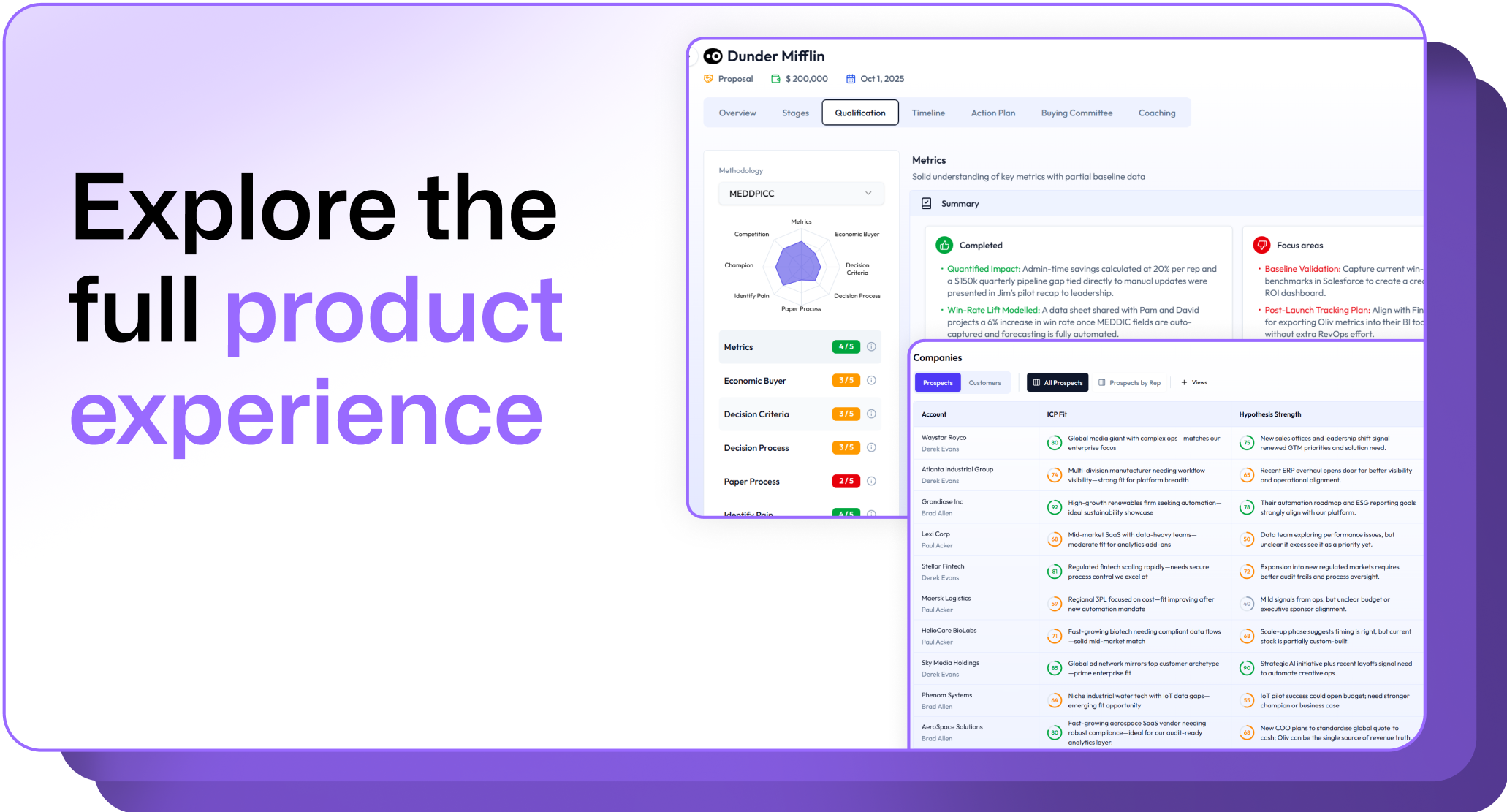
.avif)
.png)







.png)